Spinal Cord Injury: Epidural Electrical Stimulation
By: Aditya Joshi (Portola High School)
Summary
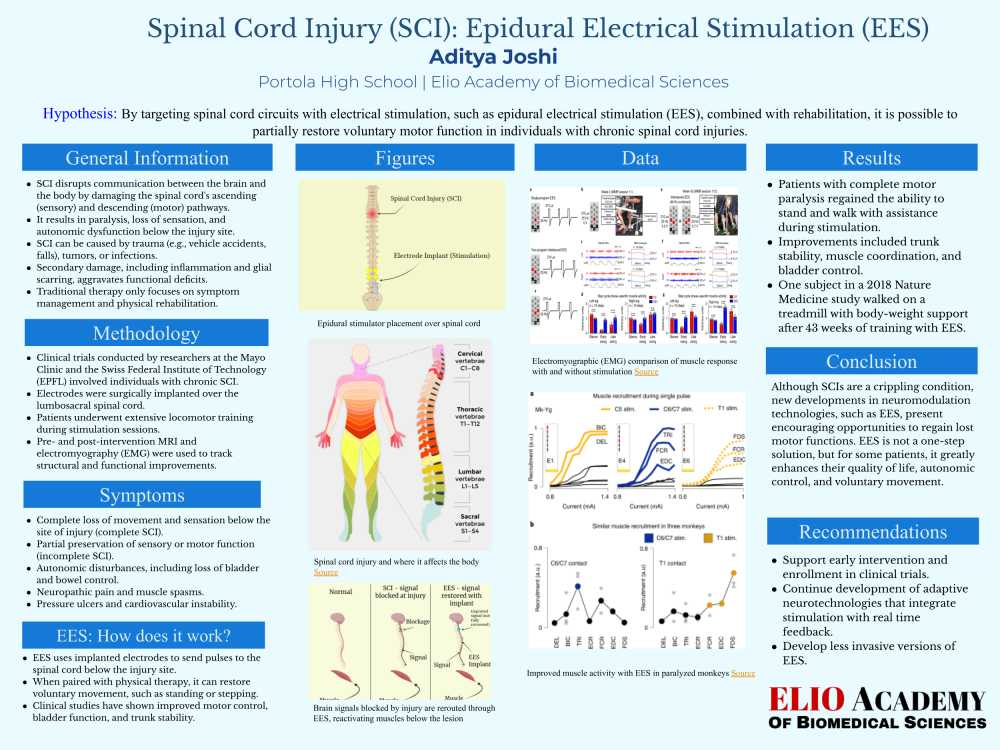
Spinal cord injuries (SCIs) are typically associated with life-altering paralysis and permanent damage to sensory functions as well as autonomic functions like bladder and bowel control. Falls and car accidents are the most common causes of these injuries. Due to the limited healing potential of the spinal cord, most of the spinal injury treatments available today are only symptom-alleviating rather than restorative. Still, some patients are able to recover limited voluntary movement with the help of a treatment called Epidural Electrical Stimulation (EES).
EES is performed by placing electrodes on the dorsal part of the lower spinal cord. EES electrodes stimulate spinal circuitry with pulses of electricity that are situated beneath the injury. At the Mayo Clinic and EPFL, clinical studies have been conducted on patients with chronic SCIs, who received EES and EES with physical training. Over some time, a number of these patients achieved the ability to stand and take aided steps during stimulation. After almost a year of treatment, one participant was supported to walk on a treadmill. Other noted advancements included improved neurogenic bladder, better muscle and trunk control, and enhanced bladder and trunk stability. Confirmatory tests such as MRI and EMG have shown EES patients to have meaningful structural and functional changes.
While EES may not be a full solution, it has enabled substantial recovery for some patients with previously minimal or no mobility. Advancing the technology remains a focus as research progresses.
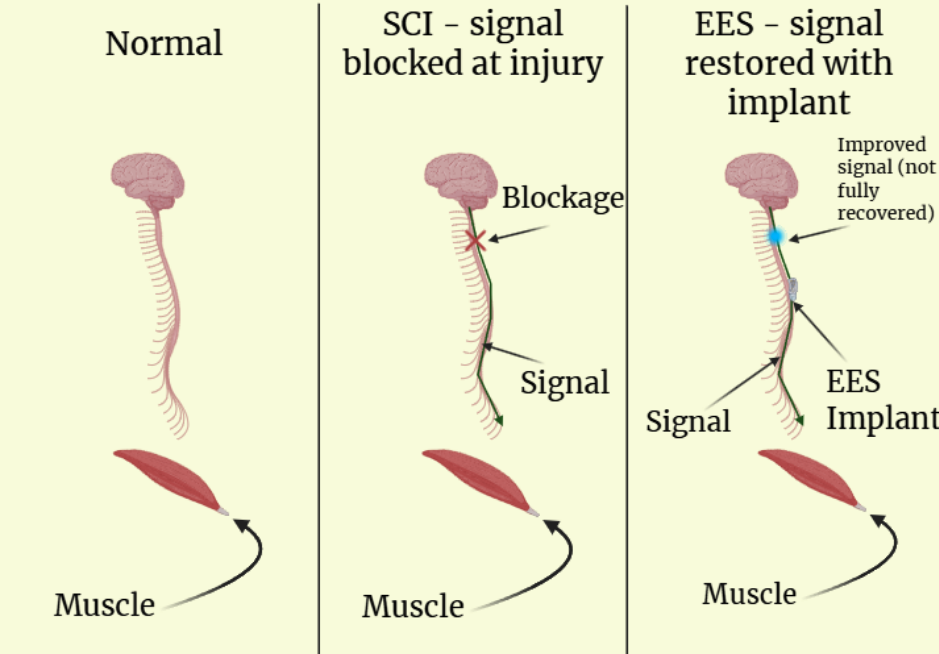
Brain signals blocked by injury are rerouted through EES, reactivating muscles below the lesion
(Figure representation created by the author: Aditya Joshi)
Video Presentation
Impact Statement

Aditya Joshi
Hi, I’m Aditya Joshi from Portola High School, Irvine CA. I learned a lot through this program, especially about how the brain works in certain conditions. It was really interesting to see how the brain handles everyday tasks such as sleeping, eating, and hearing. It is fascinating how neurons are always active, even while we are asleep. This program also gave me a chance to learn about spinal cord injuries, something I have never really learned about before. I came across Epidural Electrical Stimulation (EES) and was surprised to see how it helped some paralyzed patients regain movement. That really caught my attention and made me want to understand the science behind it. One of the most important things I learned was comprehending scientific papers. At first, I wasn't able to understand the complex vocabulary and terms that were used in publications, but through this experience I was able to get a primary context. This whole experience made me more confident in doing research and showed me how much more there is to explore in neuroscience and bioengineering.
Student Reflection
By: Aditya Joshi. The opinions expressed here are the views of the writer and do not necessarily reflect the views and opinions of Elio Academy.