Temporal Lobe Epilepsy: An Overview
By: Anvitha Puppala (Keystone School)
Summary
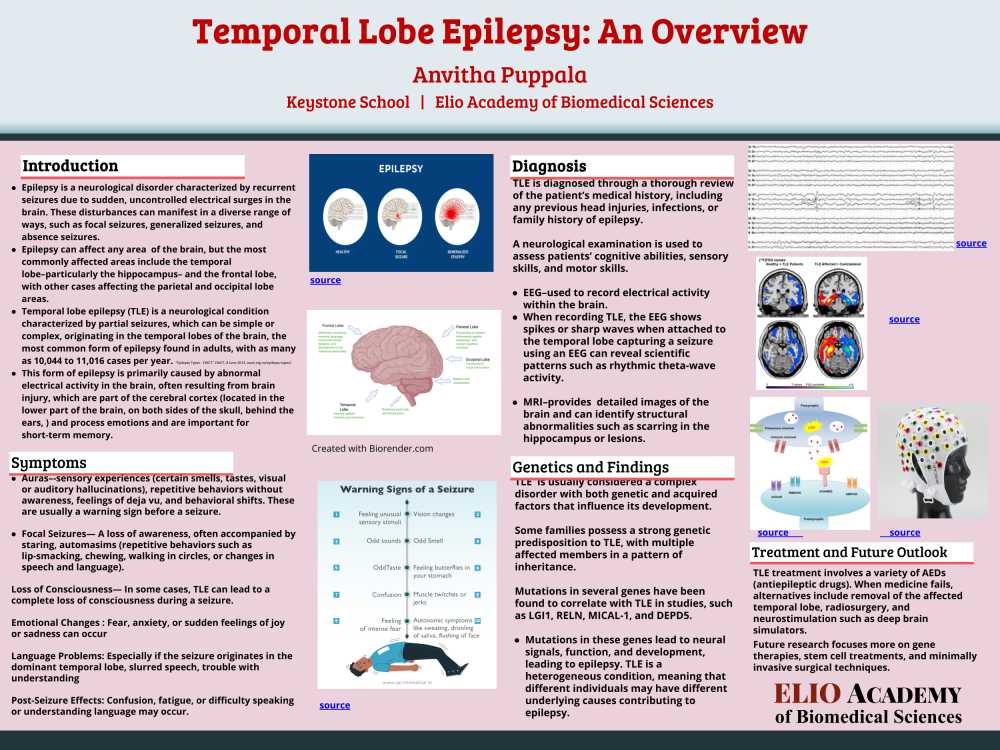
My project centers around the symptoms, diagnosis, genetic basis, and treatment of temporal lobe epilepsy. I used a poster format displaying detailed research and images found in various sources and an image created on Biorender. I introduced epilepsy as a neurological disorder, characterized by recurrent seizures resulting from sudden surges of electrical activity within the brain, affecting any area of the brain. Temporal lobe epilepsy in particular is characterized by partial seizures, primarily affecting the temporal lobe area of the brain. This form of epilepsy is primarily caused by abnormal patterns of electrical activity within the nerve pathways, often resulting from head trauma, particularly due to the cerebral cortex, which is important for processing and short-term memory.
Temporal lobe seizures have several symptoms, such as a loss of consciousness, sudden behavioral changes, convulsing, and auras, which include visual and auditory hallucinations. TLE is diagnosed through a thorough review of the patient’s medical history, as any indication of previous head injuries, infections, or a family history of seizures or epilepsy. Doctors also use a neurological examination to assess patients’ motor skills. For this section of the project, I did research on different medical devices and procedures used to identify signs of epilepsy, such as EEG devices, which are connected to brain activity, and MRI which provides a detailed scan of the brain. I also did research on the genetic component for epilepsy in families, as pedigrees showing an autosomal dominant inheritance pattern and genetic mutations. I also did research on medications and therapies used to treat temporal lobe epilepsy.
Video Presentation
Impact Statement

Anvitha Puppala
I learned much about the human brain that I believe has improved my understanding of neurological science immensely. One of the courses that I was really interested in was the Neuroscience course, because I had always been interested in the workings of the human brain, and how varied systems of the brain impact how humans process the world. Through sessions covered in this program, I learned a lot about different parts of the brain that regulate different important mental processes such as the neurological workings of sleep, concentration, and rewards, which were covered extensively, and the research project also taught me more about different diagnostic methods and medications for neurological disorders such as epilepsy, as well as how to use online resources such as BioRender for research purposes. From this program, I took away a deeper understanding of neurology and connections between chemicals within the brain, and also more experience in research about illness.
Student Reflection
By: Anvitha Puppala. The opinions expressed here are the views of the writer and do not necessarily reflect the views and opinions of Elio Academy.