PTEN and Cowden Syndrome
By: Avni Vishwas (RV PU College, Bangalore)
Summary
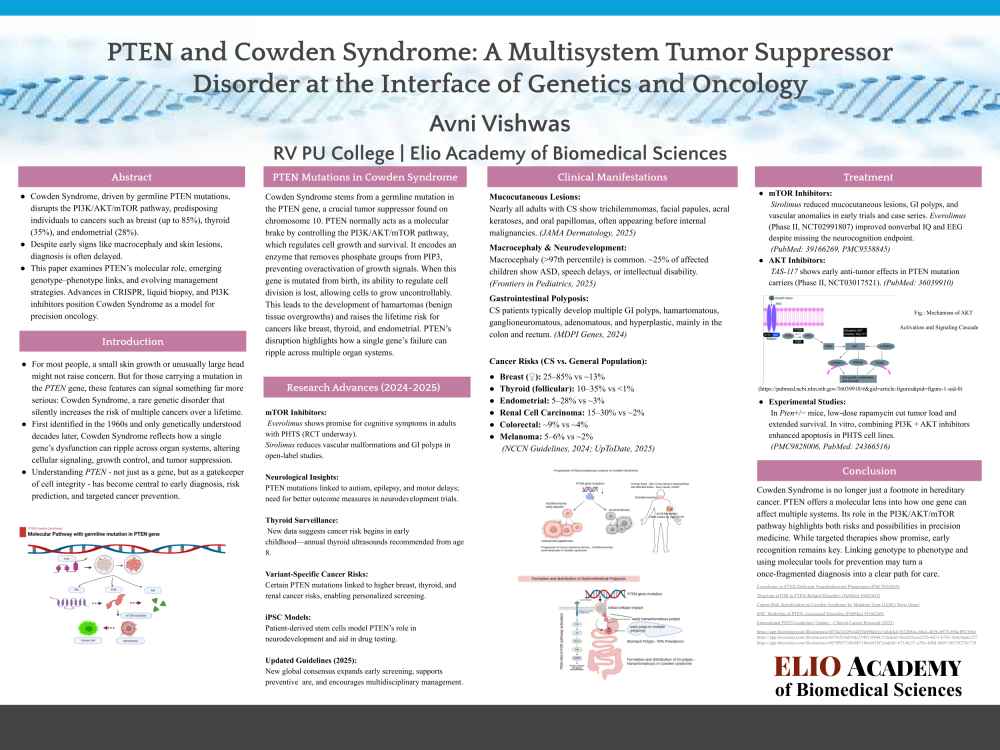
Cowden Syndrome (CS) is a rare genetic condition caused by mutations in the PTEN gene, which normally helps keep cell growth in check. When this gene doesn’t work properly, people with CS face higher risks of developing certain cancers - especially breast, thyroid, and endometrial - as well as challenges like benign tumors, skin lesions, and developmental delays.
This project explored Cowden Syndrome from both a scientific and clinical perspective. It examined how changes at the molecular level affect the entire body, drawing on evidence from research papers, patient case studies, and ongoing trials. Special focus was placed on new, more precise treatments such as PI3K-β inhibitors, as well as CRISPR activation strategies that aim to restore some PTEN function without editing the gene. It also looked at non-invasive tools like liquid biopsies (ctDNA) that could help detect cancer earlier, especially in high-risk patients.
More than just studying a rare disease, this work showed how a single gene can affect multiple systems; and how science is moving towards more tailored, less invasive care. Cowden Syndrome offers a unique lens into the future of personalized medicine.
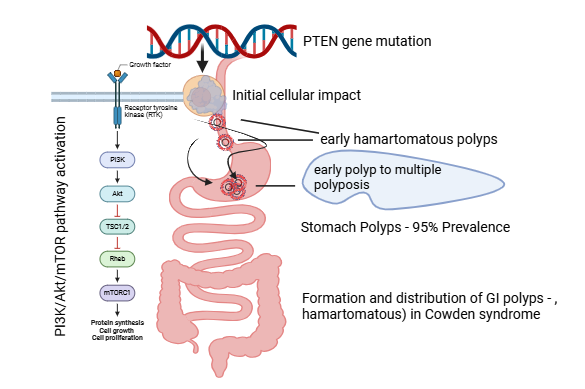
Formation and Distribution of Gastrointestinal Polyposis
(Figure representation created by the author: Avni Vishwas)
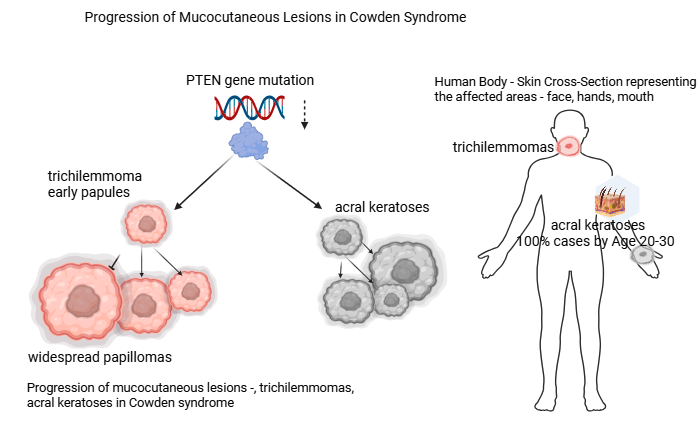
Progression of Mucocutaneous Lesions in Cowden Syndrome
(Figure representation created by the author: Avni Vishwas)
Video Presentation
Impact Statement
Avni Vishwas
Hey everyone! I’m Avni Vishwas, a student from India. This research project gave me hands-on experience with translational genetics, as I explored the PTEN gene and its role in Cowden Syndrome. I learned how to critically analyze scientific literature, connect pathway disruptions to multisystem symptoms, and communicate complex data clearly through a research poster. More than just technical growth, I gained confidence navigating ambiguity and developed a deeper appreciation for interdisciplinary research. What made the experience even more meaningful was the guidance from my mentors. Despite time zone differences, they were incredibly accommodating and patient, always offering thoughtful feedback and encouraging curiosity. Their support helped me grow not just as a student, but as a researcher learning to ask better questions. This experience reinforced my commitment to pursuing research that is thoughtful and driven by both curiosity and empathy.
Student Reflection
By: Avni Vishwas. The opinions expressed here are the views of the writer and do not necessarily reflect the views and opinions of Elio Academy.