Ciprofloxacin: A Critical Antibiotic Under Careful Watch
By: Ayush Desai (Piscataway High School)
Summary
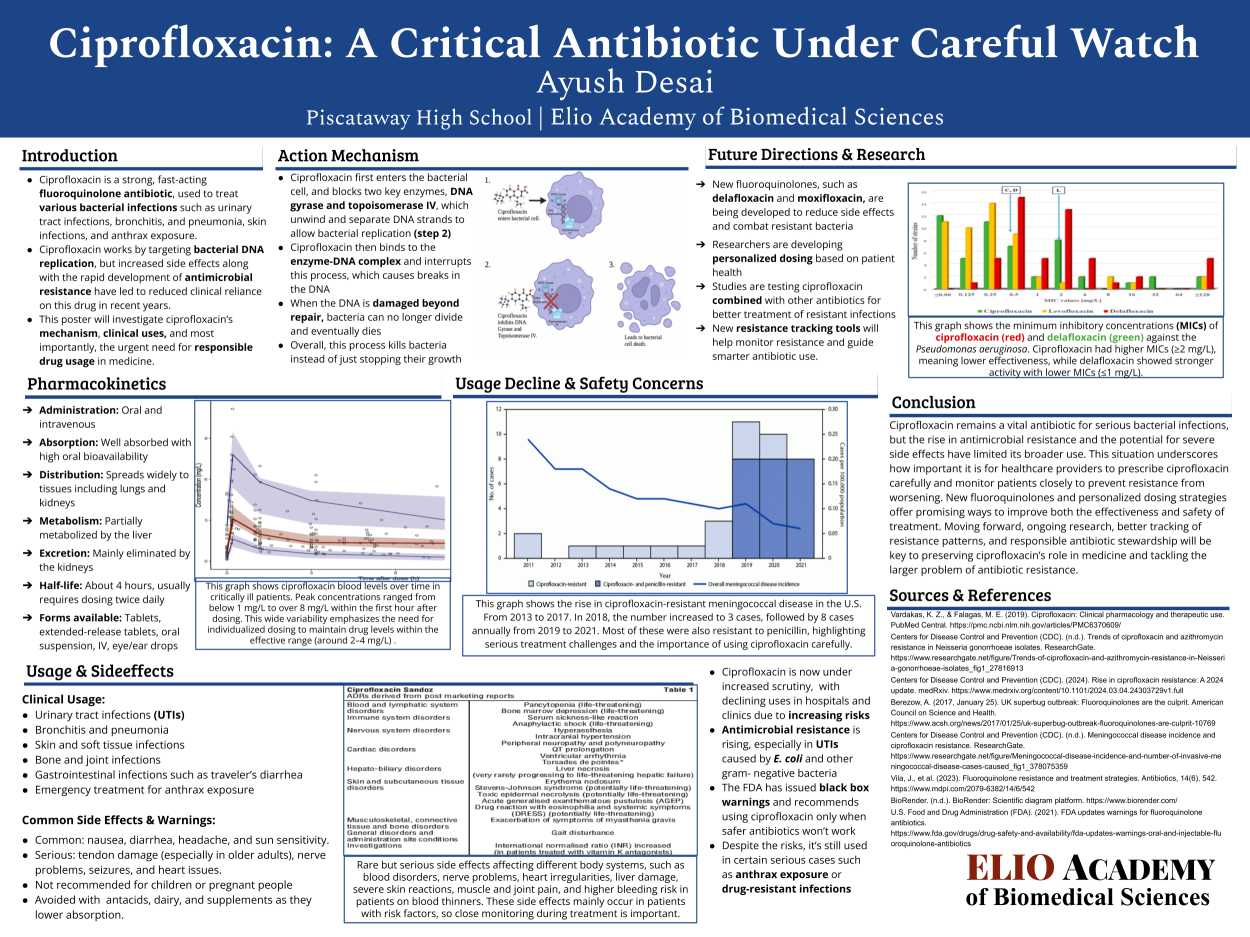
Ciprofloxacin is a fluoroquinolone antibiotic that has long been used to treat infections such as UTIs, pneumonia, skin infections, and anthrax exposure. It works by interfering with bacterial DNA replication and binding to the enzymes DNA gyrase and topoisomerase IV to ultimately kill the bacteria. While the drug has remained effective against serious infections, ciprofloxacin has seen a decline in use due to growing concerns over the side effects it brings and the rise in antimicrobial resistance.
Recent studies have shown increased resistance in gram-negative bacteria, especially E. coli, making ciprofloxacin less reliable for common infections. Serious side effects that stem from the drug include tendon damage, nerve issues, and seizures, which have led the FDA to issue black box warnings and recommend the drug’s use only when safer alternatives fail. Data from the CDC and other sources highlight troubling resistance trends, including ciprofloxacin-resistant strains of Neisseria gonorrhoeae and Pseudomonas aeruginosa, which are also becoming harder to treat with other antibiotics.
Despite these concerns, ciprofloxacin still plays a role in treating life-threatening or drug-resistant infections. Newer fluoroquinolones such as delafloxacin are being studied and have brought forward promising improvements in effectiveness and safety. Additionally, ongoing research supports the technique of personalized dosing and the use of ciprofloxacin in combination with other drugs to reduce antimicrobial resistance. Overall, ciprofloxacin’s future lies in careful, evidence-based prescribing and continued innovation to address the global challenge of antimicrobial resistance. This research project helped me better understand not only how antibiotics function at the molecular level, but also how clinical decisions must adapt to evolving resistance patterns and safety data.
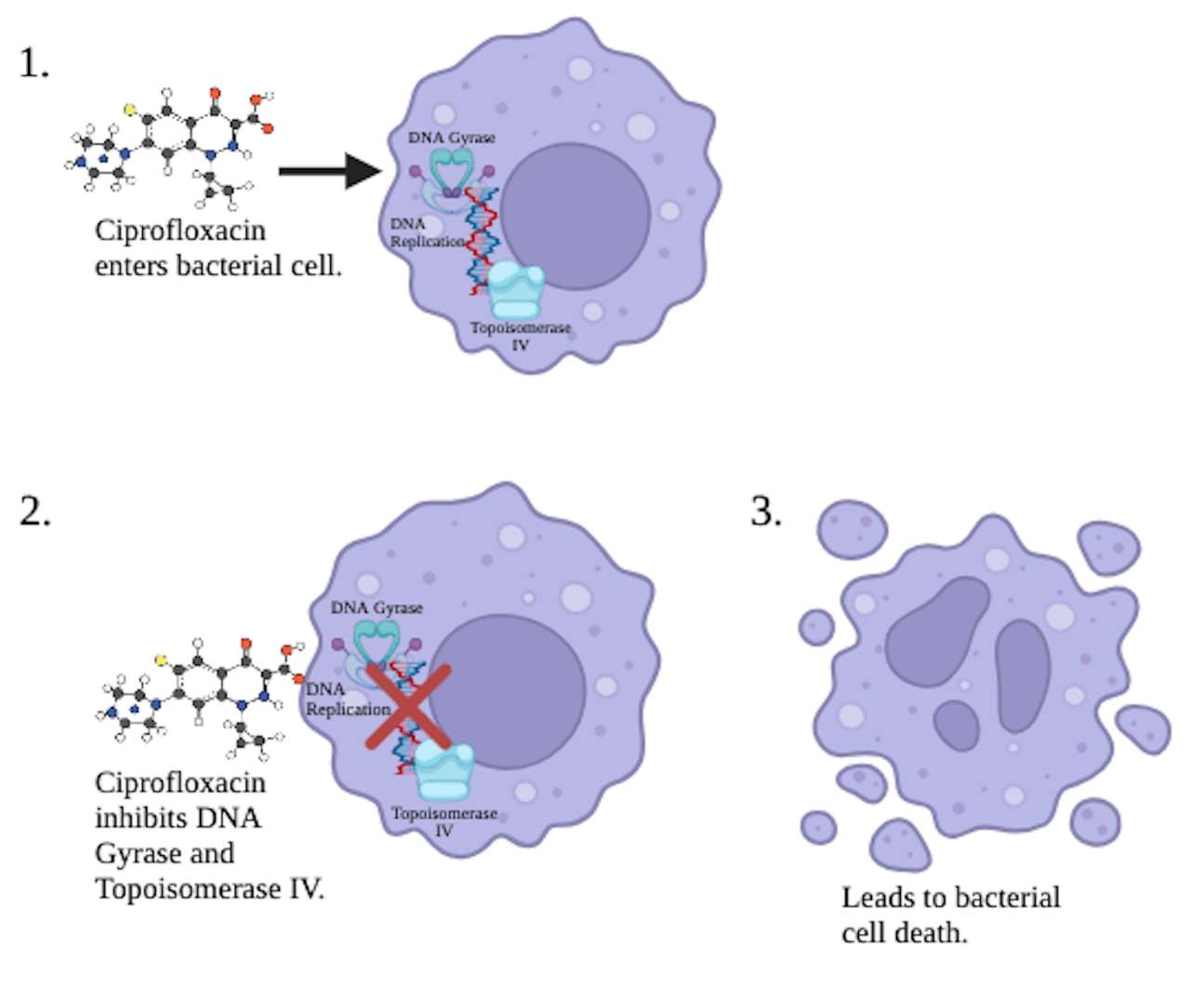
A visual representation of ciprofloxacin’s action mechanism, showing its inhibition of bacterial enzymes DNA gyrase and topoisomerase IV which then leads to DNA damage and bacterial cell death.
(Figure representation created by the author: Ayush Desai)
Video Presentation
Impact Statement

Ayush Desai
Elio Academy has been one of the most rewarding academic experiences I’ve had. During the program, I prepared a case study on the antibiotic ciprofloxacin and explored the growing issue of antimicrobial resistance. With the help of my mentor, I learned how to analyze MIC data, interpret scientific graphs, and review published research papers, all of which has helped me better understand the broader challenges in antibiotic use and bacterial resistance. I also created a research poster that strengthened my scientific writing and presentation skills. What I really appreciated was how this program made complex concepts and databases feel approachable from day one. This program gave me a real foundation in biomedical research and made me more confident in my ability to continue performing scientific research. I highly recommend Elio to anyone interested in science, research, or both, the program truly prepares you for what's ahead!
Student Reflection
By: Ayush Desai. The opinions expressed here are the views of the writer and do not necessarily reflect the views and opinions of Elio Academy.