MAD2L1 Inhibitor with Chemotherapy Combination Treatment for TNBC
By: Christina Lam
Christina Lam
Jericho High SchoolI learned valuable research skills, particularly in conducting computational research using bioinformatic tools to research human diseases. I have strengthened my knowledge in cancer biology and in bioinformatics. This program taught me how to conduct computational bioinformatic research and taught me skills that I can use in future research endeavors.
Short Report
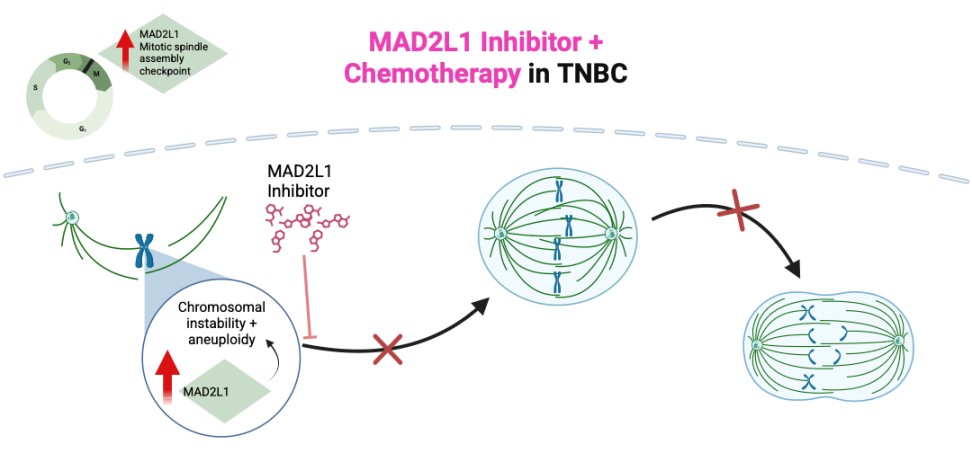
MAD2L1 inhibitor + Chemotherapy therapy in TNBC-7
(Figure representation created by the author:Christina Lam)
Background
TNBC is a highly aggressive type of breast cancer that has high cell proliferation and accounts for 15% to 20% of breast cancer cases. It commonly affects non-Hispanic Black women disproportionately and is also more commonly found in younger women. There are different subtypes in TNBC because of its heterogeneity. There are also different types of targeted therapy, but they do not accommodate for a large patient population range.
Problem Statement
Current targeted therapy like PARP inhibitors only are limited to BRCA mutation related patients which creates a high unmet need for patients who do not have specific mutations for effective targeted therapy for TNBC.
Research Hypothesis
TNBC has high unmet need, identifying novel targetable pathways will enable combination therapy with current standard of care treatment.
Results
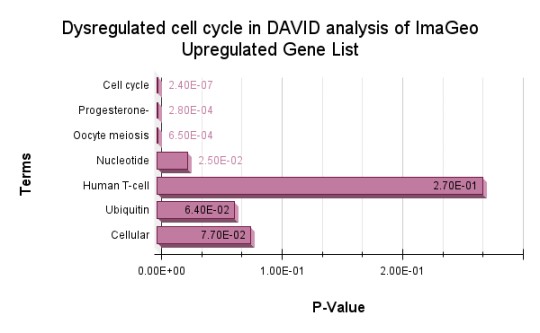
Dysregulated cell cycle in DAVID analysis of ImaGeo Upregulated Gene List
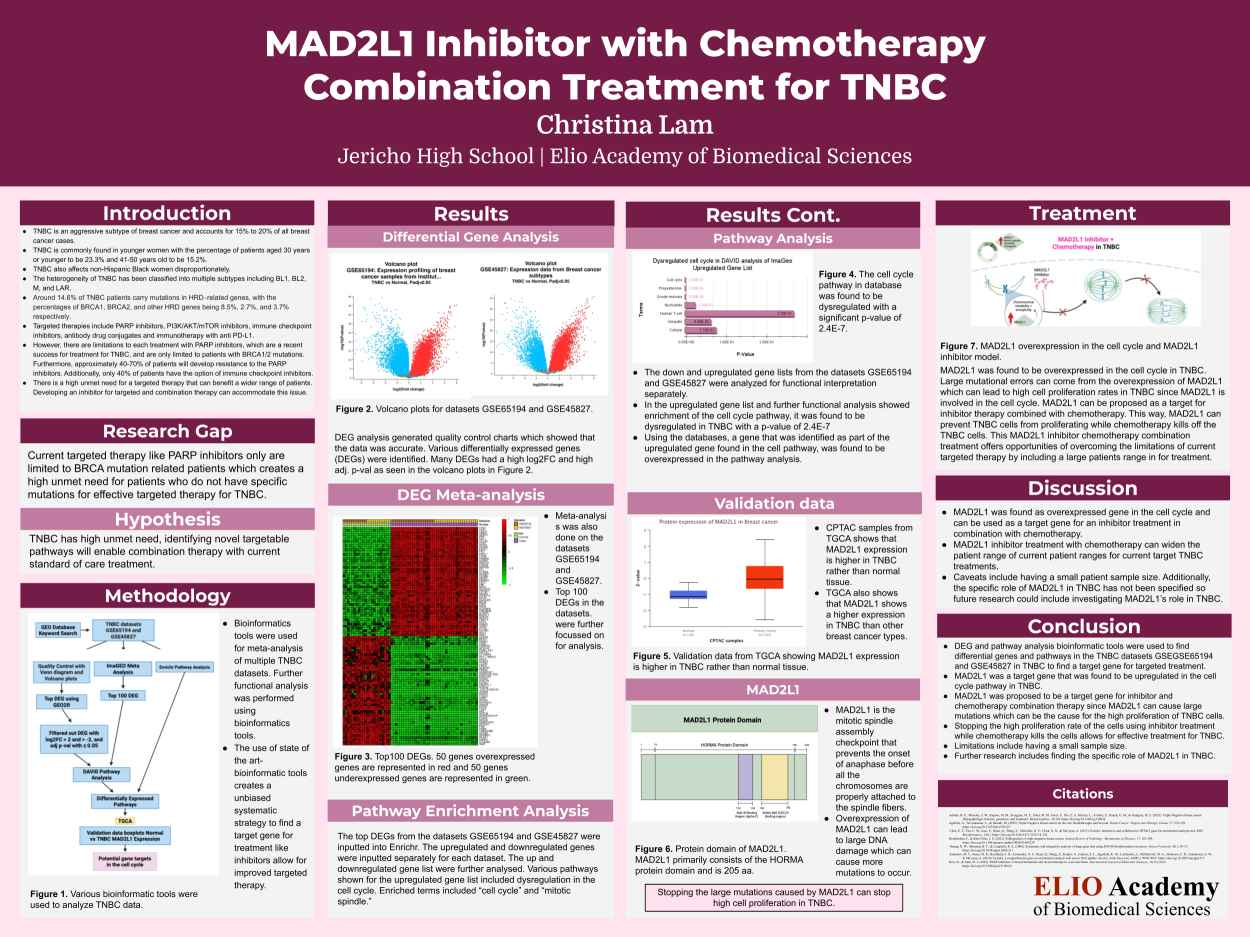
The GEO2R bioinformatic tool generated quality control charts which showed that the data was accurate. Various differentially expressed genes (DEGs) were found from GEO2R. Many DEGs had a high log2FC and high adj. p-val. In the upregulated ImaGEO gene list from the KEGG database in DAVID, the cell cycle pathway was found to be dysregulated in TNBC with a p-value of 2.4E-7. Using the KEGG database in DAVID, MAD2L1, a gene that was imputed as part of the upregulated ImaGEO gene list found in the cell pathway, was found to be overexpressed in the pathway analysis.
Conclusion
Datasets GSEGSE65194 and GSE45827 in TNBC were selected to find a target gene for targeted treatment. MAD2L1 was a target gene that was found to be upregulated in the cell cycle pathway in TNBC. MAD2L1 was proposed to be a target gene for inhibitor and chemotherapy combination therapy since MAD2L1 can cause large mutations which can be the cause for the high proliferation of TNBC cells. Stopping the high proliferation rate of the cells using inhibitor treatment while chemotherapy kills the cells allows for effective treatment for TNBC. Limitations include having a small sample size. Further research includes finding the specific role of MAD2L1 in TNBC.
By: Christina Lam. The opinions expressed here are the views of the writer and do not necessarily reflect the views and opinions of Elio Academy.