The Role of miR-6068 and its Downstream Target RSPO3 in Treatment Resistant GBM
By: Connor Chiu

Connor Chiu
Jericho High SchoolIn this program, I’ve learned how to formulate my question more specifically and to establish my hypothesis for the research project. I’ve learn to use many different computational databases to help analyze the data I’ve gathered to reach my conclusion. Also, this program helped me greatly with my presentation skills, like making a scientific research poster to visually communicate and summarize my findings.
Short Report
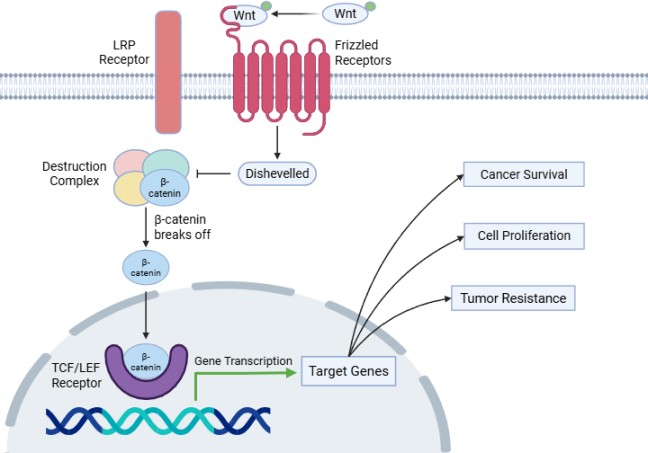
Mechanisms of the Wnt Signaling Pathway. Wnt proteins bind to Frizzled receptors triggering the Wnt/β-catenin pathway that regulates gene expression.
(Figure representation created by the author: Connor Chiu)
Background
Glioblastoma (GBM) is the most common primary malignant brain cancer, accounting for about 50% of all primary brain cancers, and is characterized by its highly aggressive nature, poor prognosis, and low survival rate. Each year, it is the cause of over 15,000 deaths in the United States, with the five-year survival rate for patients being about 5% and the average survival length estimated to be only 12-18 months. GBM is one of the hardest brain cancers to treat due to a variety of factors, including its resistance to traditional cancer therapy treatments, such as chemotherapy and radiotherapy; its rapid growth rate and aggressiveness; and tumor heterogeneity.Standard treatments typically combine Telezolomide chemotherapy with radiotherapy and are initially effective in suppressing the cancer; however, local recurrence is highly common and frequently results in recurrent cells developing chemo and radioresistance. Emerging research suggests that GBM treatment resistance may be due, in part, to microRNAs (miRNAs). miRNAs are characterized as short non-coding RNA molecules that play crucial roles in regulating gene expression through the translational repression of their target messenger RNA (mRNA), and their dysregulation has been connected to the tumorigenesis of many cancers.
Problem Statement
Although the discovery of miRNAs occurred in the early 1990s, their role in GBM wasn’t actively explored until 2005. Thus, despite significant progress in identifying and characterizing miRNAs in this cancer, many miRNAs, as well as their target genes, remain underexplored. Furthermore, the investigation for novel therapeutic agents that can overcome the issue of GBM treatment resistance is still ongoing. Despite numerous proposed treatments over the years, GBM remains an incurable cancer with most drugs proving ineffective against it, highlighting the urgent need for novel therapeutic strategies or new combination therapies to resolve this issue.
Research Hypothesis
miR-6068 and its target gene RSPO3 may play a key role in regulating hyperactive Wnt signaling in GBM, which may contribute to tumor treatment resistance. Additionally, novel Wnt inhibitors used for other types of cancer may be used for the treatment of GBM.
Results
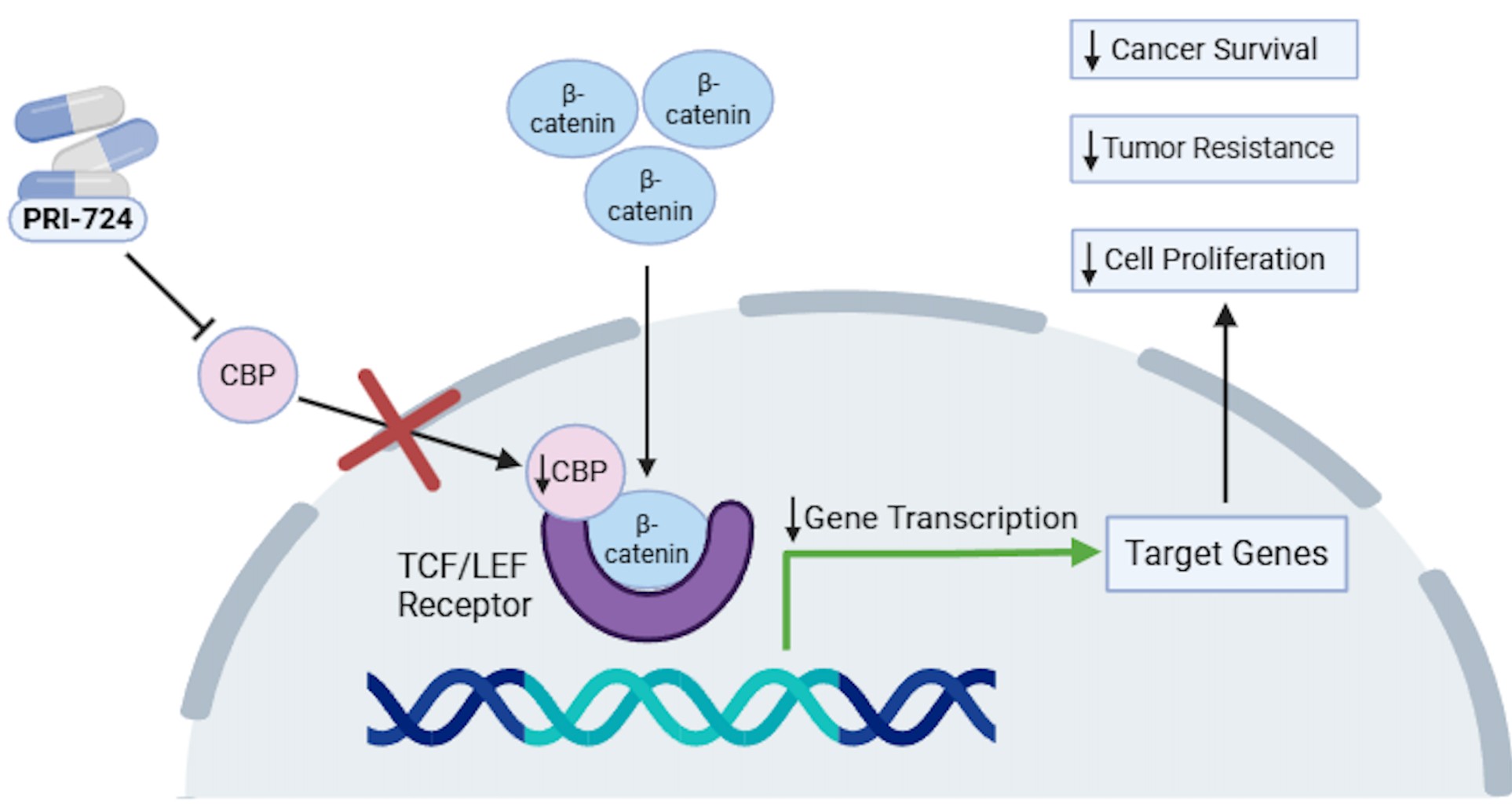
Mechanism of how PRI-724 inhibits the Wnt signaling pathway. Diagram showing how PRI-724 inhibits the binding of CBP to the β-catenin:TCF/LEF complex, decreasing gene transcription efficiency and protumor effects.
(Figure representation created by the author: Connor Chiu)
miR-6068 was identified as an underexplored miRNA. Furthermore, miR-6068 was found to be significantly downregulated in GBM, suggesting its role as a tumor suppressive miRNA in GBM. Additionally, gene RSPO3 was identified as underexplored in GBM and was selected as a focus of this study through miRDB analysis. Furthermore, RSPO3 was predicted to be oncogenic and upregulated in accordance with the hyperactivation of the Wnt signaling pathway in GBM. Since miR-6068 is downregulated while RSPO3 is predicted to be upregulated, it suggests miR-6068 to be a negative regulator for RSPO3 and suggests an inverse relationship between their expression levels.
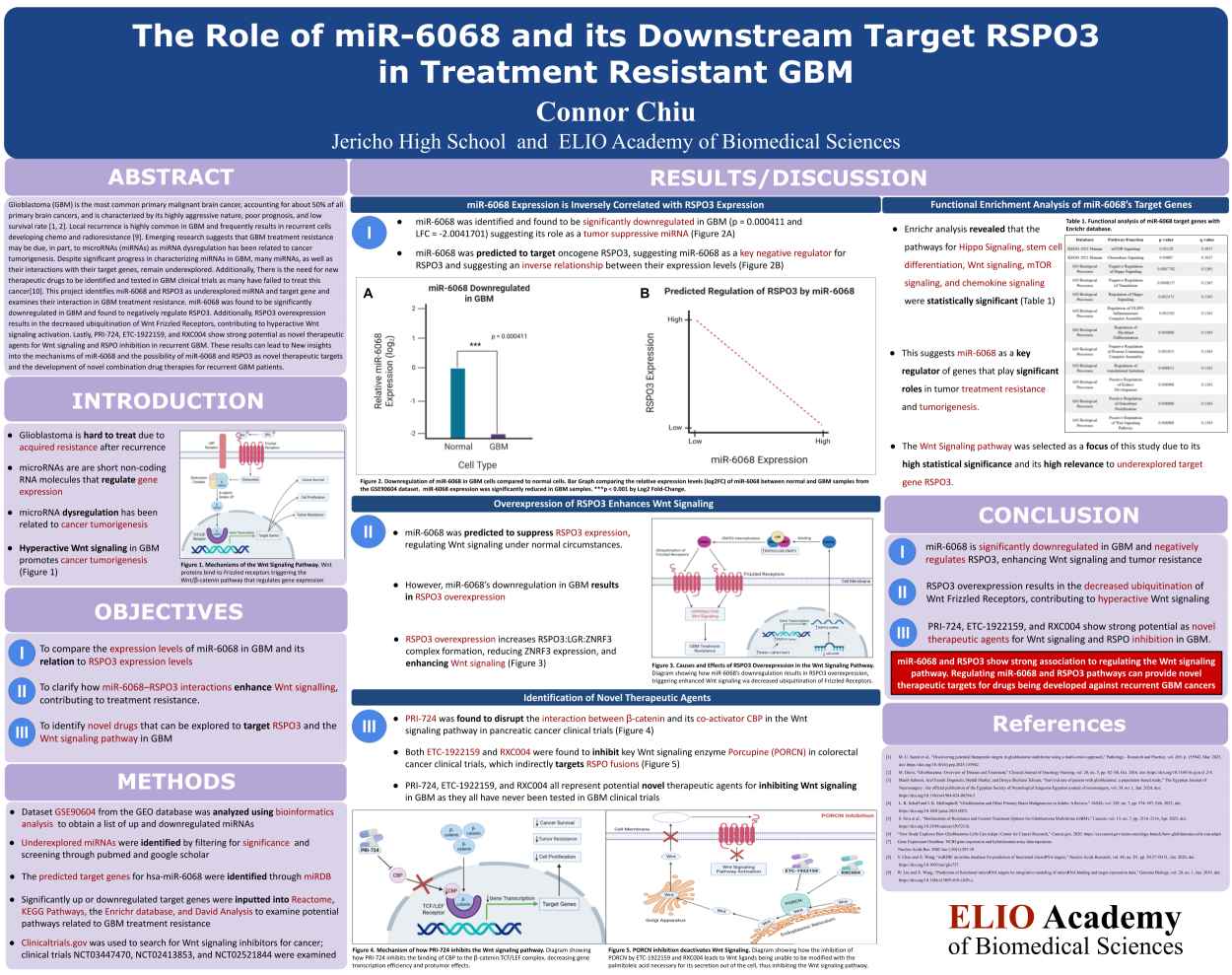
The cellular functions of miR-6068’s target genes were identified using DAVID analysisl. Analysis revealed that these genes are significantly enriched in processes related to translational regulation and postsynaptic density, suggesting their involvement in cellular communication and signaling networks that may enhance GBM treatment resistance. Furthermore, Enrichr analysis revealed that the pathways for Hippo Signaling, stem cell differentiation, Wnt signaling, mTOR signaling, and chemokine signaling were statistically significant after examining the GO Biological Processes and KEGG Pathways categories.
Since miR-6068’s downregulation results in RSPO3 overexpression in GBM. Reactome pathway analysis revealed that RSPO3 overexpression increases RSPO3:LGR:ZNRF3 complex formation, reducing ZNRF3 expression, and enhancing Wnt signaling. PRI-724 was identified as a Wnt signaling inhibitor and was found to disrupt the interaction between β-catenin and its co-activator CBP in the Wnt signaling pathway in pancreatic cancer clinical trials. Furthermore, ETC-1922159 and RXC004 were found to inhibit key Wnt signaling enzyme Porcupine (PORCN), which modifies Wnt ligands with a palmitoleic acid, allowing the ligands to cross the cell membrane and be secreted from the cell. However, PRI-724, ETC-1922159 and RXC004 have never been tested in GBM clinical trials and should be tested as potential novel therapeutic agents for recurrent GBM.
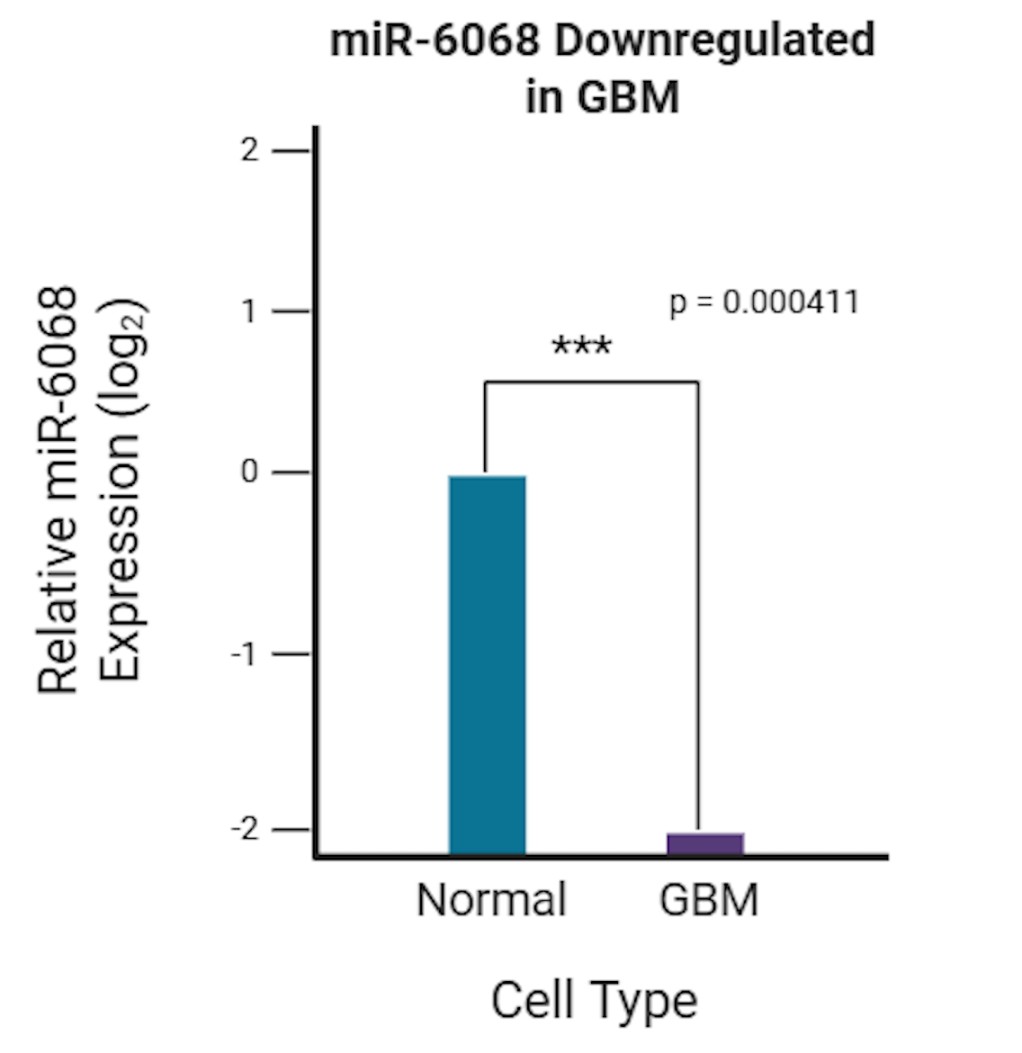
miR-6068’s predicted downregulation in GBM compared to normal healthy cells. Bar Graph summarizing miR-6068’s significant downregulation in GBM compared to normal cells
Conclusion
In conclusion, miR-6068 is significantly downregulated in GBM and negatively regulates RSPO3, enhancing Wnt signaling and tumor resistance; RSPO3 overexpression results in the decreased ubiquitination of Wnt Frizzled Receptors, contributing to hyperactive Wnt signaling activation; and PRI-724, ETC-1922159, and RXC004 show strong potential as novel therapeutic agents for Wnt signaling and RSPO inhibition in recurrent GBM. Therefore, miR-6068 and RSPO3 show strong association to regulating the Wnt signaling pathway and could act as novel therapeutic targets for drugs being developed against recurrent GBM cancers. Future investigations should include validation of the role of miR-6068 and RSPO3 in GBM with In-vitro and In-vivo experimentations. Additionally, the efficacy of PRI-724, ETC-1922159, and RXC004 should be examined in in GBM clinical trials in combination with other drugs. These future investigations could provide new insights into the mechanisms of miR-6068 and the possibility of miR-6068 and RSPO3 as novel therapeutic targets. They could also lead to the development of novel combination drug therapies for recurrent GBM patients.
By: Connor Chiu. The opinions expressed here are the views of the writer and do not necessarily reflect the views and opinions of Elio Academy.