Combination Therapeutic Suggestion For Group 3 Medulloblastoma To Target Treatment Resistances
By: Harshita Sinha & Yaanaa Garg

Harshita Sinha
Lake Stevens High SchoolThe program allowed me to connect biology with computational analysis, taking raw data to clinical applications. Being able to learn how to use research tools and functional enrichment platforms, improved both my analytical and critical thinking skills, which has helped me think more deeply about research overall. More importantly, it taught me how to understand results from multiple studies and evaluate published literature. My mentor was especially great to take time to teach a young researcher with very little background, and I always got more knowledge that what my question was. This program prepared me for a career in research by showing me the complete process, and what struggles I may encounter. It has strengthened my passion for biomedical research and gave me confidence that I can do this in the future.

Yaanaa Garg
Navrachana International School VadodaraThrough the Elio Academy research program, I gained a practical understanding of how biomedical research is conducted from start to finish. I learned how to frame research questions, critically analyze scientific literature, and interpret real clinical data, skills that go far beyond classroom learning. The program sharpened my ability to think independently, evaluate drug mechanisms, and approach problems with a research mindset. These experiences have not only improved my technical and analytical skills but also given me the confidence to engage in more advanced research opportunities in the future.
Short Report
Abstract
This project focuses on Group 3 medulloblastoma, the most aggressive form of pediatric brain tumor. Our research looks at why it has one of the most survival rates and what the the genetic drivers of it. We found the PI3K/mTOR pathway that is fueling autophagy and making the tumor treatment resistance . We studied the drug Bimiralisib that could potentially overcome this treatment resistance when combined with craniospinal irradiation, kill the tumor.
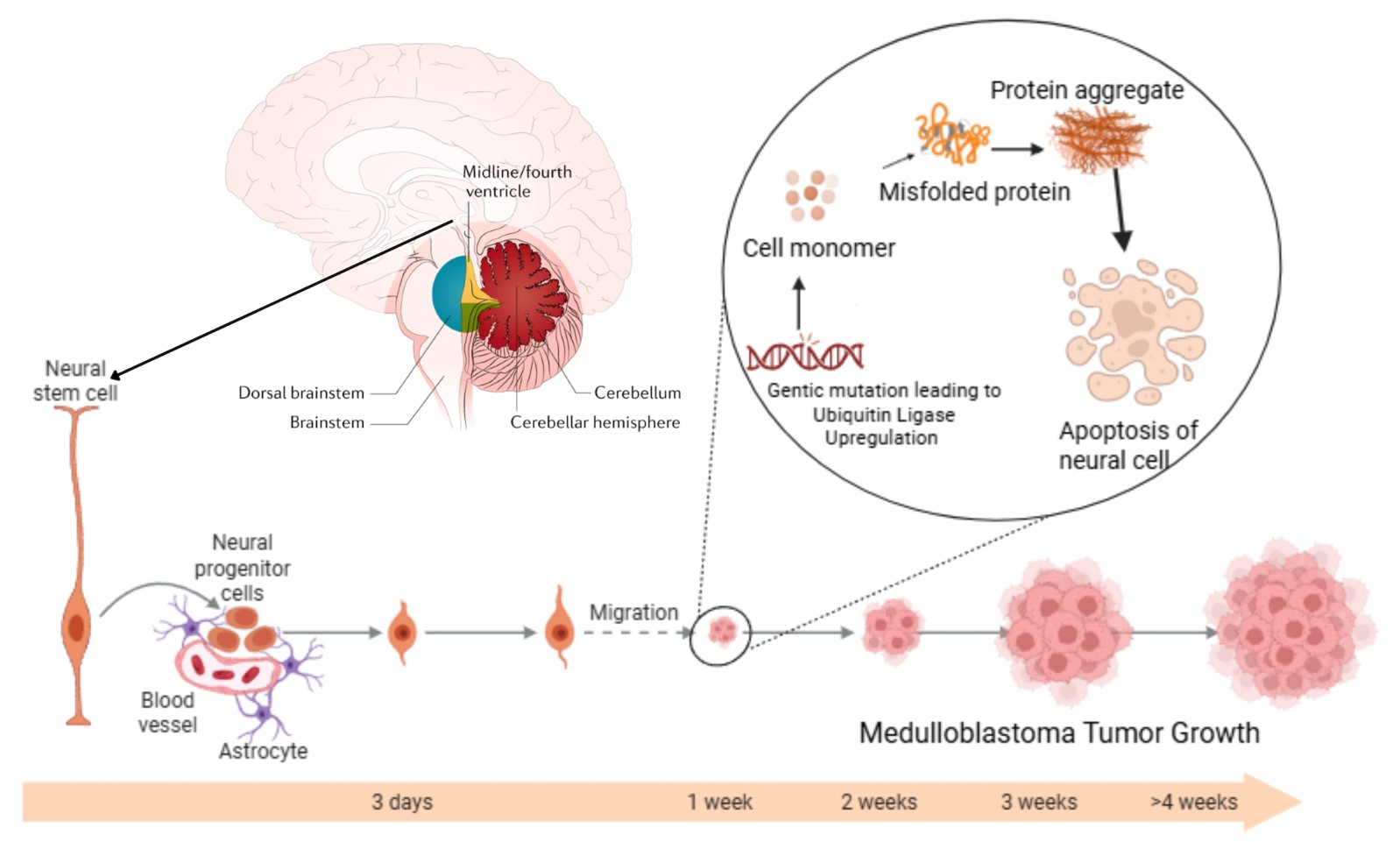
Image to demonstrate how group 3 Medulloblastoma is formed and starts to grow. It begins with special brain cells called "neural stem cells" in the midline of the cerebellum. These stem cells change into new brain cells that move and multiply in an unusual way over several weeks, forming a tumor. However, the main problem arises when a change in the DNA causes certain proteins to build up and get stuck together - making some brain cells die. This cell death upsets the area around the cells and helps the tumour to grow. The timeline at the bottom shows how the process starts within a few days and the tumour gets bigger over several weeks.
(Figure representation created by the authors: Harshita Sinha & Yaanaa Garg)
Background
Medulloblastoma is the most common malignant pediatric brain tumor with Group 3 MB representing the most aggressive subgroup, frequently marked by MYC amplification, poor prognosis and high treatment resistance. Current therapies surgery, craniospinal irradiation (CSI), and chemotherapy, extend survival but leave survivors with lifelong complications while failing to significantly improve outcomes for Group 3 patients. In this study we performed a meta-analysis on 4 GEO data sets (GSE62600, GSE21140, GSE85217, GSE37382) to identify differentially expressed genes (DEGs) and biological pathways driving Group 3 MB pathogenesis. Enrichment analysis indicates consistent upregulation of E3 ubiquitin ligases and protein degradation networks. In agreement with literature our analysis shows autophagy as key mechanisms in underlying treatment resistance and aggressiveness of this subgroup of tumor. Based on these findings, we investigated therapeutic strategies targeting this resistance mechanism and identified Bimiralisib (PQR309), a dual PI3K/mTOR inhibitor which has the ability to cross the blood–brain barrier and has less of target effects. We propose a novel treatment combination of Bimiralisib with CSI to inhibit autophagy, sensitize tumor cells to therapy, and suppress metastatic capacity. While further in vitro and in vivo validation in Group 3 MB models is essential, this study outlines a targeted therapeutic strategy.
Problem Statement
Group 3 medulloblastoma patients remain to have a poor survival outcomes compared to other subgroups. Current therapies are limited not only by severe side effects but also by the tumor's ability to resist treatment through protective cellular pathways, such as autophagy. The main research problem we addressed was: What genetic pathways drive therapy resistance in Group 3 medulloblastoma, and can targeting these pathways with existing drugs improve treatment effectiveness?
Research Hypothesis
In Group 3 medulloblastoma, therapy resistance is driven by upregulated protective autophagy through the PI3K/mTOR pathway. Inhibiting this pathway with Bimiralisib, in combination with craniospinal irradiation, is suggested to reduce tumor survival and improve treatment effectiveness.
Results
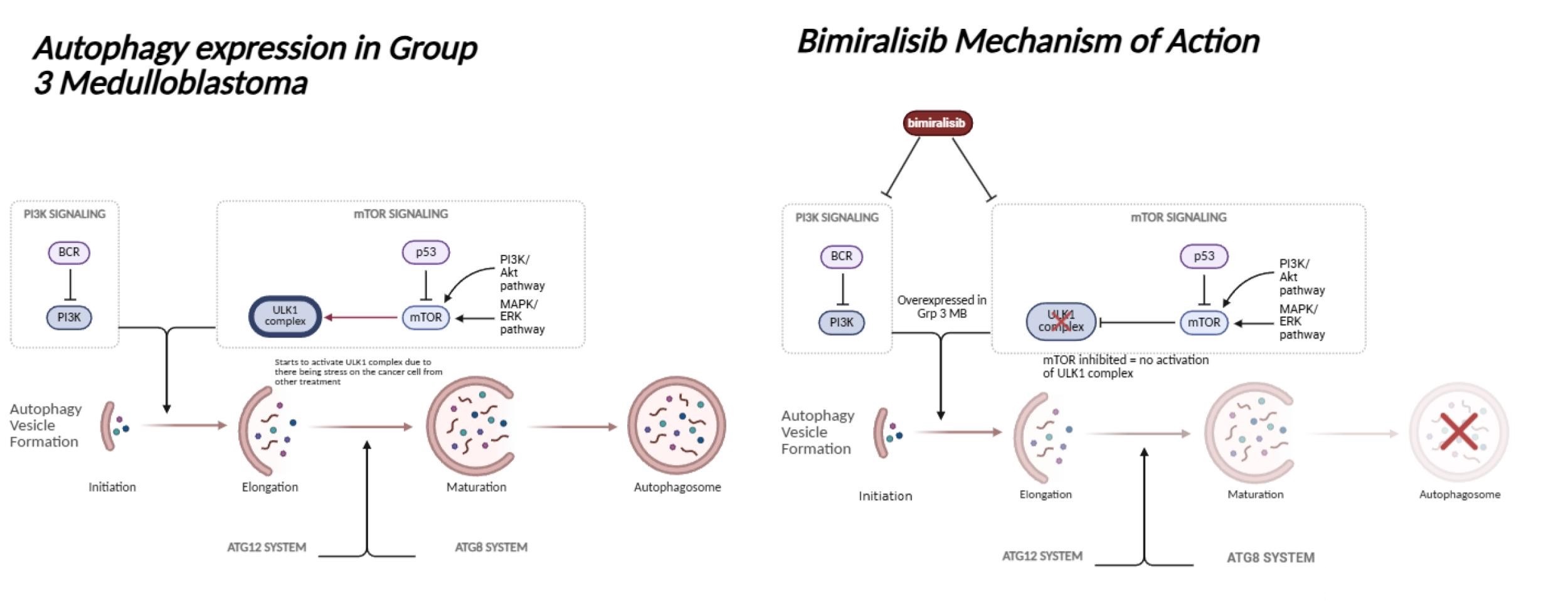
(A) Cellular stress from alternative cancer treatments (Craniospinal Radiotan or Chemotherapy) autophagy is reactivated through mTOR pathway inhibition, which subsequently activates the ULK1 complex. Initiates sequential autophagy vesicle formation. In a healthy cell, the mTOR pathway is not active, meaning autophagy vesicles aren't forming. (B) Bimiralisib could act as a dual PI3K/mTOR inhibitor in Group 3 medulloblastoma cells. By simultaneously targeting the overexpressed PI3K signaling and blocking mTOR-mediated ULK1 complex activation, it prevents autophagy vesicle formation at the initiation stage, disrupting the cellular survival mechanism that cancer cells rely on during therapeutic stress.
(Figure representation created by the authors: Harshita Sinha & Yaanaa Garg)
Our analysis of four medulloblastoma datasets (GSE62600, GSE21140, GSE85217, and GSE37382) identified significant differences in gene expression between tumor and normal brain tissue. Using GEO2R and a meta-analysis with ImaGEO, we selected the top 50 upregulated and 50 downregulated genes. Functional enrichment analyses revealed strong associations with cell cycle regulation, mitosis, and protein modification. One pathway consistently enriched across datasets was the E3 ubiquitin ligase pathway, with key genes such as RNF144A and TRIM45 highlighted. Heatmap analysis confirmed a clear distinction between tumor and normal samples, supporting these findings.
In addition to support our data, the literature review conducted, identified autophagy as a major contributor to treatment resistance in Group 3 medulloblastoma. Standard therapies like craniospinal irradiation and chemotherapy were found to trigger protective autophagy via the PI3K/mTOR pathway, allowing tumor cells to survive treatment stress. Based on these insights, we investigated Bimiralisib (PQR309), a dual PI3K/mTOR inhibitor with strong central nervous system penetration. Clinical data from other cancers suggest it can reduce tumor cell proliferation and enhance apoptosis.
Our research of both the drug and the tumor show combability, and support our hypothesis that a combination therapeutic approach for group 3 medulloblastoma may improve outcomes for this high-risk pediatric tumor.
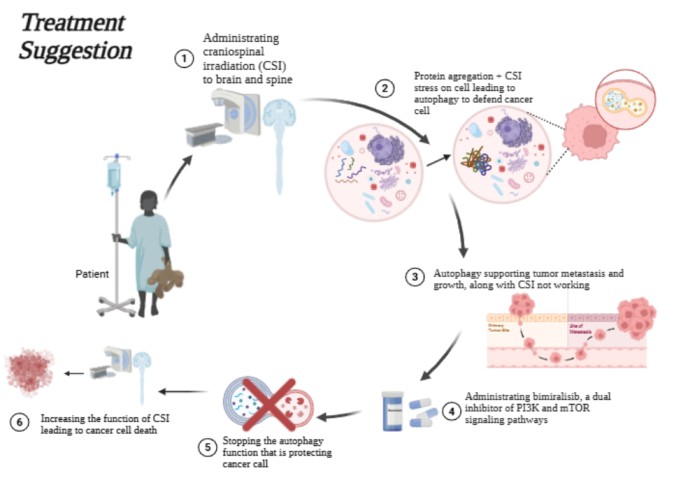
Proposed combination regimen in Group 3 Medulloblastoma to enhance craniospinal irradiation efficacy by reducing cancer cell treatment resistance mechanism by blocking autophagy processes. The current treatment (CSI) and protein aggregation in the tumor, causes cellular stress which triggers protective autophagy in tumor cells. (step 1-3) This response reduces the effectiveness of CSI by supporting tumor survival and metastasis. To counteract this, the addition of bimiralisib, a dual PI3K/mTOR inhibitor (step 4), blocks autophagy processes. Thereby sensitizing cancer cells to CSI. This combined therapeutic approach enhances treatment and promotes tumor cell death.
(Figure representation created by the authors: Harshita Sinha & Yaanaa Garg)
Conclusion
Group 3 medulloblastoma aggressiveness is linked to upregulated autophagy process and proteostasis machinery, driving proliferation and therapy resistance. From integration of meta-analysis and pathway-level tools we found mTOR/PI3K signaling as a central vulnerability. We proposed a combination regimen of Bimiralisib + craniospinal irradiation, targeting both growth and survival pathways. Bimiralisib is a dual PI3K/mTOR inhibitor, that can cross the blood–brain barrier and has shown clinical activity in other central nervous system cancers. By blocking protective autophagy while radiation targets proliferating cells, this strategy has the potential to weaken tumor defenses and increase treatment effectiveness. Future validation in preclinical models is essential before advancing to pediatric clinical trials, starting with in vitro studies on cell lines and progressing to in vivo mouse models to test safety, dosage, and synergy with irradiation. If successful, this approach could improve survival and redefine treatment for high-risk Group 3 medulloblastoma.
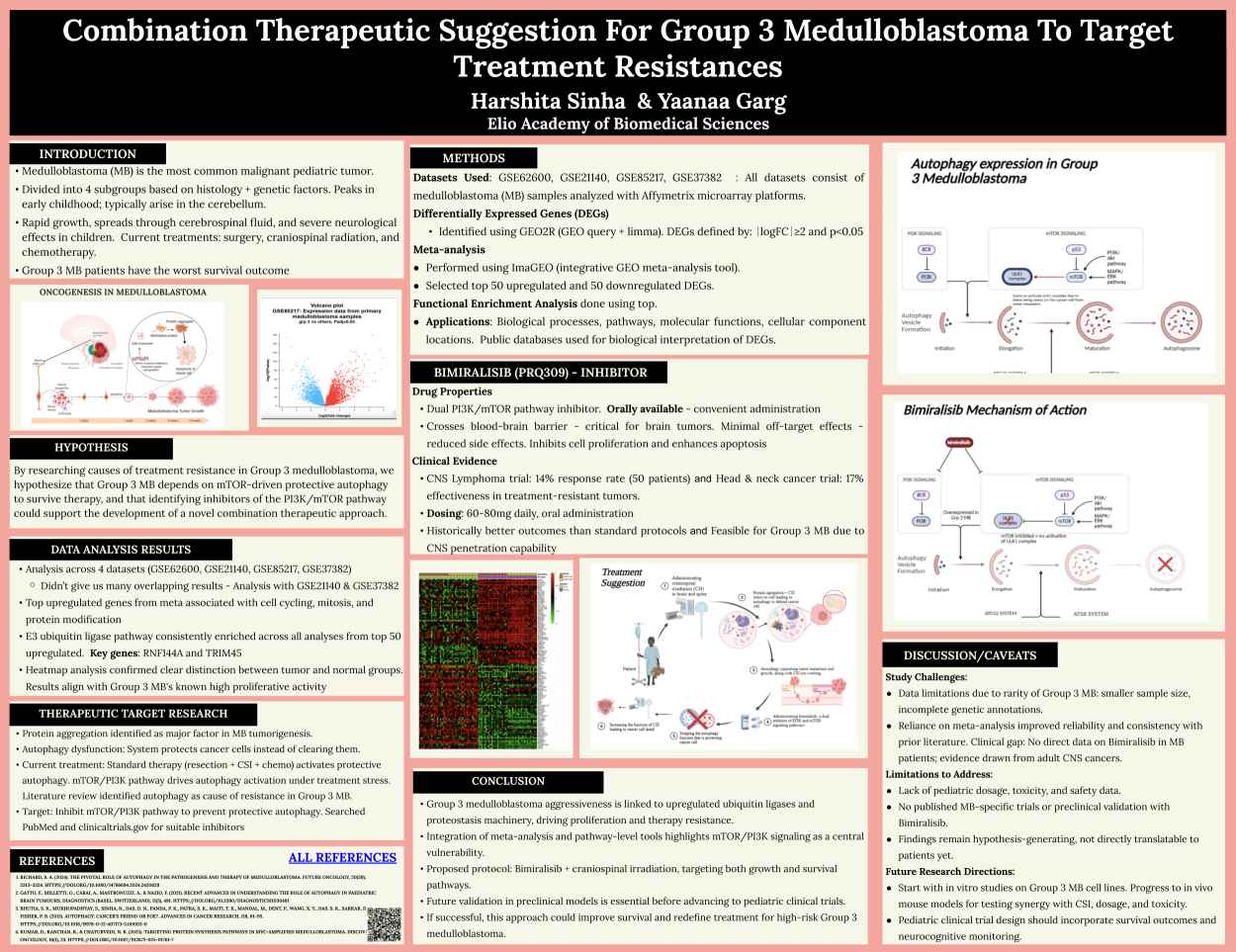
By: Harshita Sinha & Yaanaa Garg. The opinions expressed here are the views of the writer and do not necessarily reflect the views and opinions of Elio Academy.