Angiotensin-Converting-Enzyme (ACE) and It’s Role in Hypertension
By: Heejae Yu (Newport High School)
Summary
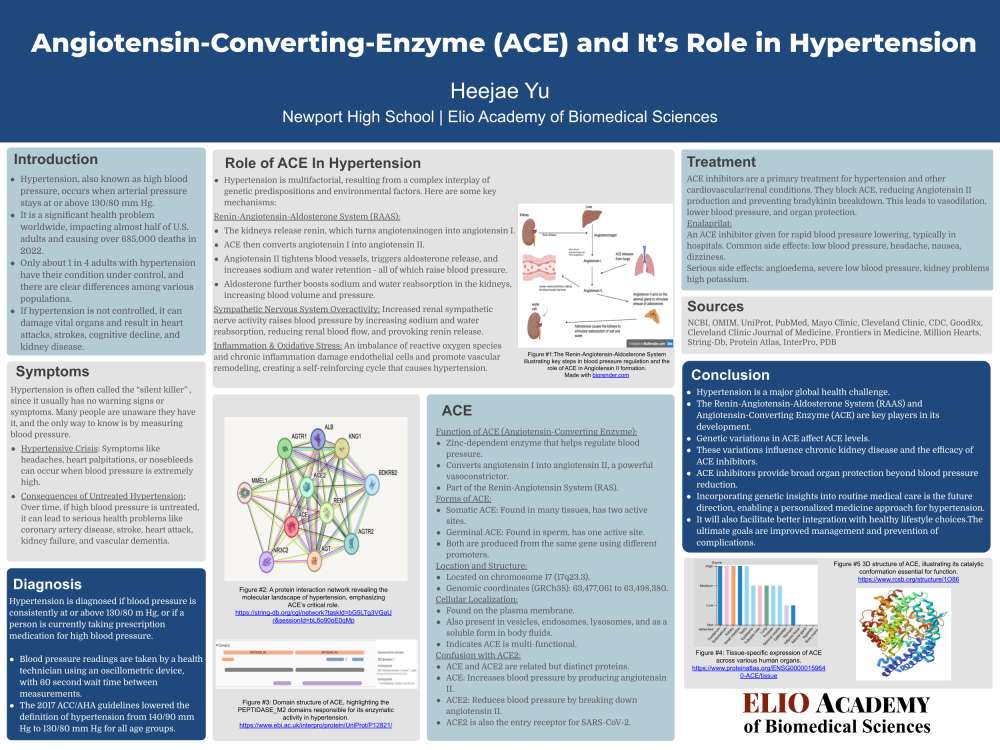
This project dives deeper into the Angiotensin-Converting Enzyme and its role in the mechanism of hypertension. Hypertension, also known as high blood pressure, is characterized by consistently elevated blood pressure against the artery walls. It is a global health crisis, impacting nearly half of the US adults and causing 685,000 deaths in 2022. In the Renin-Angiotensin-Aldosterone System, ACE has the role of converting angiotensin I into angiotensin II, which triggers high blood pressure.
This poster further describes the structure and function of ACE, and how it can be decelerated through ACE inhibitors, which are a primary treatment for hypertension. They block ACE, reducing angiotensin II production. Looking ahead, the future of hypertension treatment is leaning towards a more personalized approach. The method of incorporating advanced genetic insights into individual patient profiles allows for tailored treatment plans, maximizing the efficiency and minimizing side effects.
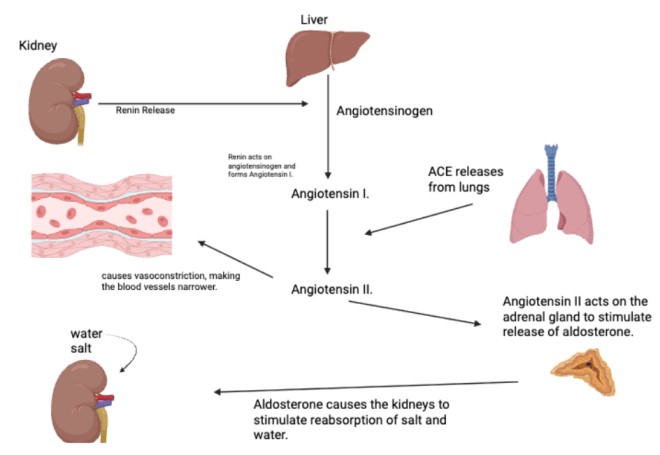
The Renin-Angiotensin-Aldosterone System (RAAS) illustrating key steps in blood pressure regulation and the role of ACE in Angiotensin II formation.
(Figure representation created by the author: Heejae Yu)
Video Presentation
Impact Statement

Heejae Yu
My name is Heejae Yu, and I am a sophomore at Newport High School. I joined this camp to build on my experiences related to biomedical science, and also cooperate with experts of this field. During the two-week biomedical research camp, I explored the genetic and molecular mechanisms of hypertension, focusing primarily on the role of Angiotensin-Converting Enzyme (ACE). This experience gave me a deeper understanding of how genetics and molecular biology play a role in modern medicine. The program strengthened my interest in biomedical science and also prepared me for future researches through literature reviews and collaborative discussions.
Student Reflection
By: Heejae Yu. The opinions expressed here are the views of the writer and do not necessarily reflect the views and opinions of Elio Academy.