Asthma: The Role of ORMDL3 and GSDMB in Inflammation
By: Henry Yu (Amador Valley High School)
Summary
This project examines the roles of the genes ORMDL3 and GSDMB in inflammation in asthma, a chronic inflammatory disease that affects the airways. The research explores how the ORMDL3 gene disrupts sphingolipid metabolism by regulating the SPT enzyme, and how its overexpression leads to ER stress and inflammation. Additionally, the GSDMB gene is involved in controlling cell death in tissues in the airways and lungs, and when overactive, it contributes to airway hyperresponsiveness, a hallmark of asthma.
Current treatments include short-term relief with inhalers, as well as long-term management with medications like leukotriene modifiers. While effective in managing symptoms, these treatments do not target the underlying genetic causes. Future research may lead to personalized medicine, including gene-targeted or isoform-specific therapies that can block the harmful effects of ORMDL3 and GSDMB. Although promising, such approaches may face challenges like cost, but they offer potential for more precise asthma treatment.
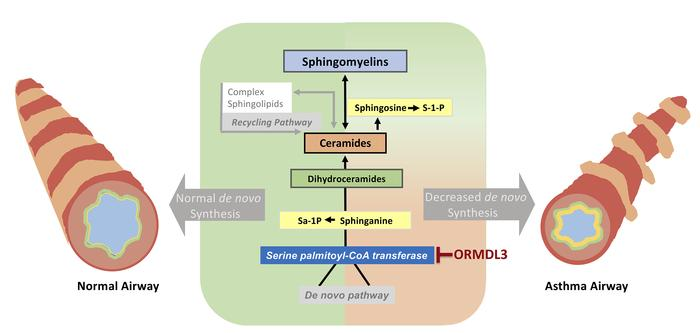
Illustration comparing a healthy airway with an inflamed airway in asthma due to disrupted lipid synthesis (source)
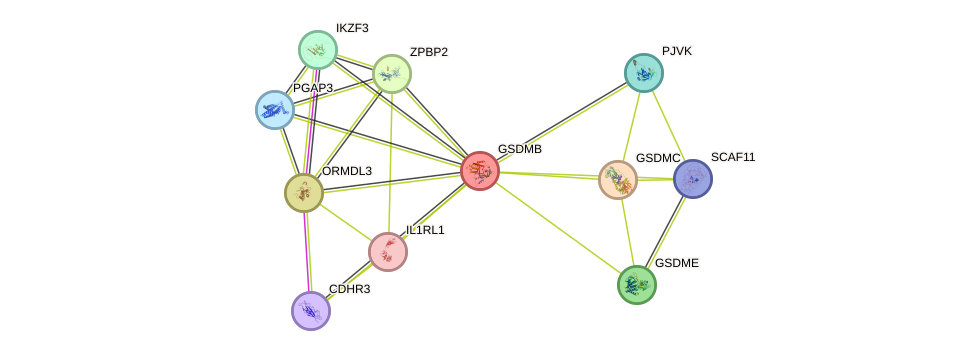
GSDMB protein interaction network showing connections to genes that are involved in inflammation, immune signaling, and airway remodeling relevant to asthma.
Video Presentation
Impact Statement
Henry Yu
My name is Henry Yu, and I am a sophomore at Amador Valley High School. I worked on a project on asthma, focusing specifically on the two genes linked to inflammation and airway dysfunction, and how their overexpression makes asthma symptoms worse. Through this program, I gained the experience to learn how to use different tools and how to transform research into a scientific poster. This opportunity opened my eyes to how powerful genetics is in medicine and gave me more insight into genomics. Additionally, my mentor was supportive throughout the process and offered feedback and helped me stay on track as I developed my research.
Student Reflection
By: Henry Yu. The opinions expressed here are the views of the writer and do not necessarily reflect the views and opinions of Elio Academy.