Applications of Metformin as a Potential Therapeutic Intervention for Huntington’s Disease
By: Ishaan Vaikar (International School of Zug and Luzern)
Summary
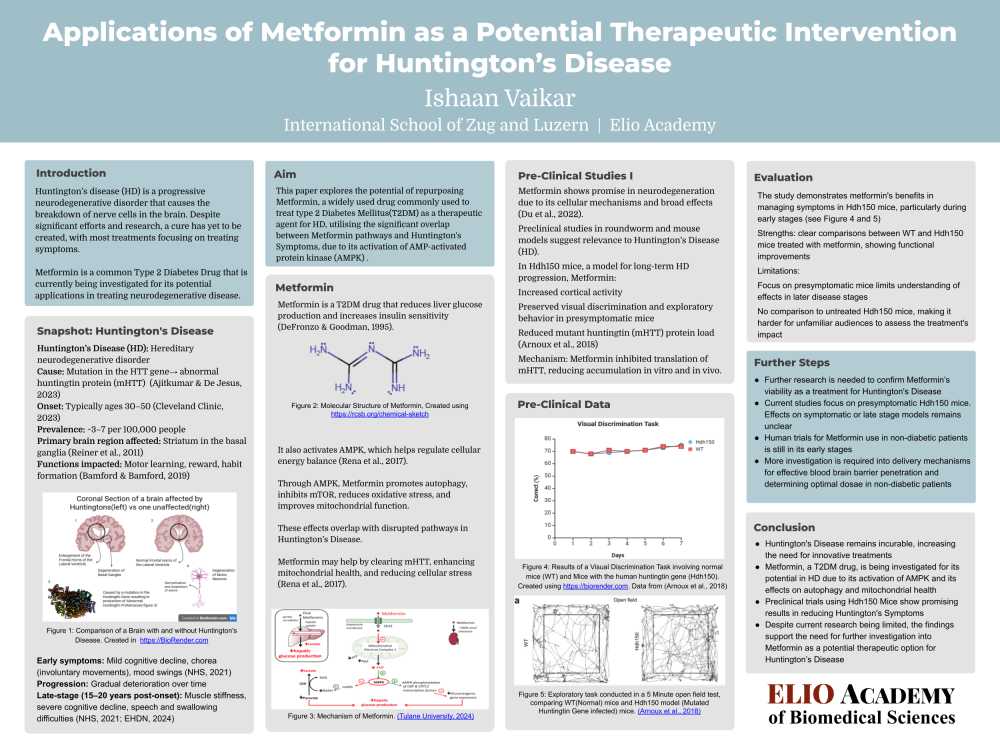
Huntington’s disease (HD) is a progressive neurodegenerative disorder caused by a CAG trinucleotide expansion in the HTT gene. Despite significant efforts and research, a cure has yet to be created, with most treatments focusing on treating symptoms. This paper explores the potential of repurposing Metformin, a widely used drug commonly used to treat type 2 Diabetes Mellitus as a therapeutic agent for HD, utilising the significant overlap between Metformin pathways and Huntington's Symptoms, due to its activation of AMP-activated protein kinase (AMPK). The discussion focuses on common molecular mechanisms, recent clinical trials in the field, and the impacts of targeting metabolic pathways in neurodegenerative disease.
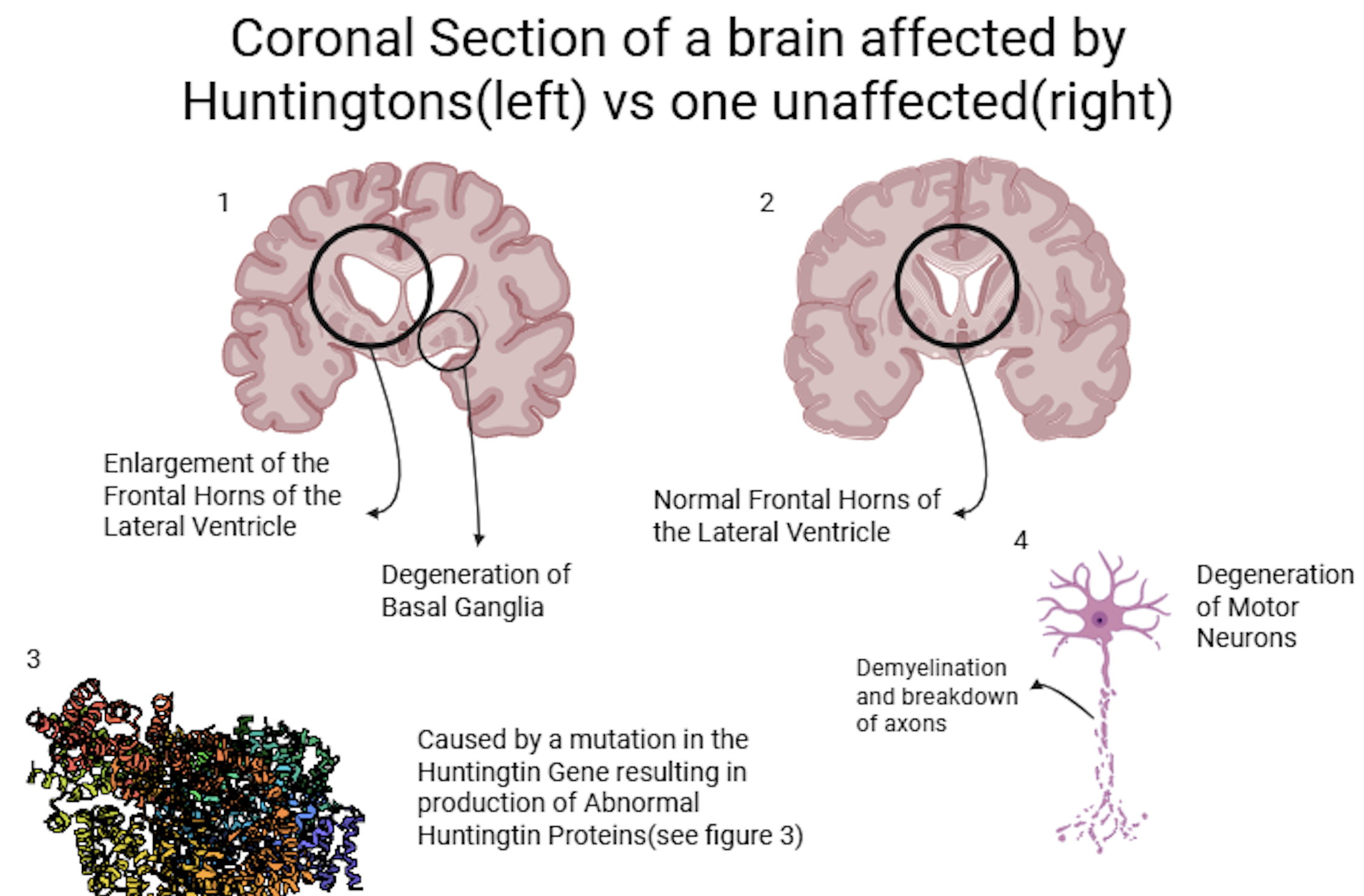
Comparison of a Brain with and without Huntington's Disease.
(Figure representation created by the author: Ishaan Vaikar)
Video Presentation
Impact Statement

Ishaan Vaikar
This experience was quite enlightening, allowing me to learn about a field I might be interested in as well as get the opportunity to conduct a guided research project which will form an extremely useful basis to any future scientific career I might choose to pursue. I was encouraged and motivated to learn and engage with the content, as well as show independent dedication in completing the project, both aspects of this class that will be very useful in the future, regardless of what I should choose to do.
Student Reflection
By: Ishaan Vaikar. The opinions expressed here are the views of the writer and do not necessarily reflect the views and opinions of Elio Academy.