Unraveling Migraines
By: Ishanth Ravuri (Vista Del Lago High School)
Summary
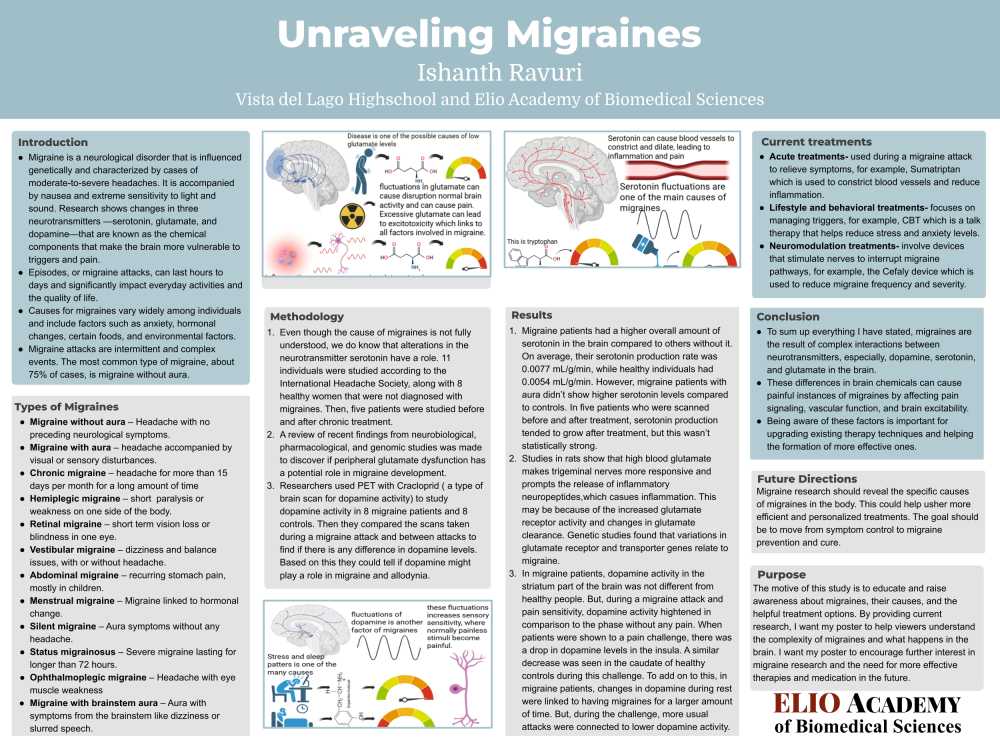
For my project, I researched migraines and how three neurotransmitters—glutamate, dopamine, and serotonin—play a role in causing them. Migraines are strong headaches that can last for hours or even days. They often come with symptoms like nausea, sensitivity to light or sound, and sometimes visual changes called auras. I learned that migraines are not just simple headaches, but they actually involve changes in how the brain works and how neurotransmitters send signals.
Glutamate is a neurotransmitter that makes nerve cells more excited. When there’s too much glutamate in the brain, it can cause overactivity, which might trigger a migraine. Dopamine is connected to how we feel pleasure, but too much or too little can affect blood flow and pain sensitivity during a migraine. Serotonin helps control mood, sleep, and pain. When serotonin levels drop, blood vessels in the brain can swell, which may cause migraine pain.
In the methodology part of my project, I read articles, watched videos, and looked at scientific studies to collect my information. The results showed that each neurotransmitter plays a different but important role in starting or making migraines worse. I also learned about the different types of migraines, such as migraine with aura, without aura, and chronic migraines. Current treatments include pain relievers, triptans (which affect serotonin), and lifestyle changes like better sleep and reducing stress. Some people even use preventive medications or natural remedies.
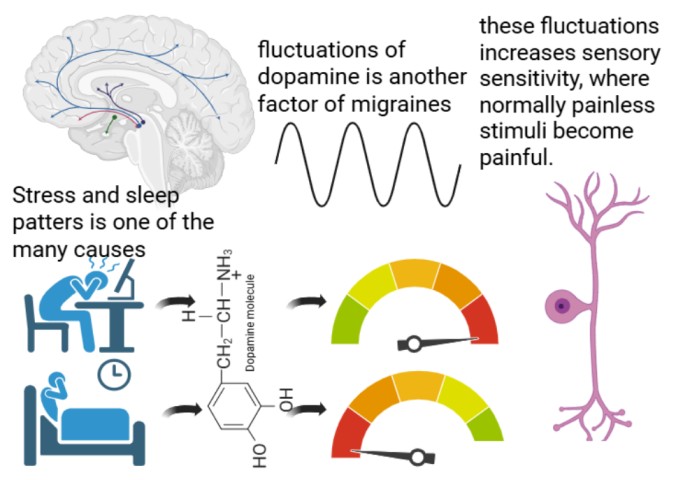
Illustration to show how dopamine affects migraines
(Figure representation created by the author: Ishanth Ravuri)
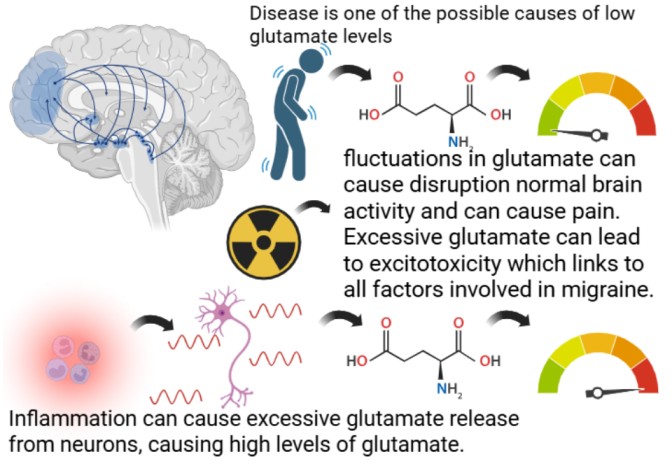
Role of glutamate in migraines
(Figure representation created by the author: Ishanth Ravuri)
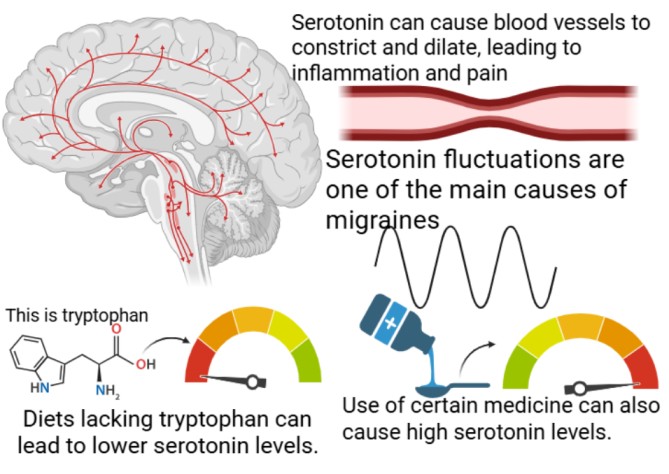
Role of serotonin in migraines
(Figure representation created by the author: Ishanth Ravuri)
Video Presentation
Impact Statement

Ishanth Ravuri
This camp helped me gain a deeper understanding of how the brain and nervous system work. I learned about the structure and function of neurons, how they communicate through both electrical and chemical signals, and how different regions of the brain control various functions, such as movement, memory, emotion, and decision-making. The camp introduced me to topics such as migraines, brain development, and common neurological disorders like epilepsy, Parkinson’s disease, and Alzheimer’s. The camp covered many interesting topics, including the biology of learning and memory, as well as how stress and mental health affect brain function. We even studied common neurological and psychiatric disorders such as epilepsy and depression, and learned about current treatments and research. Even though the camp was virtual, it included videos that gave us a better understanding of the brain and its functions. Overall, the camp not only expanded my scientific knowledge but also inspired me to consider a future in the medical field.
Student Reflection
By: Ishanth Ravuri. The opinions expressed here are the views of the writer and do not necessarily reflect the views and opinions of Elio Academy.