Alzheimer's Disease: An Overview
By: Jaden Chan (Vista del Lago High School)
Summary
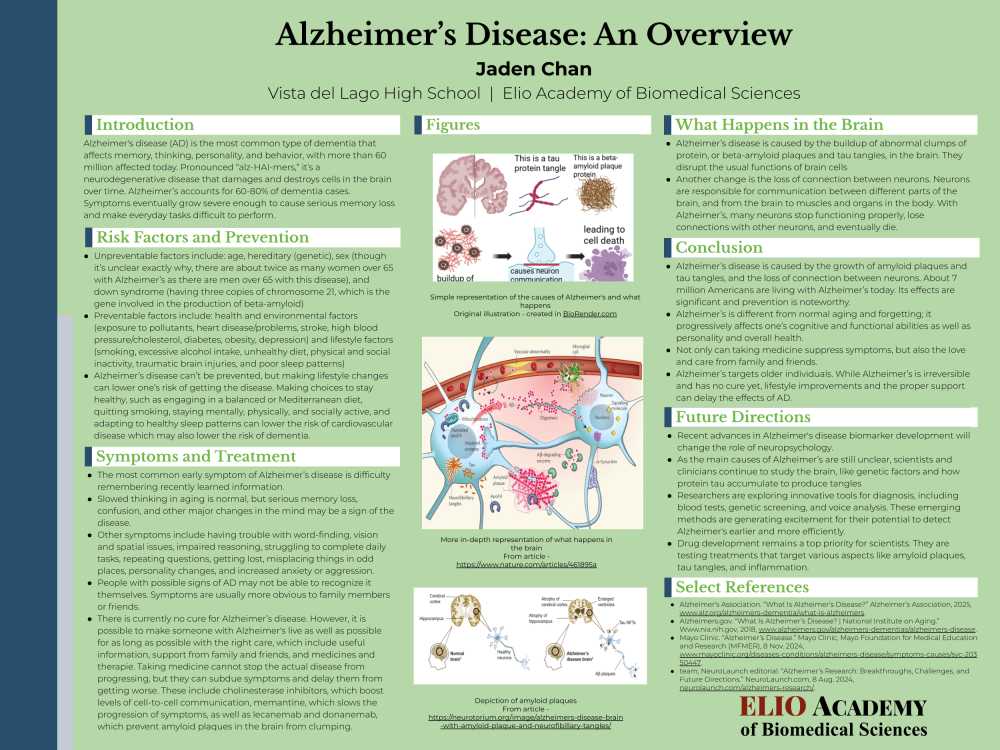
Alzheimer’s disease is a progressive neurodegenerative disorder and the leading cause of dementia worldwide, affecting over 60 million people, including approximately 7 million Americans. It gradually impairs memory, thinking, personality, and behavior—often first noticed by family and close friends rather than the individual themselves. The disease is caused by changes in the brain involving beta-amyloid plaques and tau tangles that disrupt communication between neurons and eventually cause cell death. These changes reduce brain functionality and lead to a steady cognitive decline that worsens over time.
While certain risk factors like age, genetics, sex, and Down syndrome cannot be controlled, lifestyle and environmental influences play a significant role in prevention. Poor diet, lack of exercise, high blood pressure, diabetes, smoking, alcohol use, and sleep deprivation can make you more susceptible to Alzheimer’s. On the other hand, adopting a Mediterranean diet, engaging in regular physical activity, maintaining cardiovascular health, and staying mentally and socially active can slow progression. Though a total cure does not exist yet, treatment options such as cholinesterase inhibitors, memantine, and new medications like lecanemab and donanemab aim to reduce symptoms and enhance quality of life.
Exciting advances in biomarker research, such as genetic testing and blood-based diagnostics, might bring us to earlier and more accurate detection. Researchers are also exploring tools like speech analysis to identify cognitive decline in its earliest stages. As science continues to evolve, the hope is to develop more effective treatments that target the root causes of Alzheimer’s, improve patient outcomes, and help families manage the condition with loving support.
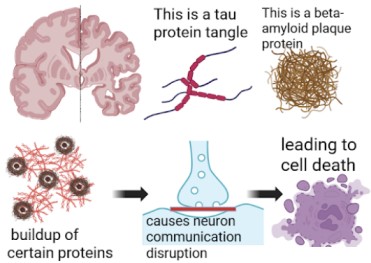
Representation of the causes of Alzheimer's and what happens
(Figure representation created by the author: Jaden Chan)
Video Presentation
Impact Statement

Jaden Chan
Hello, my name is Jaden Chan, and I am a freshman at Vista del Lago High School. Participating in this course deepened my understanding of both the scientific and human aspects of Alzheimer’s disease. I learned what causes AD, its effects, what happens in the brain, and how to prevent it. Additionally, I developed critical skills in analyzing literature, translating complex findings into language that is easy to understand, and informing the risk factors in a way that is meaningful to every kind of audience. The project refined my ability to think like a researcher—asking better questions, evaluating sources sharply, and constructing data-informed conclusions. Beyond technical knowledge, I gained insight into the challenges of communicating science to non-experts—a skill that is crucial for advocacy and public health education. Creating this poster taught me how to visually organize information, emphasize clarity, and create impactful messaging—tools I will carry into future research presentations and academic work. Most importantly, this experience strengthened my motivation to pursue work that connects science and society, highlighting the real-world relevance of neurodegenerative research. Overall, I enjoyed this course very much and hope to learn more about biology in the future.
Student Reflection
By: Jaden Chan. The opinions expressed here are the views of the writer and do not necessarily reflect the views and opinions of Elio Academy.