Genes of Schizophrenia: Role of PRODH
By: Jasmin Huang (Mark Keppel High School)
Summary
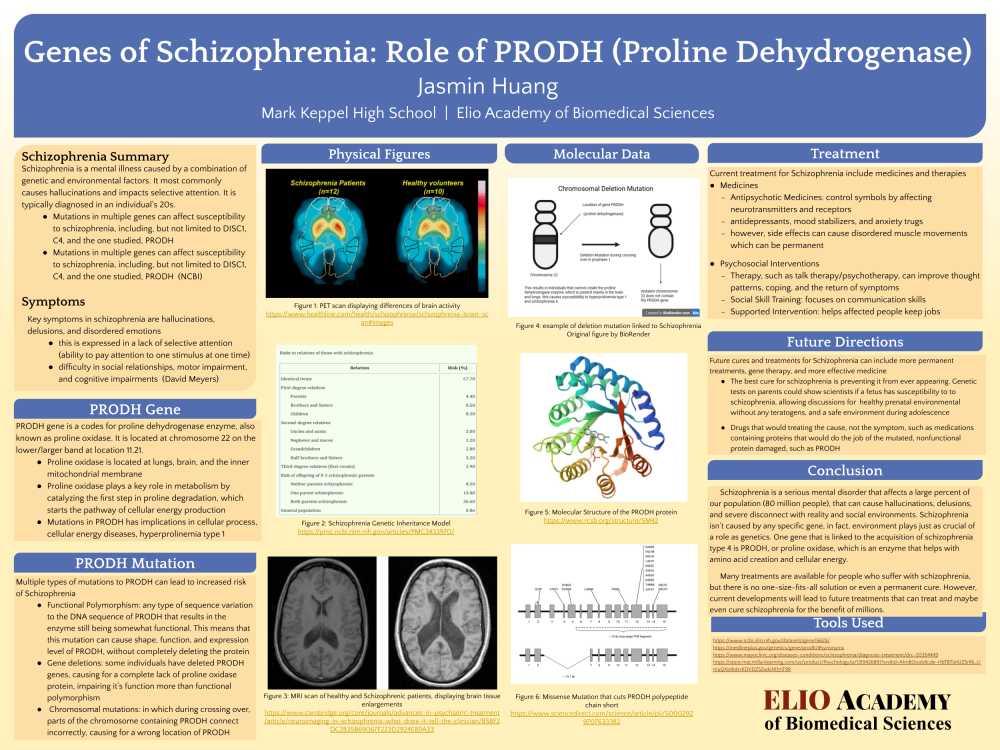
Schizophrenia is a serious mental disorder that effects 1% of the population and is diagnosed around the 20s that causes hallucinations, delusions, and disconnect with reality. It is a genetic disorder that can also be effected by environmental factors. No one gene controls Schizophrenia, but PRODH, or proline dehydrogenase is one of the involved genes, and the one being studied in this poster.
PRODH catalyzes the first step of proline degradation and helps kickstart the cellular metabolic pathway. Mutations in PRODH are linked with Schizophrenia type 4, hyperprolinemia type 1, and cellular energy disorders. Mutations can be anything from missense mutations, nonsense mutations, functional polymorphisms, and chromosome malfunctions in crossing over. Current treatment for Schizophrenia include medicine and therapies, but there is no current cure. Many promising treatments are being developed now that may lead to a cure in the future.
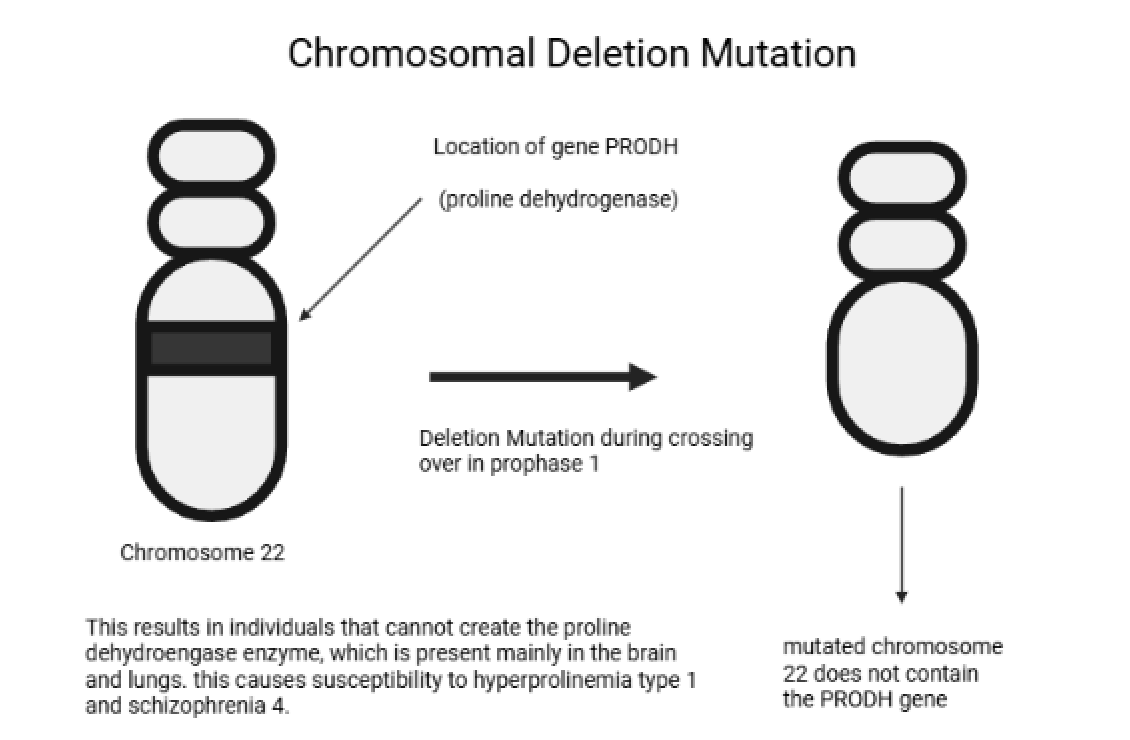
Example of deletion mutation linked to Schizophrenia
(Figure representation created by the author: Jasmin Huang)
Impact Statement
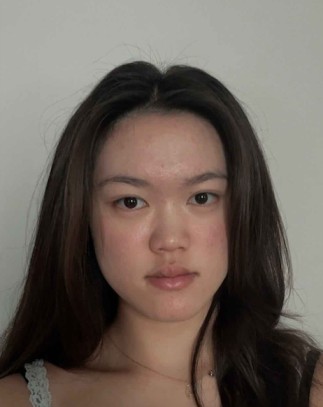
Jasmin Huang
My name is Jasmin Huang and I'm an incoming senior. I've always loved Medical Science and realized in my Freshmen year that I wanted to study gene engineering. I learned a lot from Elio Academy, including how to perfect scientific posters and how to give presentations. The morning lectures were really impactful, as it was very specific in fields I wanted to learn more in, such as data science and medical genetics. The afternoon classes were very helpful as they helped me understand what was taught in the morning. I improved my research skills by now knowing how to use many Biomedical tools that I never would have used before, such as NCBI, Clinical Trials, and BioRender. At the end of the program, we created a poster and gave a presentation. I created mine on the genes that are linked to Schizophrenia.
Student Reflection
By: Jasmin Huang. The opinions expressed here are the views of the writer and do not necessarily reflect the views and opinions of Elio Academy.