A Comparison of Antihypertensive Medications: Lisinopril vs. Hydrochlorothiazide
By: Joanna Zhou (Amador Valley High School)
Summary
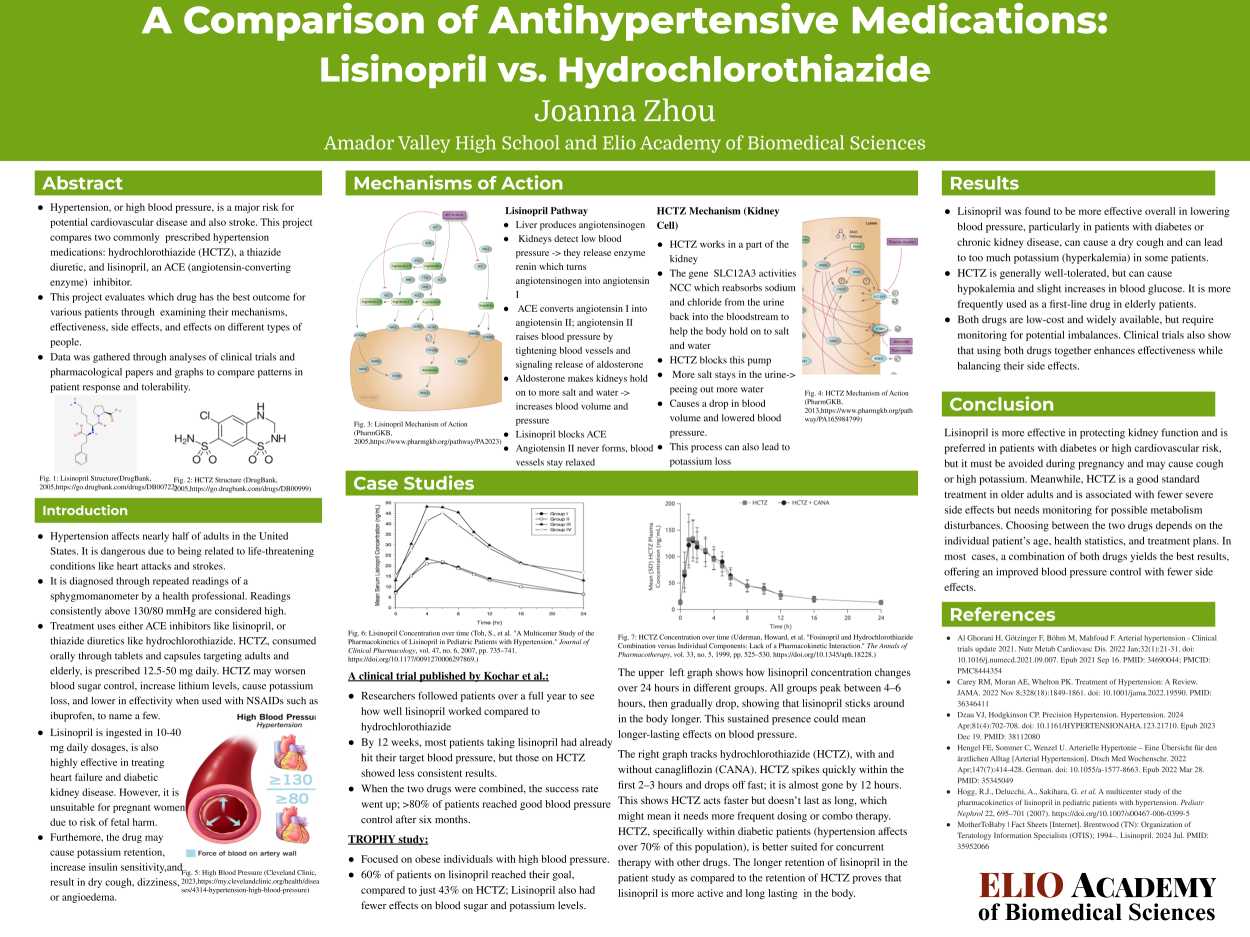
Hypertension, or high blood pressure, is a major risk for potential cardiovascular disease and also stroke. This project compares two antihypertensive medications: hydrochlorothiazide (HCTZ), a thiazide diuretic, and lisinopril, an ACE (angiotensin-converting enzyme) inhibitor. This project evaluates which drug has the best outcome for various patients through the data of mechanisms, effectiveness, side effects, and effects on different types of populations. Data was gathered through analyses of clinical trials and pharmacological papers and graphs to compare patterns in patient response and tolerability.
Video Presentation
Impact Statement

Joanna Zhou
I’m Joanna Zhou, a freshman at Amador Valley High School. Through this project, I explored the pharmacology behind two commonly prescribed antihypertensive medications (lisinopril and hydrochlorothiazide) and how their mechanisms and effectiveness differ due to the patient. It started off as a comparison of blood pressure medications, but eventually taught me to read clinical trial data, understand pharmacokinetic actions, and understand patient responses. It was also my first time utilizing scientific databases like PubMed and understanding how researchers evaluate drugs. Working on this project helped me connect biology with real-world application, and even though I’m just starting my journey in medicine and research, this experience gave me a glimpse into the complexity and excitement of pharmacology.
Student Reflection
By: Joanna Zhou. The opinions expressed here are the views of the writer and do not necessarily reflect the views and opinions of Elio Academy.