Doxorubicin vs Imatinib: Two Drugs, Two Eras, One Goal
By: Khushie Mandhana (Jamnabai Narsee International School)
Summary
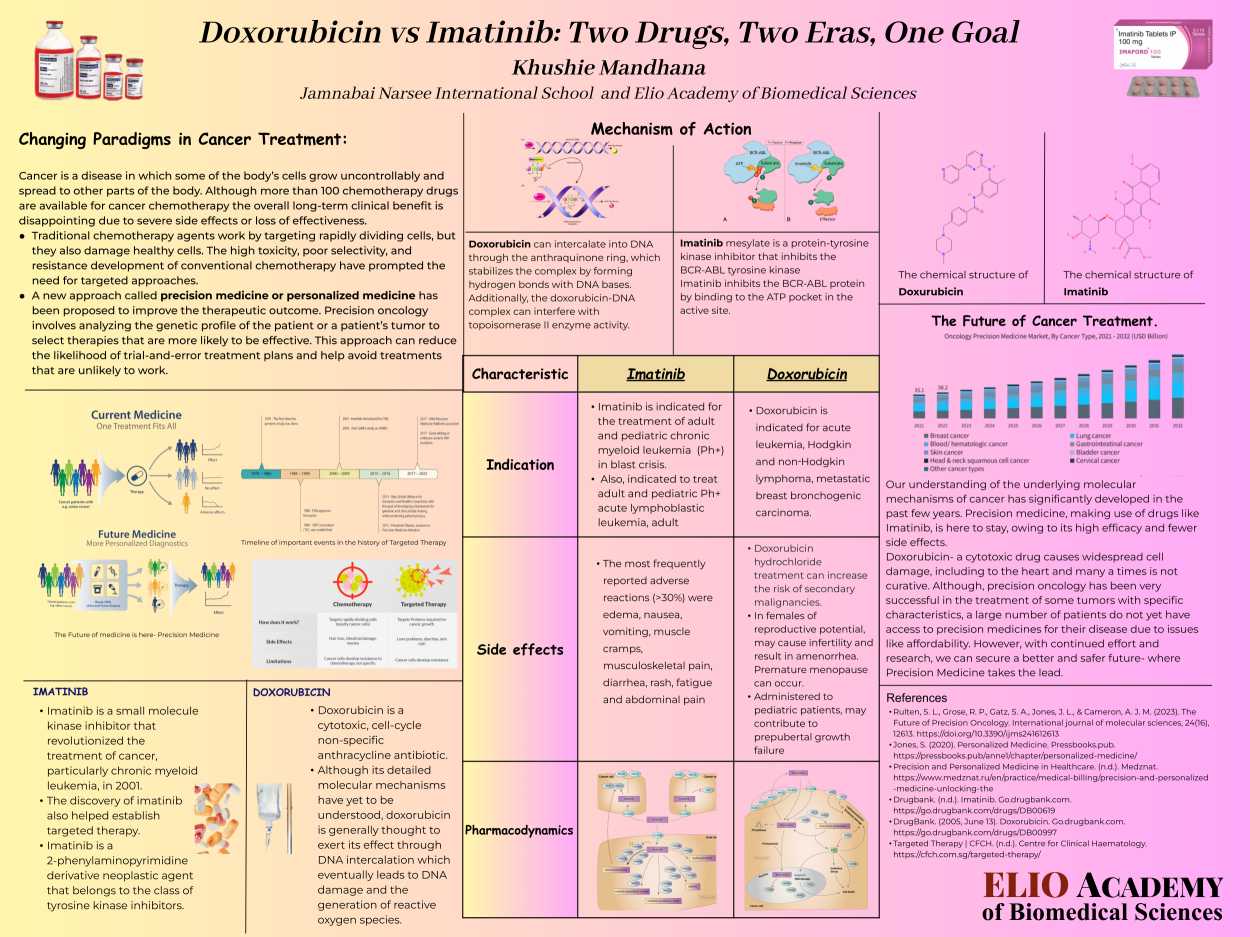
In today's times, cancer can be treated in various ways, be it chemotherapy, immunotherapy or even hormonal therapy. This project sheds light upon the trajectory of precision medicine, and why it is preferred over traditional cytotoxic chemotherapy. Each individual's genetic makeup is unique, and designing a personalized treatment that is tailored according to the needs of the patient, remains to be the cornerstone of targeted therapy. With higher efficacy and fewer side effects, drugs like Imatinib are the prime examples of precision oncology. On the contrary, Doxorubicin, also known as the 'Red Devil,' though efficacious in performing its job, comes with serious side effects such as irreversible heart problems due to its high cardiotoxicity.
The project aims to compare the two types of therapies with the help of these two drugs. Firstly, the mechanism of action greatly differs for both. Doxorubicin, an anthracycline antibiotic, intercalates itself into the DNA sequence, stabilizing the complex by forming hydrogen bonds with DNA bases. It thus interferes with the activity of the topoisomerase II enzyme, in rapidly growing cells. The administration of this drug leads to apoptosis of the healthy fast- growing cells as well, such as the cells in the GI tract, making it extremely destructive. Conversely, Imatinib, a tyrosine kinase inhibitor, ceases the binding of BCR-ABL protein, by binding to the ATP pocket in the active site. This is far less detrimental than the former, as it is precise and only deals with affected cancerous cells. With treatable side effects, such as edema, nausea and muscle cramps this drug has been gaining popularity recently.
Although, there are challenges entailed in the process of scaling precision medicine, such as affordability and lifetime resistance, with continued research and persistent personalization- targeted therapy, projected to be a 272 billion dollar market in the next 7 years, will ensure a secure future with not only a longer life span, but also, a life of quality, and ultimately, cure.
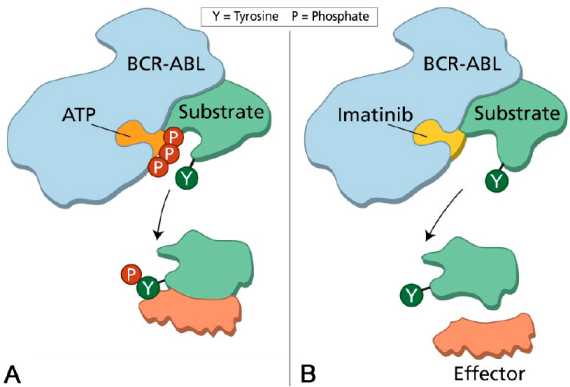
Mechanism of Action in Imatinib
Video Presentation
Impact Statement

Khushie Mandhana
I am Khushie Mandhana, an aspiring medical student from Mumbai, India. The accelerator research program has been a fruitful opportunity for me to broaden my knowledge horizons about science as well as the world. My research was primarily based on precision medicine and I had the opportunity to learn about the biochemistry and practical applications of leading cancer drugs namely, Imatinib and Doxorubicin. The organized structure of the program comprised daily interactive lectures as well as exposure to websites such as NCBI, PubChem, Drugbank. These have helped me gain immense knowledge about research conduction methods as well as about the field of pharmacology, and enriched my analytical and critical thinking skills. Meeting people from different parts of the world helped me incorporate various perspectives and think dynamically about the ever-evolving field of oncology. This program has furthered my interests in pursuing medicine and drawn me closer to the field. Through the guidance of my mentor and support of my fellow students, I thoroughly enjoyed this experience. I now find myself to be more motivated than ever, to conduct more research!
Student Reflection
By: Khushie Mandhana. The opinions expressed here are the views of the writer and do not necessarily reflect the views and opinions of Elio Academy.