A Meta-Analysis Comparing the Use of medical Cannabis to Dietary Alterations as Treatment for Fibromyalgia
By: Lucas Duet (Baldwin High School)
Summary
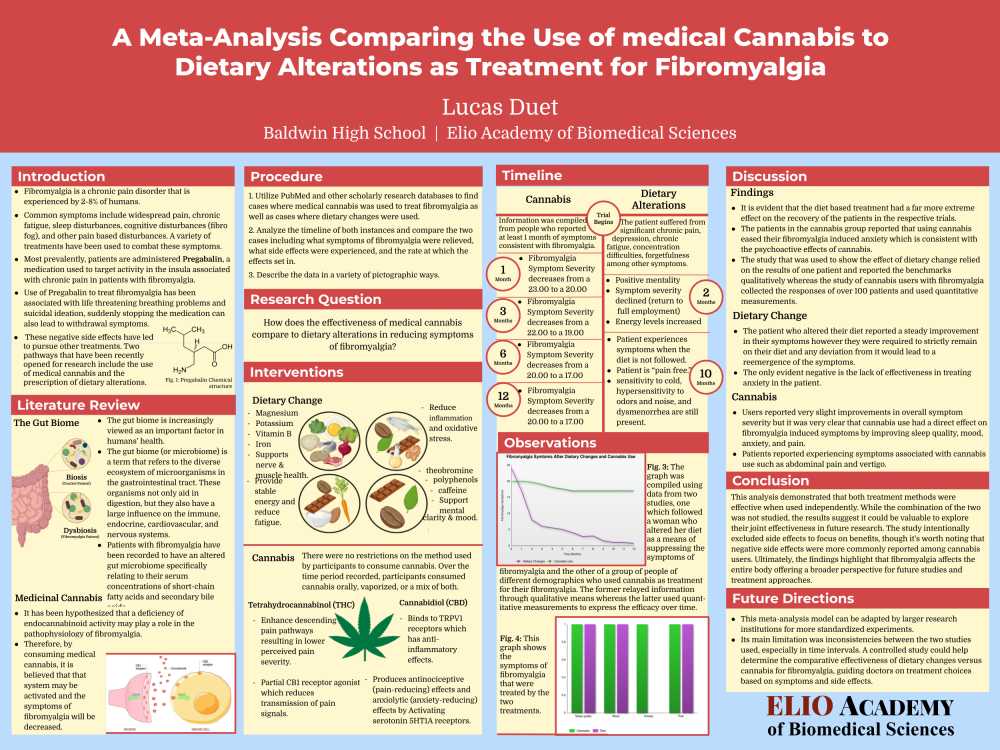
Fibromyalgia is a chronic disorder characterized by widespread pain, fatigue, and other systemic symptoms, affecting approximately 2–8% of the population. The most commonly prescribed pharmaceutical for its treatment is pregabalin, a drug associated with harsh and sometimes dangerous side effects. Due to these concerns, there has been a growing interest in alternative treatment options. This meta-analysis compares two such alternatives: dietary alterations and medical cannabis. Specifically, it analyzes one study that treated a fibromyalgia patient through specific dietary changes and another that examined symptom relief in patients using medical cannabis. This analysis explores the theoretical mechanisms by which both treatments may reduce symptoms and compares their results over a 12-month period using visual data and timeline mapping.
The comparison revealed that dietary intervention produced more immediate and dramatic improvements in fibromyalgia symptoms. However, over time, both the dietary and cannabis-based treatments were found to be effective in reducing symptom severity. The cannabis users, while reporting symptom relief, also experienced side effects that were not reported by the patient who followed the dietary treatment. Conversely, the dietary patient experienced rapid recurrence of symptoms whenever they deviated from their prescribed nutritional plan, suggesting a strong dependency on maintaining the diet consistently.
Some limitations of this study include uneven spacing between symptom reports in the source studies and differences in methodology—one relying on quantitative data, the other on qualitative observations. Despite these challenges, the analysis offers meaningful insights into the relative efficacy of two promising non-pharmaceutical treatments and underscores the need for more controlled research into alternative therapies for fibromyalgia. These findings may inspire further investigations into combined treatment strategies and long-term management approaches that reduce reliance on conventional medications.
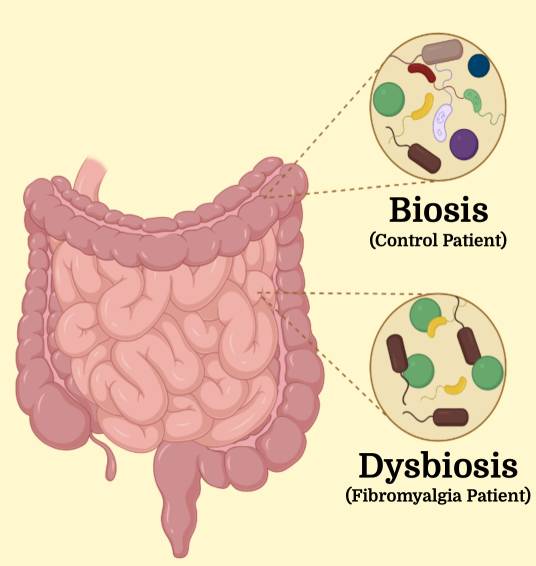
Gut biome of healthy patient versus patient with fibromyalgia.
(Figure representation created by the author: Lucas Duet)
Video Presentation
Impact Statement

Lucas Duet
This program taught me about time management and how to set benchmarks in order to finish projects in a set amount of time. It also opened my eyes to the intricacies of the brain and how many different functions it serves beyond what you learn in a typical classroom setting. Through the lecture and the interactive activities, I improved by interpersonal skills while also learning about how the brain works and interacts with the different parts of the body, lessons that will serve me well as I hope to pursue a career in pharmaceuticals. However, the lessons learned through this program, such as work ethic and organizational skills, are invaluable and would aid me even if i did not aim to pursue a career in the sciences. Overall, this program has more than prepared me for a future in scientific research and has improved my skills and understanding of neuroscience more than I could have imagined.
Student Reflection
By: Lucas Duet. The opinions expressed here are the views of the writer and do not necessarily reflect the views and opinions of Elio Academy.