Exosomal miRNAs as Modulators of Adipose Inflammation & Insulin Signaling in Type 2 Diabetes Mellitus
By: Miyo Macario (Byrne Creek Secondary School)
Summary
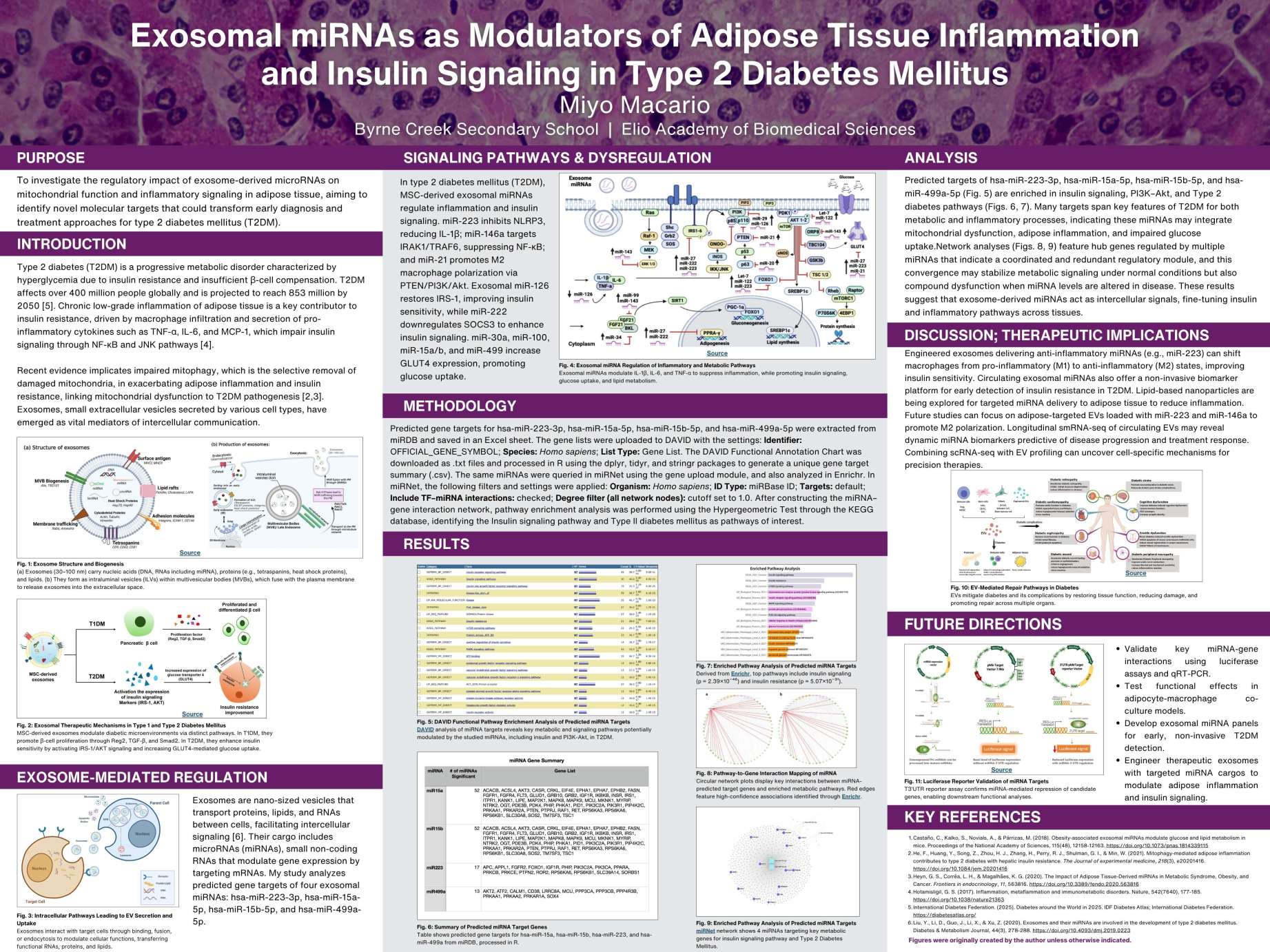
Type 2 diabetes mellitus (T2DM) is a chronic metabolic disorder in which insulin resistance and β-cell dysfunction compromise the regulation of blood glucose levels. Exosome-derived microRNAs (miRNAs), packaged within extracellular vesicles, have emerged as key regulators of intercellular communication in these pathways. This study focuses on four exosomal miRNAs, namely miR-223-3p, miR-15a-5p, miR-15b-5p, and miR-499a-5p, to identify their predicted gene targets and assess their functional roles in T2DM pathophysiology.
Predicted targets were identified through miRDB and analyzed using DAVID, Enrichr, and KEGG pathway enrichment. Network analysis in miRNet revealed that these miRNAs regulate overlapping gene sets enriched in insulin signaling, PI3K–Akt, and inflammatory pathways. Key hub genes emerged as convergence points, indicating a coordinated regulatory module that maintains metabolic homeostasis but becomes dysregulated in disease. Pathways implicated in insulin resistance, T2DM, and mitochondrial dynamics emerged as significantly enriched, pointing to their contribution to the crosstalk between metabolism and inflammation. Importantly, these exosomal miRNAs may integrate signals between adipose tissue inflammation, mitochondrial quality control, and glucose metabolism. Given the known ability of mesenchymal stem cells (MSCs) to release exosomes enriched in regulatory miRNAs and modulate immune responses, MSC-derived exosomes carrying these miRNAs represent a promising therapeutic avenue to restore homeostasis and attenuate T2DM-related inflammation.
Mapping the gene networks and pathways associated with these exosomal miRNAs in T2DM, this study supports the design for future functional studies. Future directions include experimental validation of miRNA–target interactions, engineering MSC-derived exosomes to deliver anti-inflammatory miRNAs and reprogram macrophage phenotypes, and longitudinal profiling of circulating exosomal miRNAs as biomarkers for early T2DM detection.
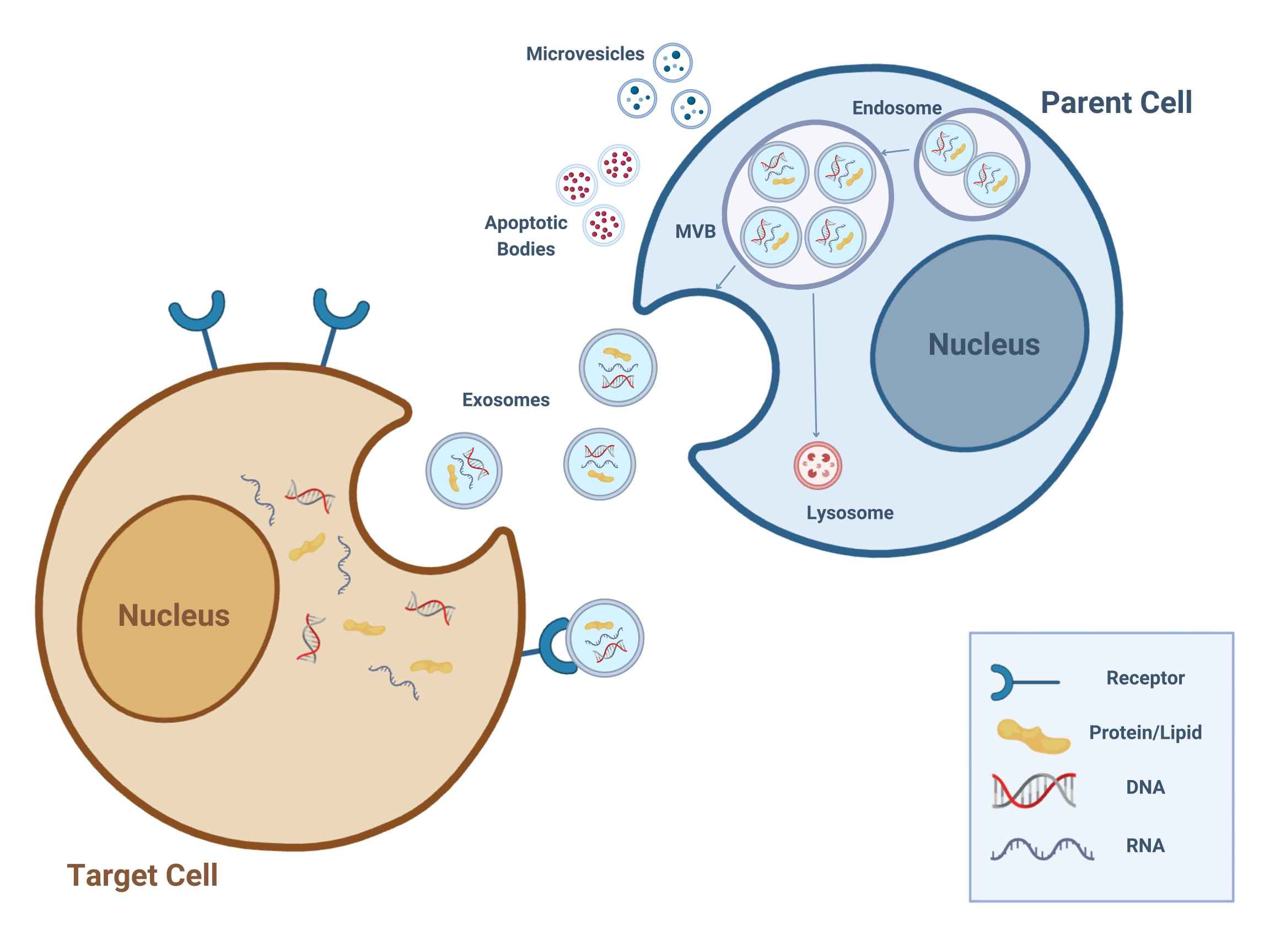
Intracellular Pathways Leading to EV Secretion and Uptake Exosomes interact with target cells through binding, fusion, or endocytosis to modulate cellular functions, transferring functional RNAs, proteins, and lipids.
(Figure representation created by the author: Miyo Macario)
Video Presentation
Impact Statement

Miyo Macario
My name is Miyo Macario, and I am a student in Canada with a passion for understanding the molecular mechanisms of human disease. Through my research, I examined how small extracellular vesicles, particularly exosomal microRNAs, can modulate inflammatory responses in adipose tissue and alter insulin signaling, ultimately influencing the progression of metabolic disorders. My experience through conducting this research has deepened my ability to analyze primary scientific literature, interpret complex molecular pathways, and draw meaningful connections between cellular mechanisms and systemic health outcomes. I gained insight into the intricate relationship between chronic inflammation, metabolic dysregulation, and the potential of exosomal biomarkers as tools for early diagnosis and targeted treatment strategies. Beyond strengthening my skills in data interpretation, critical thinking, and scientific writing, this project deepened my appreciation for the precision and creativity required to design meaningful studies, and inspired my resolve to pursue discoveries that can be transformed into real-world solutions that improve global public health outcomes.
Student Reflection
By: Miyo Macario. The opinions expressed here are the views of the writer and do not necessarily reflect the views and opinions of Elio Academy.