Malaria: Prevalence, Genetics, and Future Direction
By: Omalichachi Chidi Wosu (Strathcona Tweedsmuir )
Summary
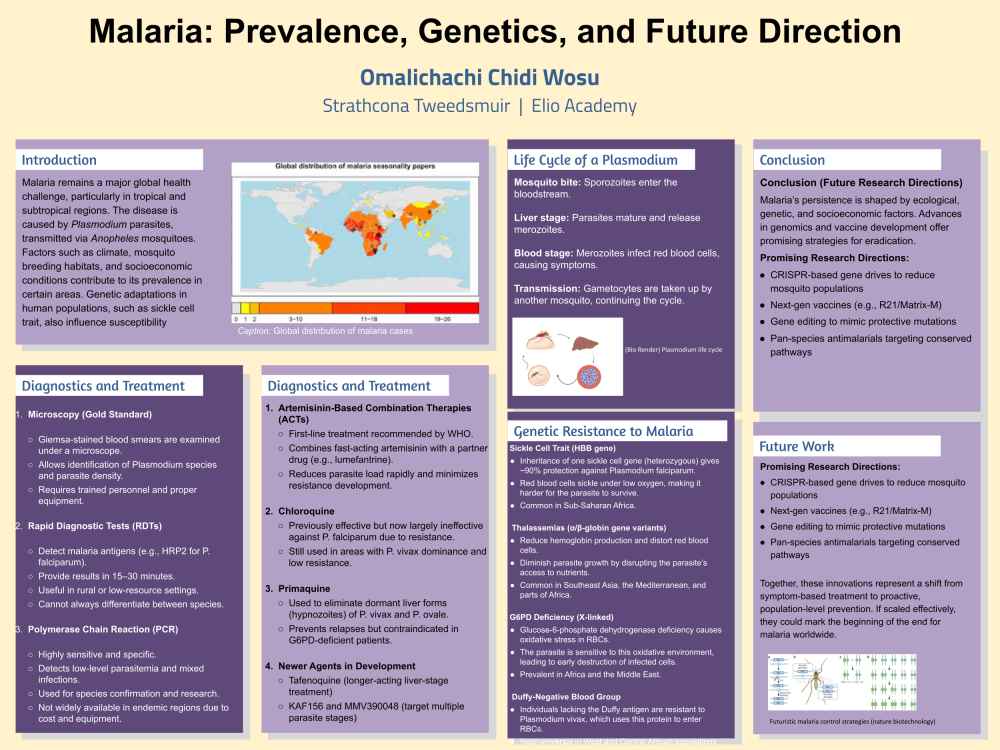
Malaria is a life-threatening disease that kills approximately 600,000 people worldwide each year, primarily in tropical/subtropical regions. Plasmodium parasites transmitted by Anopheles mosquitoes cause it. Malaria is influenced by environmental factors such as the climate and standing water( mosquito breeding sites). The plasmodium life cycle (between a mosquito and a human host) involves 2 main stages. The liver stage( where sporozoites infect hepatocytes) and the blood stage (merozoites infect red blood cells, multiply, and burst them). Through research scientists have discovered that certain genetic traits such as one sickle cell gene,Thalassemias,G6PD deficiency Duffy-negative blood group all individually provide natural protection against the disease.
Due to the deadliness of malaria, accurate and timely diagnostics are a necessity. A popular Diagnostic Method is Micropsy. It involves identifying and counting parasites in blood smears. Secondly, Rapid diagnostic tests, or RDTs, detect parasite antigens in blood. These tests are ideal as they offer fast results in minutes. The Polymerase Chain Reaction (PCR) detects parasites in DNA.
Aside from diagnostics, treatments have been developed to control Malaria. ATCs are the first-line treatment for most malaria cases. Chloroquine is used where P. vivax is sensitive, Pimaquine and tafonquine target dormant liver forms to prevent relapse. Although there are well put-together methods of treating and managing it, there are researchers who are solely focused on its elimination. Key innovations include gene drives, next-gen vaccines, new drugs, and gene editing. These efforts aim to save millions of lives long term.
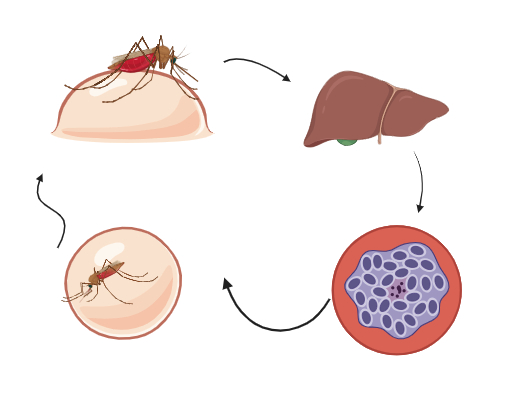
Plasmodium life cycle
(Figure representation created by the author: Omalichachi Chidi Wosu )
Impact Statement
Omalichachi Chidi Wosu
The Elio Academy program thoroughly enriched my knowledge of science. When I first joined,I had a relatively good understanding about the concepts that were taught such as microbiology and genetics. However as the assigned teachers lectured they were able to go into very detailed analysis of the day's subject. After each session I felt satisfied knowing that i had learned a lot of useful information. We didn’t just memorize facts about cancer biology, instead we explored real questions such as why certain mutations lead to specific tumors and how scientists figure out how to target those exact mechanisms for treatment. What was really beneficial for me was how much I grew as a researcher. Prior to this i had minimal research experience and was quite nervous jumping into the program. However the assigned research mentor was very helpful and attentive to everyone's needs and constantly asking for feedback on the class. She didn't just hand me answers, instead I was challenged to think deeper and sharper. In retrospect, the program did more than teach me science: it helped me understand how much I enjoyed biology and research. I am excited for what's ahead. Thanks to Elio academy, I now have the confidence to take on scientific discovery.
Student Reflection
By: Omalichachi Chidi Wosu . The opinions expressed here are the views of the writer and do not necessarily reflect the views and opinions of Elio Academy.