Li-Fraumeni Syndrome and TP53 Mutation Types
By: Regina Huang (Manhasset High School)
Summary
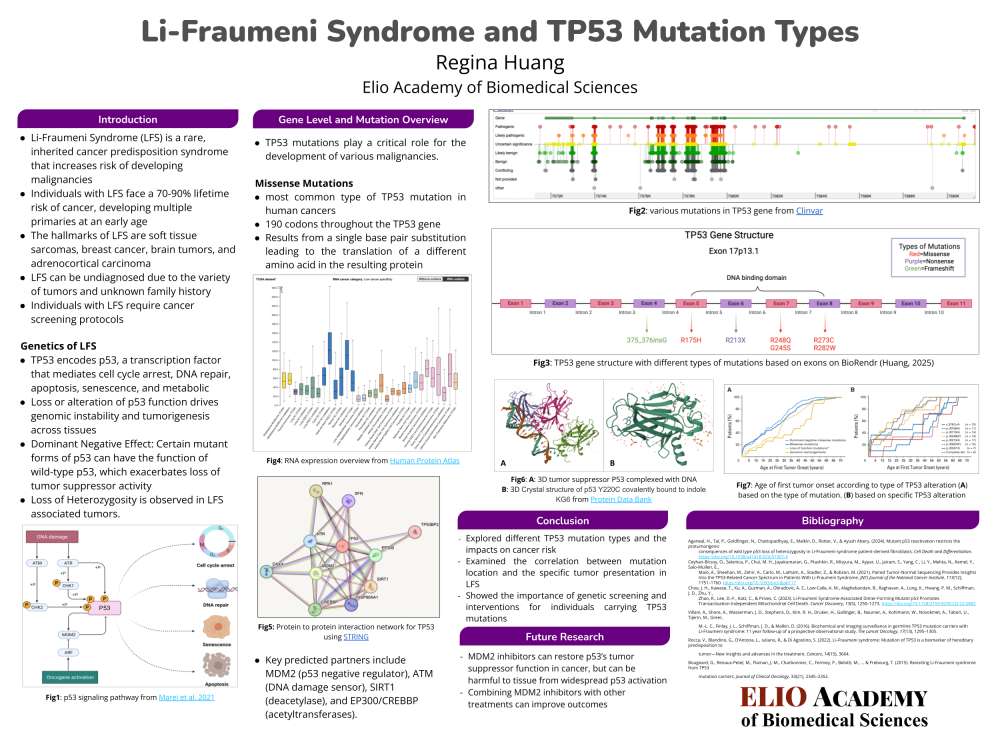
TP53 germline mutations are the main factors causing Li-Fraumeni Syndrome (LFS), an infrequent cancer predisposition pathology. Up to ninety percent of patients with this syndrome develop malignancies within their lives, mostly at an earlier age. The tumor suppressor protein, p53, encoded by TP53, takes part in controlling several critical pathways, including cell-cycle regulation, DNA repair, apoptosis, and genomic stability. However, once it is mutated, it loses this function, allowing abnormal cells to multiply and develop into a tumor. Missense, nonsense and frameshift mutations usually observed among those LFS associated mutations disrupt both structural and functional aspects of p53 particularly targeting its DNA binding domain.
This study will analyze the risks of cancer associated with different types of TP53 mutations in the context of tissue-specific tumor development among individuals diagnosed with LFS. The methodology comprises literature, structural analysis, gene expression databases, and protein interaction models to describe key mutation hotspots: R175H, R248Q, and R273C. Results also prove that type of mutation prescribes tissues in which tumors can develop at an earlier or later stage predominantly within those where dominant-negative missense mutations initiate interference with wild-type p53 visualized proteins highlighted by STRING network and 3D protein model graphics disrupting normal protein interactions and DNA binding.
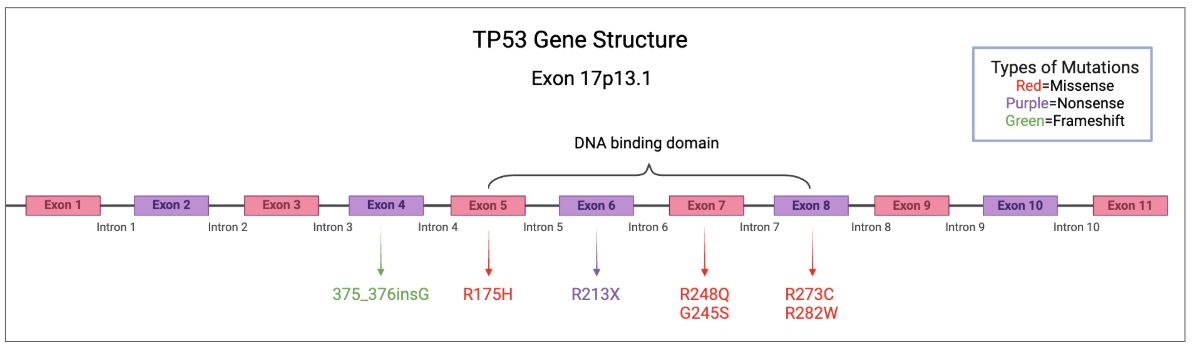
TP53 gene structure with different types of mutations based on exons
(Figure representation created by the author: Regina Huang)
Video Presentation
Impact Statement
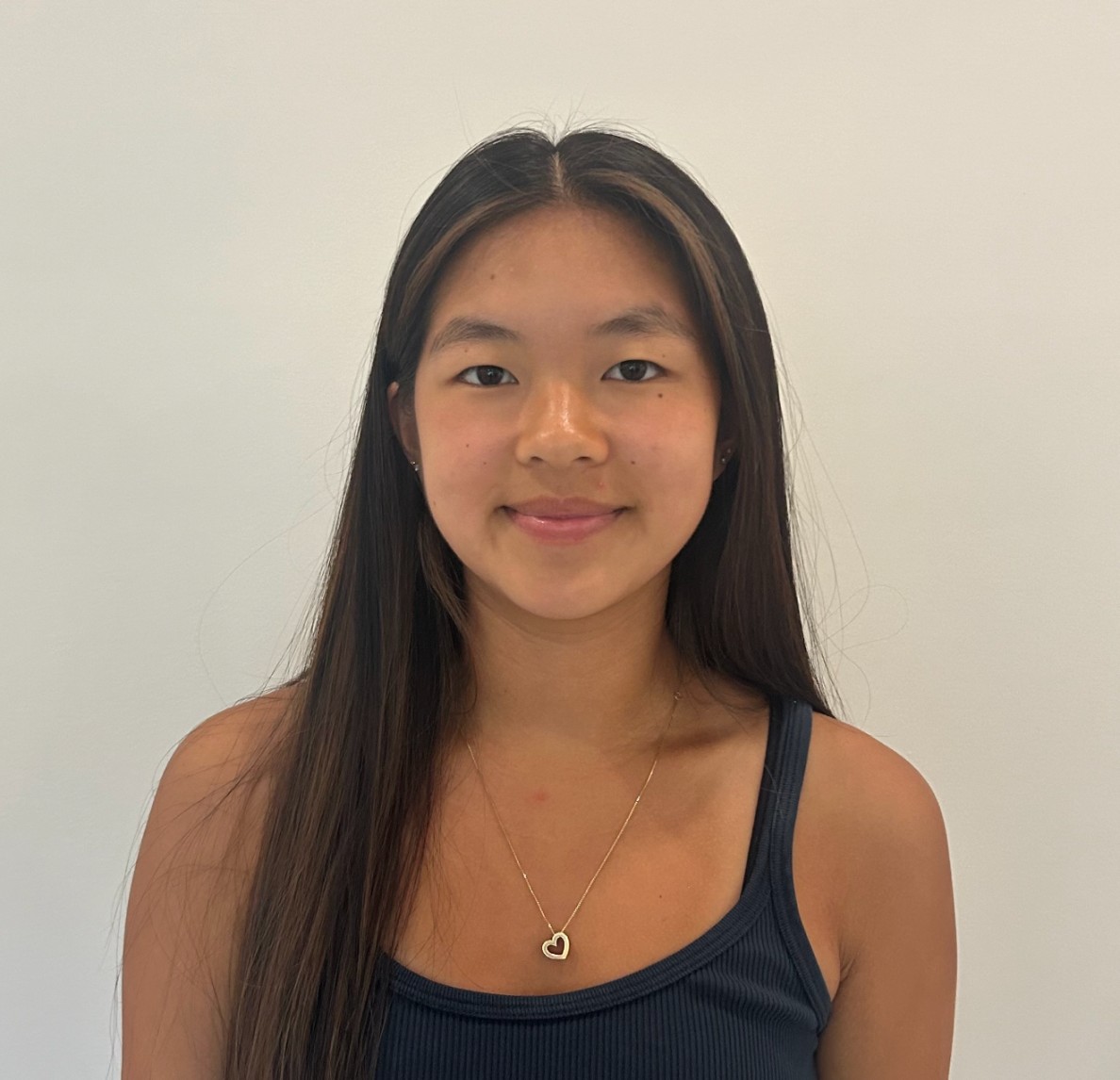
Regina Huang
Through the Elio Academy of Biomedical Sciences, I gained a better understanding of cancer biology, molecular genetics, and bioinformatic tools used for research. I learned how to analyze scientific literature and design my own research project. Additionally, I learned how to use databases such as ClinVar, the Human Protein Atlas, and STRING, which I used to extract and interpret data for my scientific research. This program also strengthened my ability to present scientific ideas clearly through creating my own schematics and figures through BioRendr. Creating models of TP53 mutations and analyzing their structural consequences, which improved my data skills. This experience prepared me for future research endeavors by creating a foundation for research skills such as analyzing literature reviews and how to use databases to interpret data and models. Furthermore, the lectures about genetics, cancer therapy, research tools, and biomedical research was helpful for future research topics that I may be interested in.
Student Reflection
By: Regina Huang. The opinions expressed here are the views of the writer and do not necessarily reflect the views and opinions of Elio Academy.
Science Research Experience
Removal of Methylene Blue Dye Using Agricultural Waste Derived Activated Carbon
Under supervision of Alison Huenger
October 2024-February 2025
Awards: LISC Senior Division Science Fair
Meritorious Award SAAWA Science Fair- Chemistry Honorable Mention
NYSSEF Andromeda Science Fair- Honorable Mention