Antithrombotic Agents in Cardiovascular Disease: A Comparison of Aspirin and Warfarin.
By: Shukri Mohamed (Park View High School)
Summary
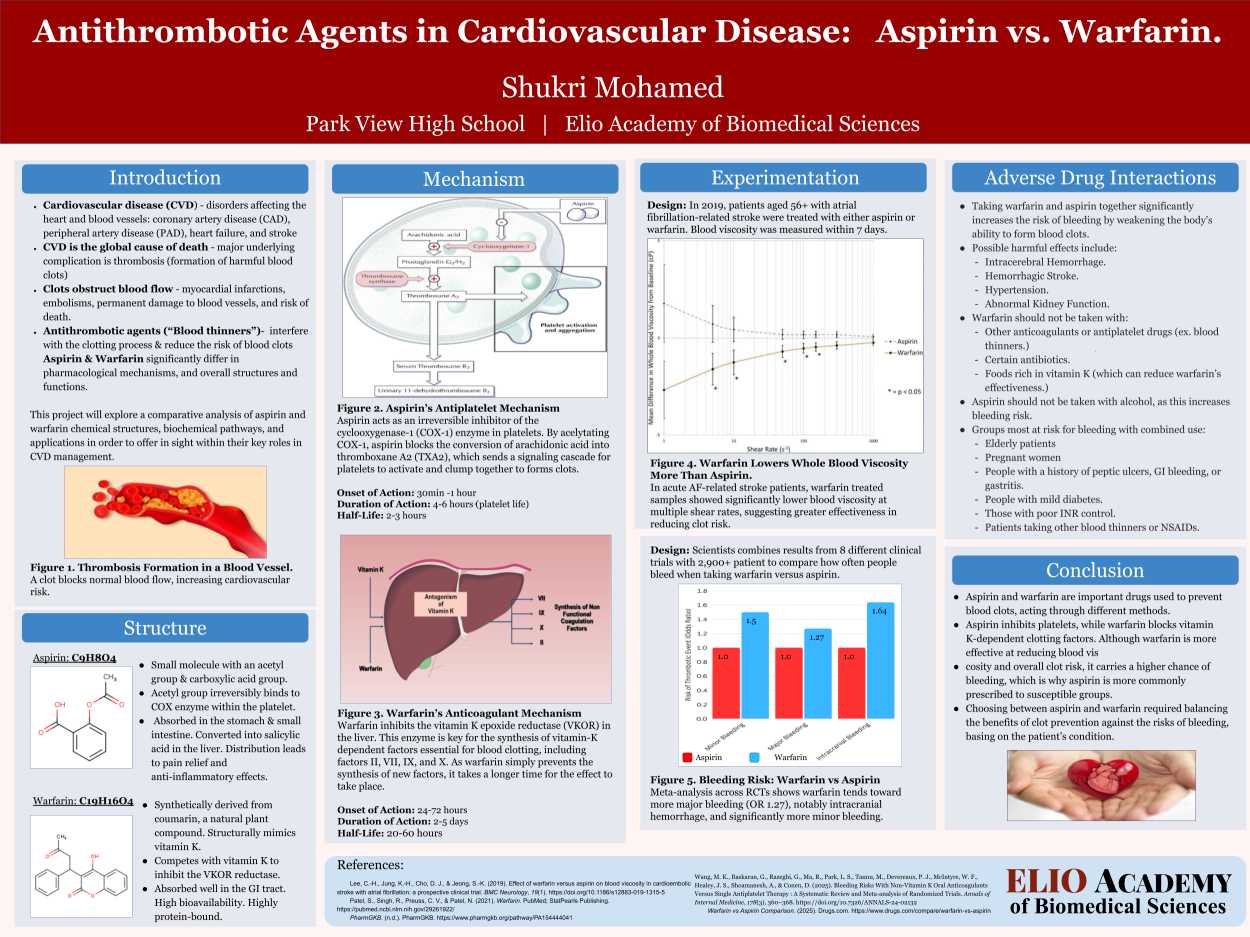
This project will explore the difference between aspirin and warfarin, two commonly used blood thinners, in the context of cardiovascular disease (CVD) management and treatment. CVD remains the leading global cause of death, with disastrous conditions like coronary artery disease, congenital heart disease, and peripheral heart disease posing health risks due to interference with blood flow to the heart, body, and brain. These diseases have serious symptoms and events that can injure and cause death to vulnerable people, one most potent underlying condition being thrombosis, the formation of blood clots. Antithrombotic agents, drugs that work against the formation of blood clots, can be used to act as a type of blood thinner to decrease the risk of blood-clot related events. However, despite their similar purposes, warfarin and aspirin have significantly different structures and subsequent mechanisms.
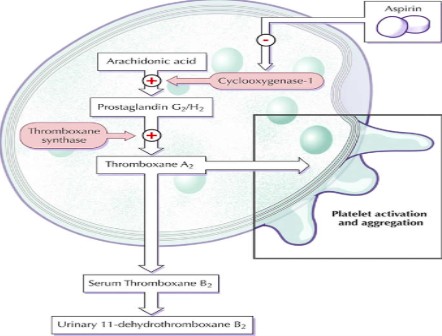
Aspirin, an antiplatelet drug, prevents platelets from clumping together to form blood clots within blood vessels. It does this by inhibiting the cyclooxygenase-1 enzyme responsible for releasing the signal, known as the secretion of thromboxane A2, causing platelets to convene together on a damaged artery, forming a blood clot. However, warfarin, an anticoagulant, interferes with the enzyme-substrate complex of vitamin K epoxide reductase (VKOR) and vitamin K binding to produce the blood clotting factors II, VII, IX, and X. Without the synthesis of these blood clotting factors, the blood's ability to form clots is significantly reduced. Through research thoroughly investigating the specifies of these mechanisms of actions, the structures, and certain experimentations, this research helps clarify why in certain cases aspirin is prescribed over warfarin--- and vice versa.
Video Presentation
Impact Statement

Shukri Mohamed
Going into this program, I was nervous about the content load and prospect of not learning anything due to the sheer amount of information and difficulty of this college class. However, I was sorely mistaken. After the first lesson, I became extremely relieved to find out that there was a structure that allowed me to process information, and ample time to ask questions I was confused on. My teacher explained things very well, from simple anatomy to complex biological processes, such as the Citrus Acid Cycle. I gained the opportunity to learn about new topics, including nutrition and hormones, and expand on topics I was already familiar on, such as glycogenesis. I got to improve my knowledge on pharmacology, which is so helpful to my future pursuit of the health care field.
Student Reflection
By: Shukri Mohamed. The opinions expressed here are the views of the writer and do not necessarily reflect the views and opinions of Elio Academy.