Comparative analysis of Metformin, Liraglutide, and Insulin on Type 2 Diabetes: Using a case study
By: Suhaan Bansal (Primus Public School)
Summary
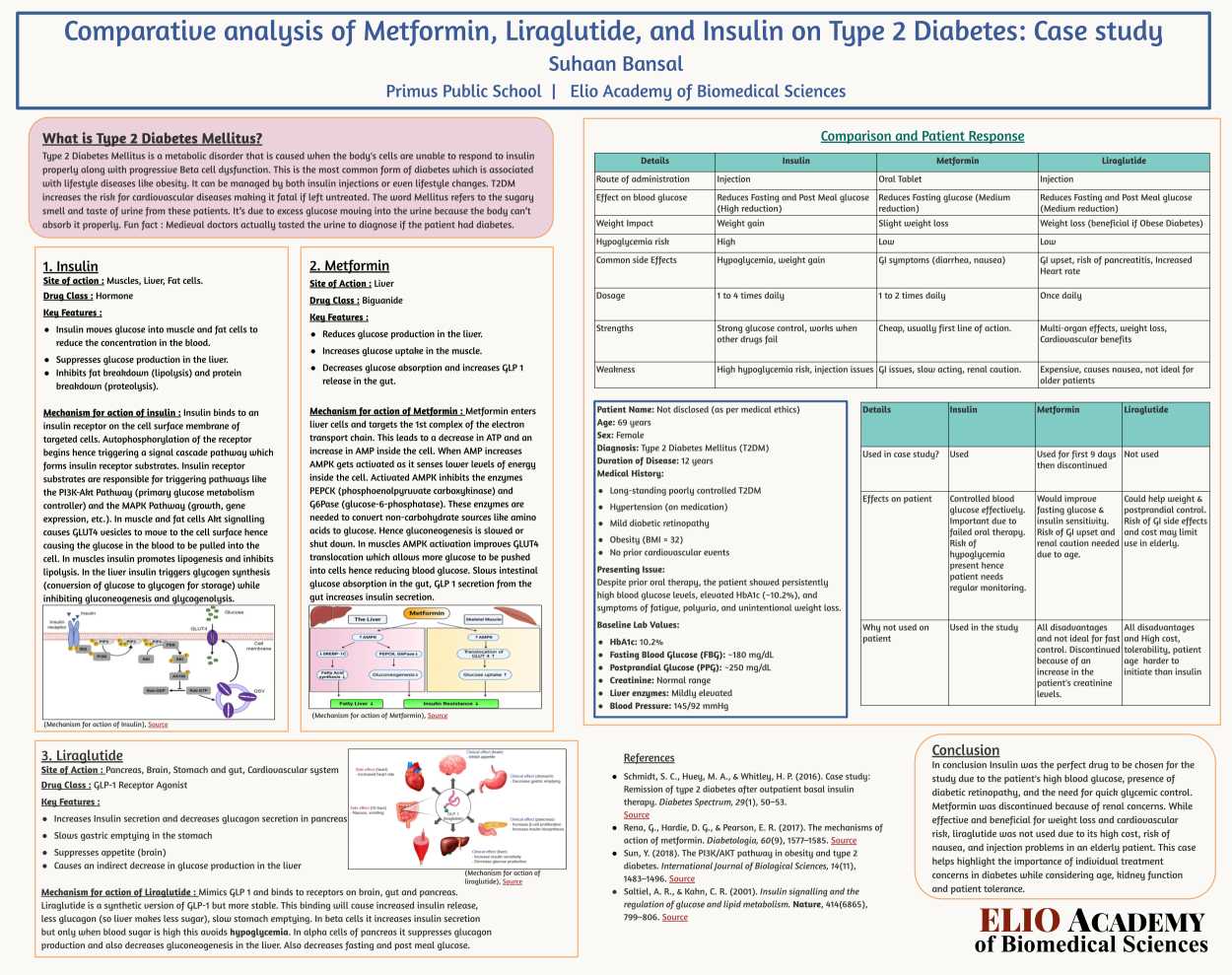
My scientific poster shows how type 2 diabetes is pharmacologically managed through a comparative evaluation of 3 main drugs which are Insulin, Metformin and Liraglutide. The aim is to understand the mechanism of how each drug works in the body, their clinical implications and how suitable each drug is in the management of type 2 diabetes and what may be the different factors considered by doctors before recommending a drug to the patient with the help of a real life study to support my evaluation.
A 69-year-old female with poorly controlled T2DM and multiple existing health conditions was chosen as the clinical subject. Through this case study, the strengths, weaknesses, and clinical relevance of each drug were assessed. Insulin was used in the case study which showed rapid glycemic control (which the patient required due to a longstanding case of T2DM) which made it the optimal drug due to the patient's critical condition and renal function limitations. Metformin, though initially prescribed, was discontinued after 9 days due to rising creatinine levels. Liraglutide was not chosen due to the patient's age group. While it can be beneficial for weight loss and cardiovascular benefits it was not used due to its high cost, risk of gastrointestinal side effects, and the patient’s age.
The project shows the importance of individualized treatment for not only diabetes but for any disease as a doctor has to look at how a drug can affect a specific patient before prescribing it. Even though there are general treatments, these can have side effects on specific patients highlighting the need for a medical professional to prescribe a drug. In my project it shows how the drug was picked after looking at factors such as safety, tolerability, age, organ function, and socio-economic limitations.
Video Presentation
Impact Statement

Suhaan Bansal
Hi my name is Suhaan and my project highlights the importance of personalized medicine in the treatment of Type 2 Diabetes Mellitus. By comparing multiple drugs with a real clinical case my project is able to emphasise how treatment decisions must be made to meet a specific patient's needs considering factors such as age, renal function, cost, and tolerability. This program helped me understand and learn more about critically evaluating drug mechanisms, and understanding the clinical reasoning behind treatment choices. This program really helped me grasp how scientists should present their research visually and verbally. This experience has further prepared me for a future in biological research by improving my analytical thinking, data interpretation skills, and ability to approach clinical questions with a scientific mindset. I am a student from India and because of this I faced timezone issues, managing both school and this program was difficult but my mentors were extremely supportive and helped me push through till the end.
Student Reflection
By: Suhaan Bansal. The opinions expressed here are the views of the writer and do not necessarily reflect the views and opinions of Elio Academy.