Breaking the OCD Cycle: An Analysis of ERP Therapy Through Simulated Exposure
By: Vanshika Jain (Knowledgeum Academy)
Summary
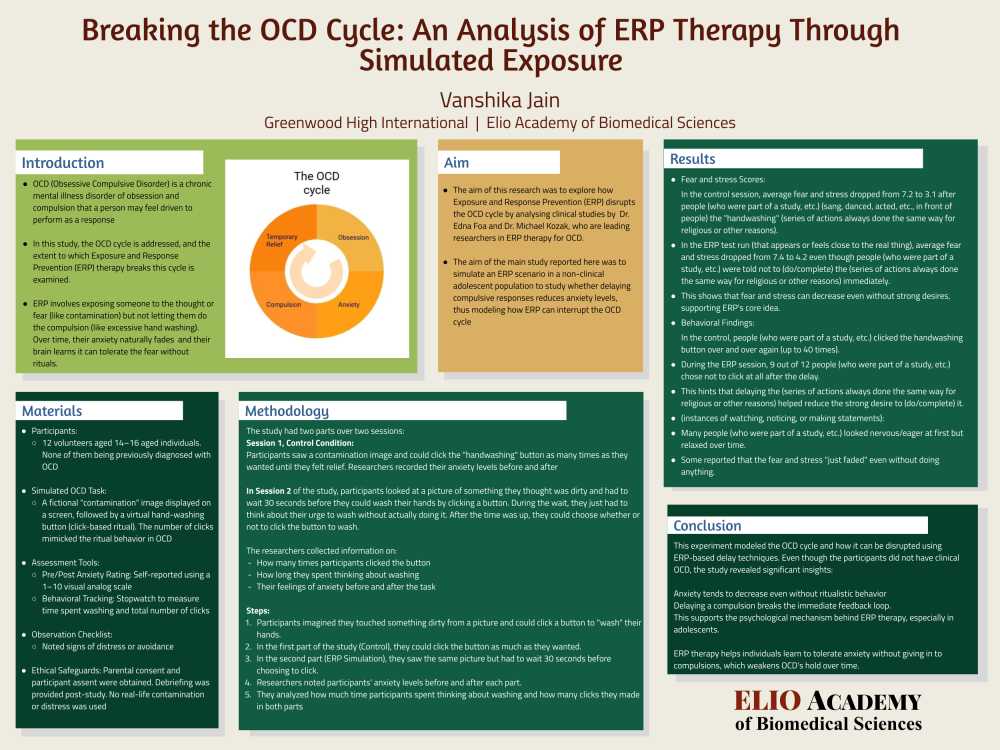
This project is about Obsessive-Compulsive Disorder (or OCD) and how a certain kind of therapy called Exposure and Response Prevention (or ERP) works to break it's cycle. OCD is a mental health condition marked by obsessions and compulsive behaviors that a person feels driven to perform in an attempt to reduce anxiety. The relief gained, however, is momentary and the cycle repeats itself, often leading to dysfunction. Dr. Foa and Dr. Kozak and some other psychologists developed ERP therapy which works with a patient by progressively exposing them to their feared scenarios and preventing the compulsive responses that usually follow. This progressively helps patients reduce anxiety and unlearn the need for rituals, teaching them that distressing thoughts can be allowed to coexist in their mind.
For this project, I focus on a simulation-based experiment that I came across which is usually in the form of ERP therapy simulations for OCD, for teaching purposes. During the simulation, participants viewed an image depicting some form of contamination and were instructed to either enact a compulsive response, such as virtual handwashing, immediately, or postpone it. The findings indicate that not performing the compulsive behavior immediately often decreased anxiety. In fact, 75% of participants opted not to perform the compulsive behavior after a brief period, which supports the principle that core to ERP that anxiety will dissipate over time without being reinforced.
This project deepened my understanding of the psychological and behavioral tendencies of OCD. It also enabled me to improve in critical thinking, ethics, scientific analysis, and compassion-informed dialogue. Above all, the project underscored that OCD is a condition that can be managed and the importance of generating the right information to counter stigma and help motivate proactive treatment.
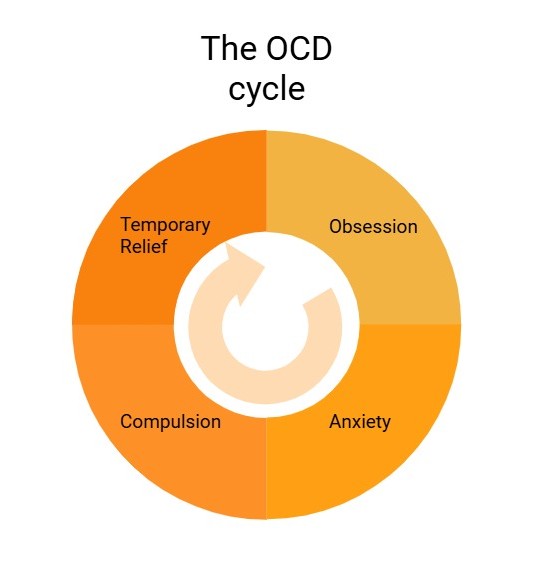
OCD cycle
(Figure representation created by the author: Vanshika Jain)
Impact Statement

Vanshika Jain
Taking part in this research-based project enhanced my understanding of mental health in relation to scientific analysis. Learning about the OCD cycle and Exposure and Response Prevention (ERP) therapy opened my eyes to the application of psychology in treatment. While I did not conduct the actual experiment, my analysis of simulation data helped me improve crucial research skills, including interpretation of results, evaluating behavior, and drawing appropriate conclusions. This project helped me explain tricky scientific ideas using pictures and words to different people. It changed how I think about talking about mental health issues. I became more confident using psychology words and connecting those ideas to things we can see in people's behavior. This experience, most importantly, taught me how to approach a topic in a research manner, supporting claims with credible evidence for accuracy when adapting scholarly work into publicly digestible formats. It taught me the importance of combining empathy with science in crafting meaningful awareness.
Student Reflection
By: Vanshika Jain. The opinions expressed here are the views of the writer and do not necessarily reflect the views and opinions of Elio Academy.