SMARCAD1 in Palmoplantar Keratoderma: Risk Factor for Melanoma Linked to Poor Survival
By: Wenqi Yang and Michael Li

Wenqi (Vicky) Yang
San Juan Hills High SchoolThe extended research program at Elio Academy exposed me to numerous fascinating biomedical concepts and familiarized me with advanced research methods and processes. I had no previous experience in research, but as I concluded my research project, I feel that I’ve gained several skills and experience that will be instrumental to my future.

Michael Li
Langley High SchoolThrough this program, I found sources of research that are a million times more valuable than any source I would be able to find on my own volition. I set my path of future Dermatology/Oncology research by crafting the skills that I learned from this initial project. Lastly, the Elio program helped me decide what specialty of medicine I truly want to do for the future.
Short Report
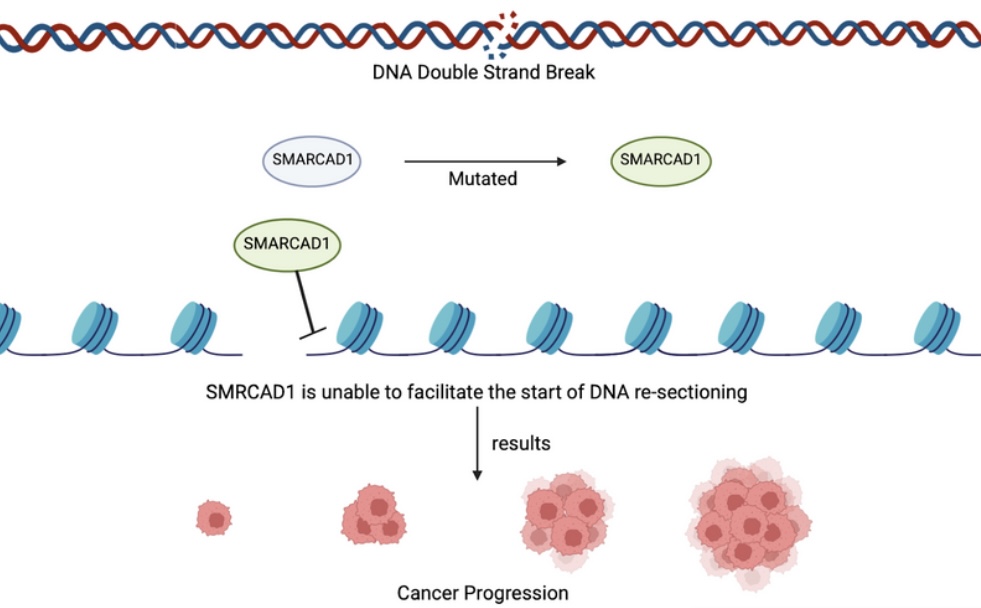
Visualizes the effect of a loss of function SMARCAD1 gene and the resulting tumorigenesis.
(Figure representation created by the authors:Wenqi Yang and Michael Li)
Background
Patients presenting with PPK and MM comorbidities have been observed in academia of past case studies, but no definitive association has been established. An association between SMARCAD1 PPK and cutaneous malignancies is significantly rarer. Researchers observed a link between the PPK disorder known as Huriez syndrome resulting from a loss of function mutation of the SMARCAD1 gene linked to skin cancer risk. This association was more consistent with squamous cell carcinoma, but the development of carcinogenesis paralleled the progression of Marjolin’s ulcer, a rare skin cancer caused by improper wound healing which may result in melanoma.
Problem Statement
The presence of genetic PPK is not currently known to be a statistically significant risk factor for melanoma. Independent case studies have suggested a moderate correlation between PPK and malignant melanoma (MM), as researchers have observed melanoma in patients with genetic disorders characterized by PPK.
Research Hypothesis
Due to the sporadic cases of PPK progression to melanoma which have been reported, we hypothesize that underlying molecular events may drive the PPK progression to melanoma. Thus, on account of these observations, investigations into the link between PPK progression and melanoma were conducted.
Results
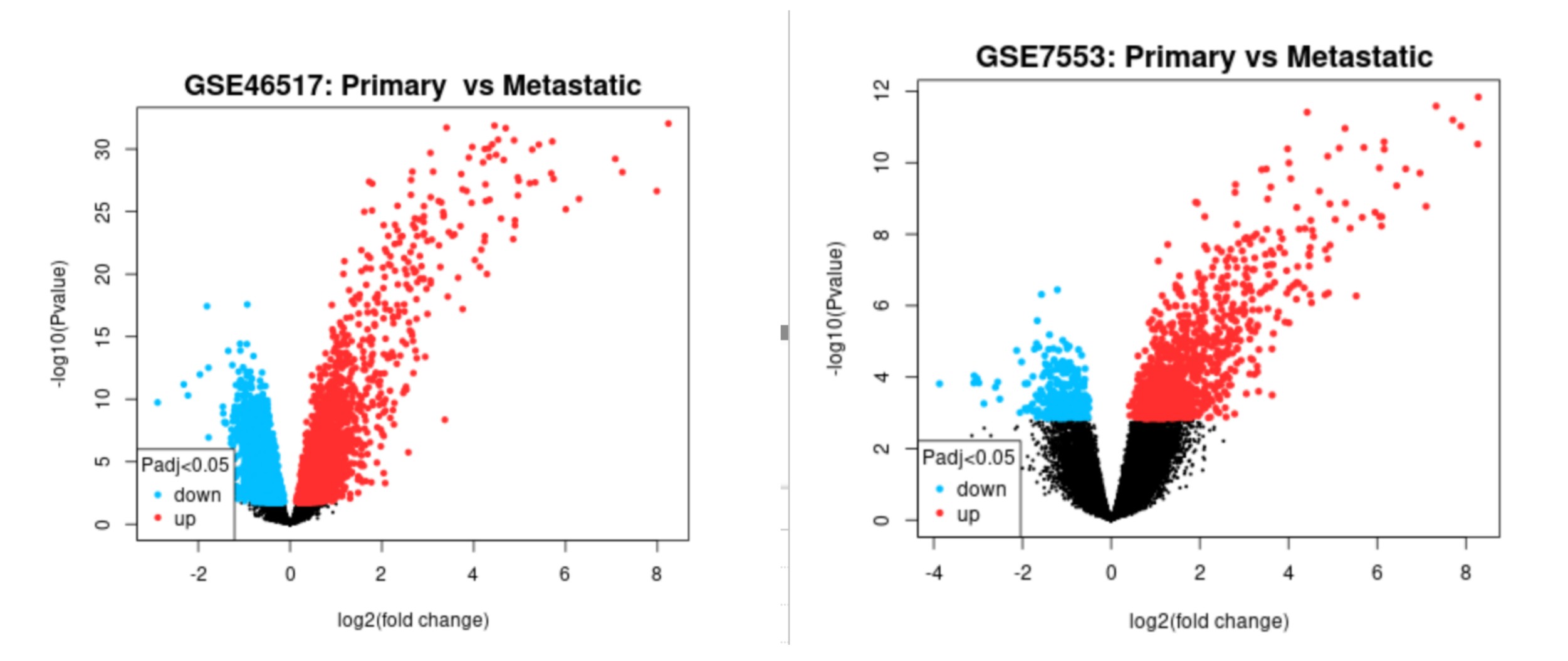
Volcano plot representing Differentially Expressed genes (DEGs). Each red dot represents upregulated genes, each blue dot represents downregulated genes.
(Figure representation created by the authors:Wenqi Yang and Michael Li)
From the DGE analysis, several genes were identified that indicated the highest downregulation in metastatic melanoma compared to primary melanoma. DEGs (differentially expressed genes) are genes that exhibit statistically significant changes in expression levels in response to different experimental conditions, such genes were analyzed further. DEGs were considered statistically significant when the Z value -11 and the P value 0.01 were considered for pathway analysis. The pathway analysis yielded the most important annotation cluster in Fig1. As for Fig2, the role of SMARCAD1 is known to be a tumor suppressor gene in malignant peripheral sheath tumors (MPSTs). Specifically, researchers tested the role of SMARCAD1 tumorigenesis in zebrafish and identified two loss-of-function mutant variations (sa1299 and p403) resulting in the development of MPST. The above variations resulted in DNA double bond repair insufficiencies, or in other terms causing the inability of DNA resectioning ending in tumorigenesis. Therefore, we propose that a loss of function SMARCAD1 variation exists in the context of melanoma progression. We corroborate this finding in Huriez syndrome characterized by PPK and resulting from SMARCAD1 gene dysfunction is markedly similar to Marjolin’s ulcer in disease progression, of which the latter is indicative of cutaneous malignancies including melanoma. Fig3 was obtained by observing that the high expression (n = 49) of the SMARCAD1 is indicative of poor patient prognosis on the Human Protein Atlas. This observation was statistically significant (p value = 0.0099).
Conclusion
This study concludes establishing a preliminary link between SMARCAD1 protein expression and tumor progression linked to lower life expectancy. We deduce that melanoma tumors rely on the SMARCAD1 protein to regulate DNA fork stalling and promote cancer growth. We also conclude that certain genetic PPK disorders — namely Basan and Huvier syndromes — which have a loss of function mutation of the SMARCAD1 gene are at an increased risk of developing cutaneous malignancies including melanoma. Further research into other gene alterations of the skin-specific isoform resulting in PPK should be analyzed for their association with MM. It is also suggested that close monitoring of individuals with PPK disorders resulting from SMARCAD1 gene dysfunctions may produce novel therapies from cutaneous cancers.
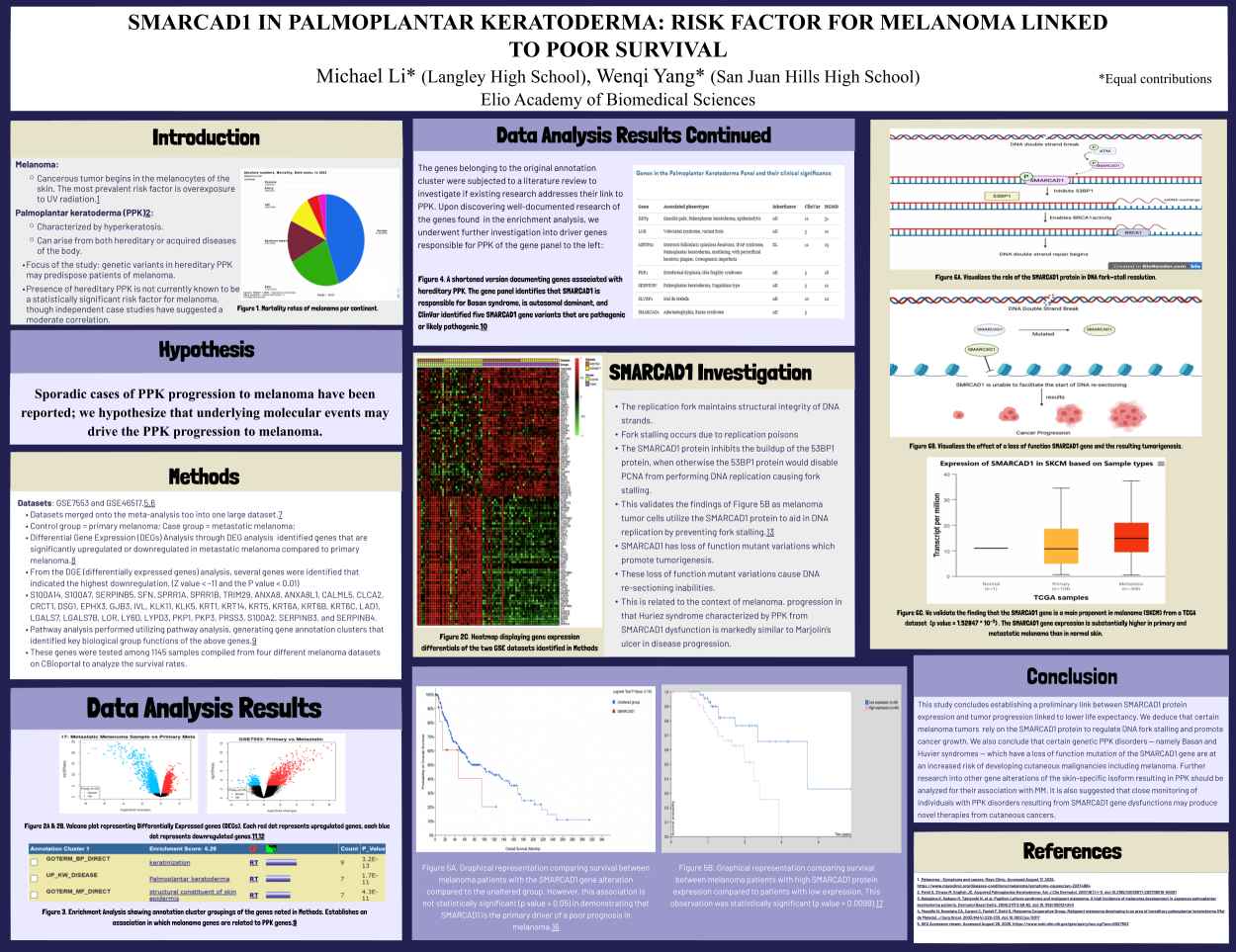
Full Report / White Paper
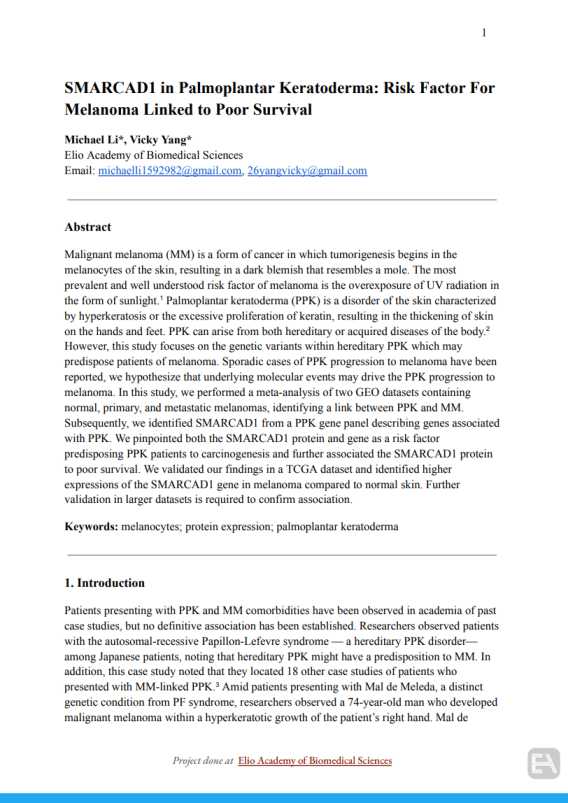
(Click to view the full report)
By: Wenqi Yang and Michael Li. The opinions expressed here are the views of the writer and do not necessarily reflect the views and opinions of Elio Academy.