Defensive Activation Theory
By: Amal Chaudhry (American School of Bahrain)
Summary
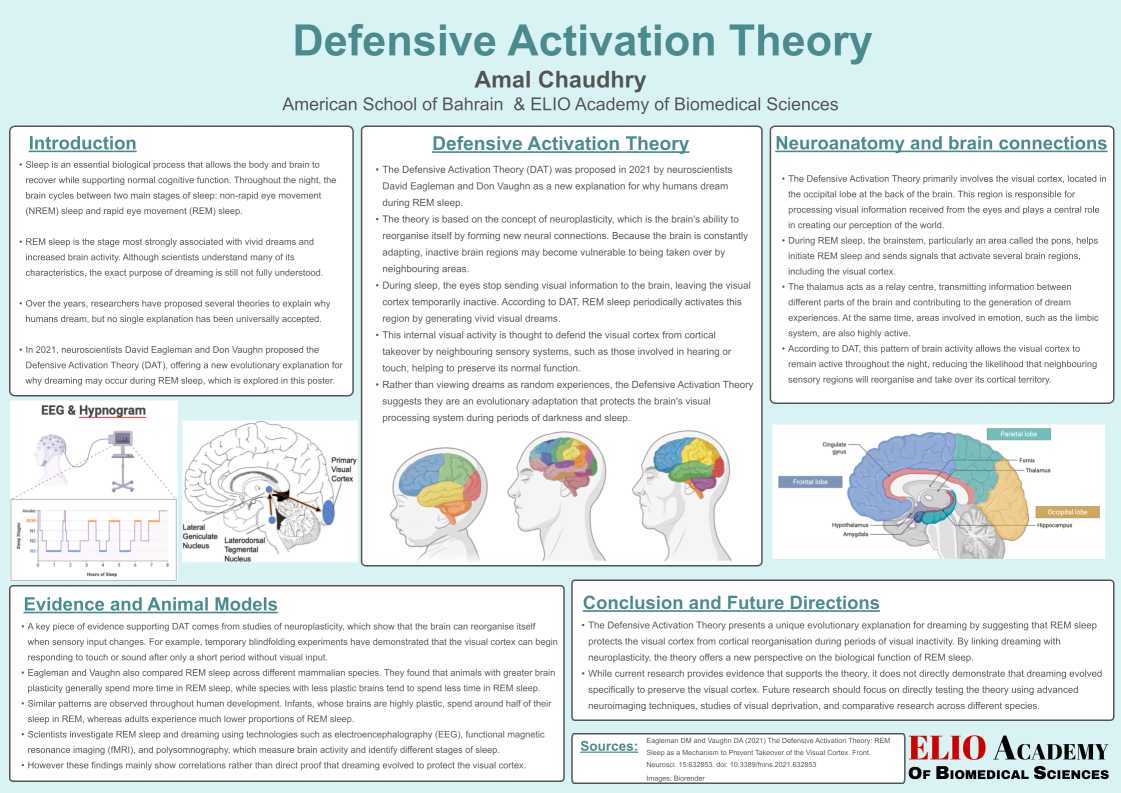
Dreaming has fascinated scientists for centuries, yet its biological purpose remains one of neuroscience's greatest unanswered questions. My project explored the Defensive Activation Theory (DAT), a hypothesis proposed by neuroscientists David Eagleman and Don Vaughn in 2021. DAT proposes that dreaming evolved to protect the brain's visual cortex. During REM sleep, the eyes stop receiving visual input, leaving the visual cortex temporarily inactive. Because the brain is highly adaptable through a process known as neuroplasticity, the theory suggests that neighbouring sensory regions could begin reorganising this unused cortical territory. According to DAT, the vivid visual experiences produced during REM sleep periodically activate the visual cortex, helping to preserve its function throughout the night.
To investigate this hypothesis, I examined the neuroscience behind REM sleep, neuroplasticity, and cortical competition, as well as the brain regions involved, including the visual cortex, pons, thalamus, and limbic system. I also explored the evidence supporting the theory, such as studies demonstrating rapid cortical reorganisation following temporary visual deprivation and comparative research across mammalian species showing that animals with greater brain plasticity generally spend more time in REM sleep. Although these findings support the hypothesis, I also considered its limitations, including the lack of direct experimental evidence and the existence of alternative explanations for dreaming, such as memory consolidation and emotional regulation.
Completing this project strengthened both my understanding of neuroscience and my scientific research skills. I learned how to analyse primary research articles and communicate complex scientific concepts through a research poster and presentation. My project also demonstrated that scientific theories continue to evolve as new evidence and theories emerge. Investigating the Defensive Activation Theory reinforced my interest in neuroscience and gave me an opportunity to learn how to present my findings in a nice way.
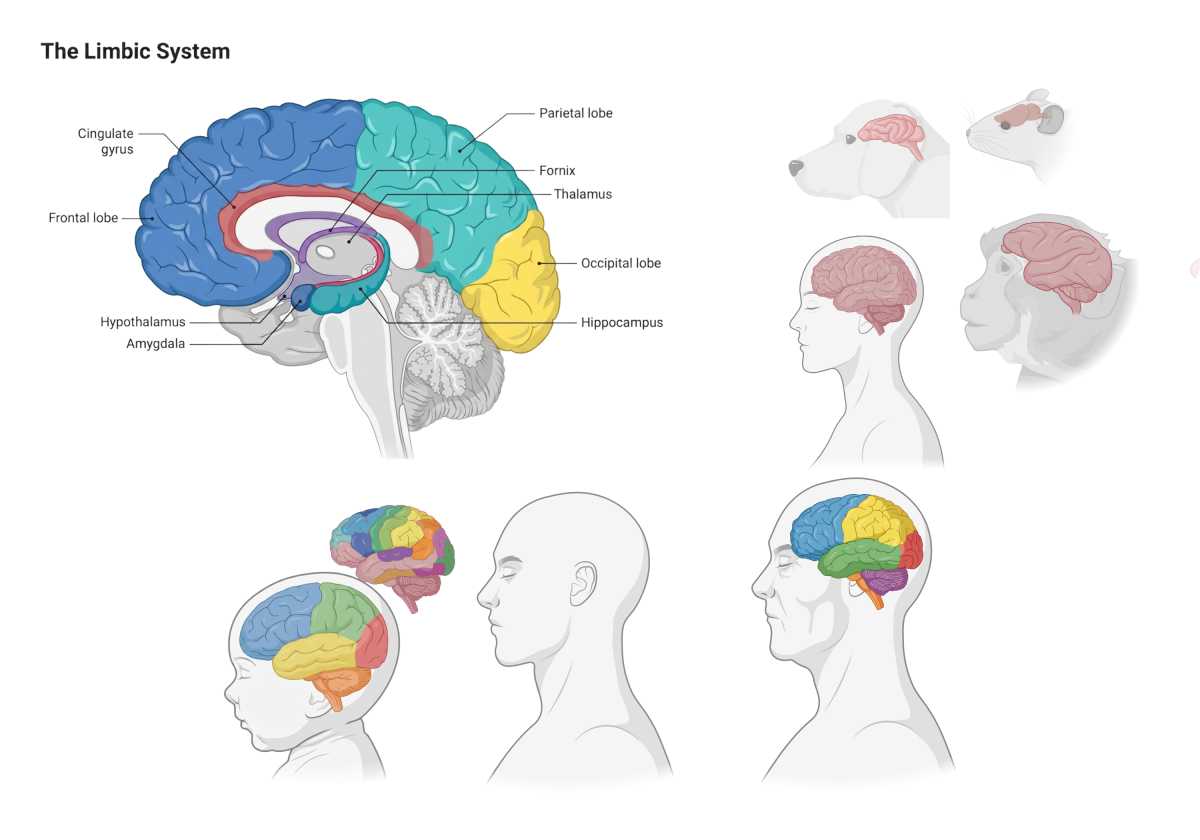
Neuroplasticity over time and Different animal's brains to compare rem sleep
Video Presentation
Impact Statement

Amal Chaudhry
Participating in this neuroscience program gave me a deeper understanding of how the brain is studied. One of the most valuable aspects of the course was learning about the different brain systems and how it can relates to your daily life. Exploring topics such as vision, neuroplasticity, and brain imaging strengthened my understanding of the brain and research. The program also helped me develop practical research and communication skills. I learned how to analyse scientific literature, summarise the complex information, and then present my findings in a clear and structured way. Preparing a research poster and presentation also improved my ability to communicate scientific concepts to another audience while encouraging thinking and scientific questions. Overall, this experience really reinforced my interest in neuroscience research and provided a strong foundation for any future opportunities, particularly in biomedical research and medicine, which are areas I am particularly interested in.
Student Reflection
By: Amal Chaudhry.