BRAF V600E Mutations and the Development of Drug Resistance in Metastatic Melanoma
By: Candice Chen (Leigh High School)
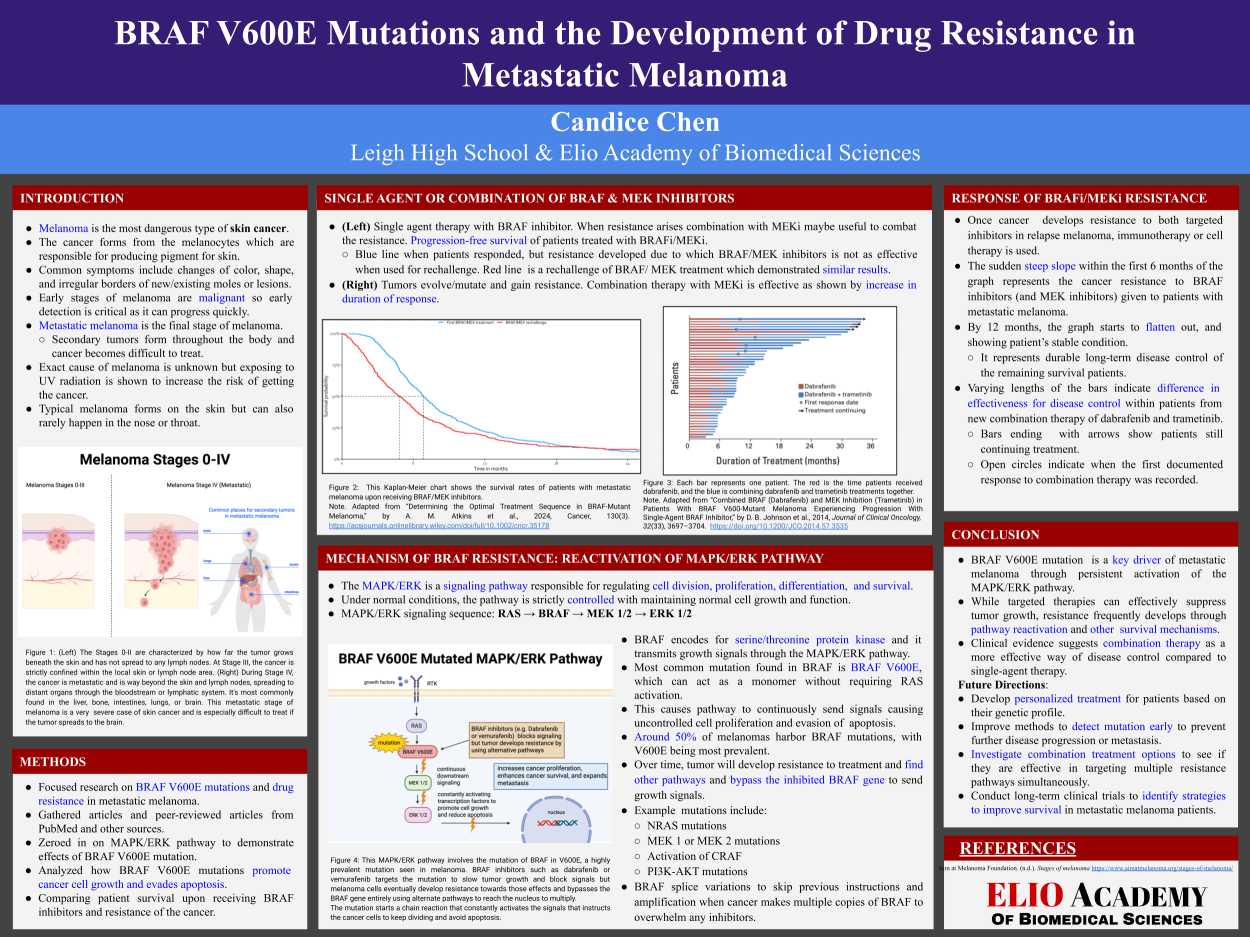
Summary
This is a project on BRAF V600E mutations in the MAPK/ERK signaling pathway and how it affects metastatic melanoma with the development of drug resistance. Melanoma is the most dangerous type of skin cancer. This type of cancer starts in the melanocytes, which are responsible for skin coloration. Common symptoms of melanoma include changes of color, shape, or borders of new/existing moles or lesions. While the exact cause of melanoma is unknown, frequent exposure to UV radiation is shown to increase the risk of getting the cancer. Even though early stages of melanoma are malignant, metastatic melanoma–being the last stage–is especially difficult to treat, so early mutation and cancer detection is critical.
The MAPK/ERK pathway plays an important role in melanoma, specifically involving the BRAF gene, which encodes for a serine/threonine protein kinase. Under normal conditions, the signalling pathway has controlled growth signals to manage cell division, proliferation, differentiation, and survival. Over 50% of melanomas harbor a BRAF mutation, with BRAF V600E being most prevalent. The role of the BRAF V600E in the MAPK/ERK pathway is its ability to constantly fire uncontrolled growth signals to expand tumor growth or metastasis and evade cell apoptosis. Though targeted treatments may suppress tumor growth, melanoma can develop resistance and use other pathways or alternate survival mechanisms to continue cell proliferation and expansion.
Overall, BRAF V600E is a key driver in metastatic melanoma because of the persistent activation of the MAPK/ERK pathway. From my research of clinical studies conducting trials of patients receiving BRAF/MEK inhibitors, studies have shown that tumors often develop resistance during single-agent treatment. However, when faced with combination therapies, the patients showed more effective results in controlling cancer growth and delaying disease progression. These findings show the importance of combining multiple treatments instead of relying on one single inhibitor to block the BRAF mutation. While targeted therapies initially block some signaling, combination therapies are a more effective solution to provide long-term stabilization of the disease for patients. Continued research on BRAF V600E and treatment resistance may lead to improved treatment strategies and bring better outcomes for patients with metastatic melanoma.
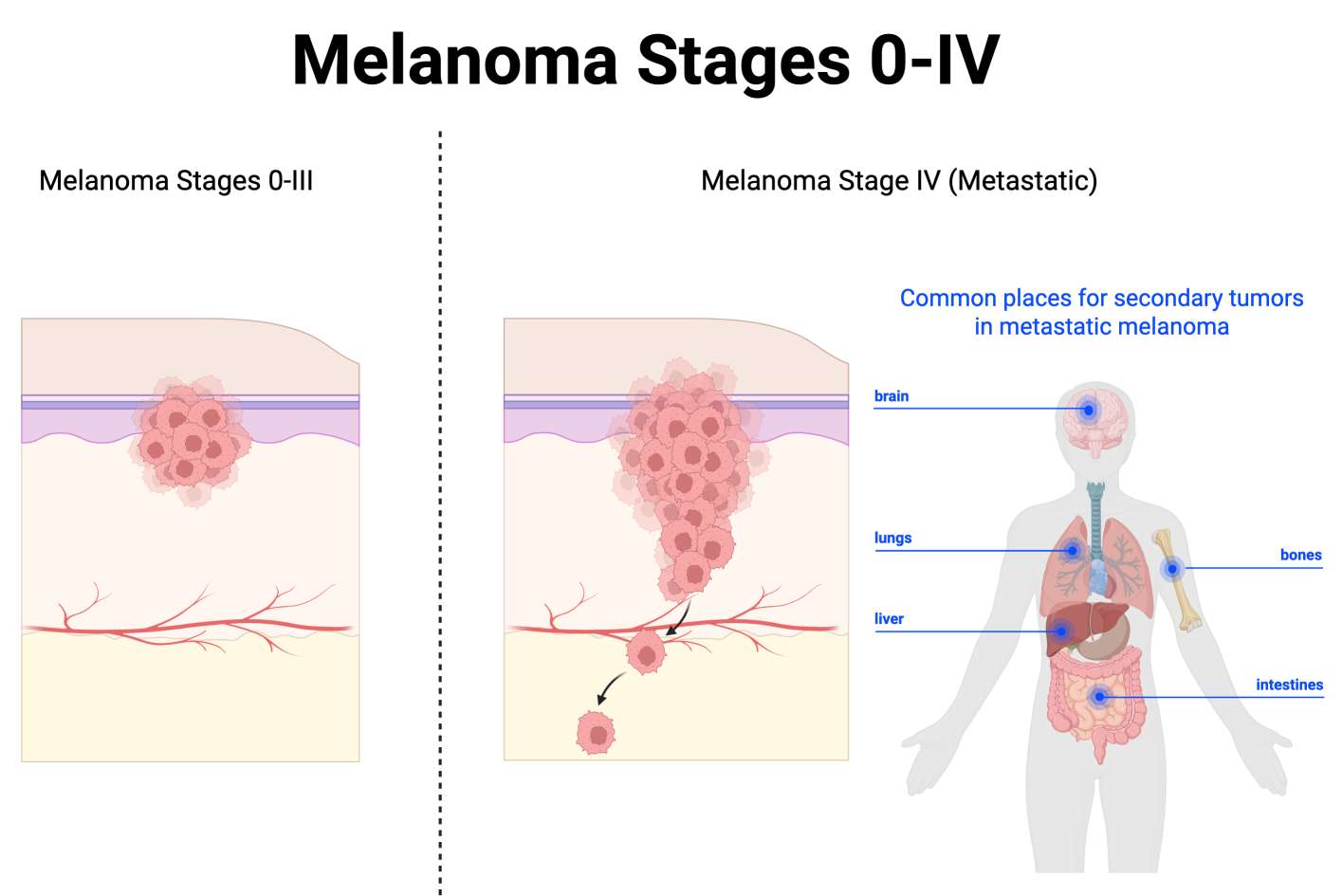
Melanoma Stages 0-IV
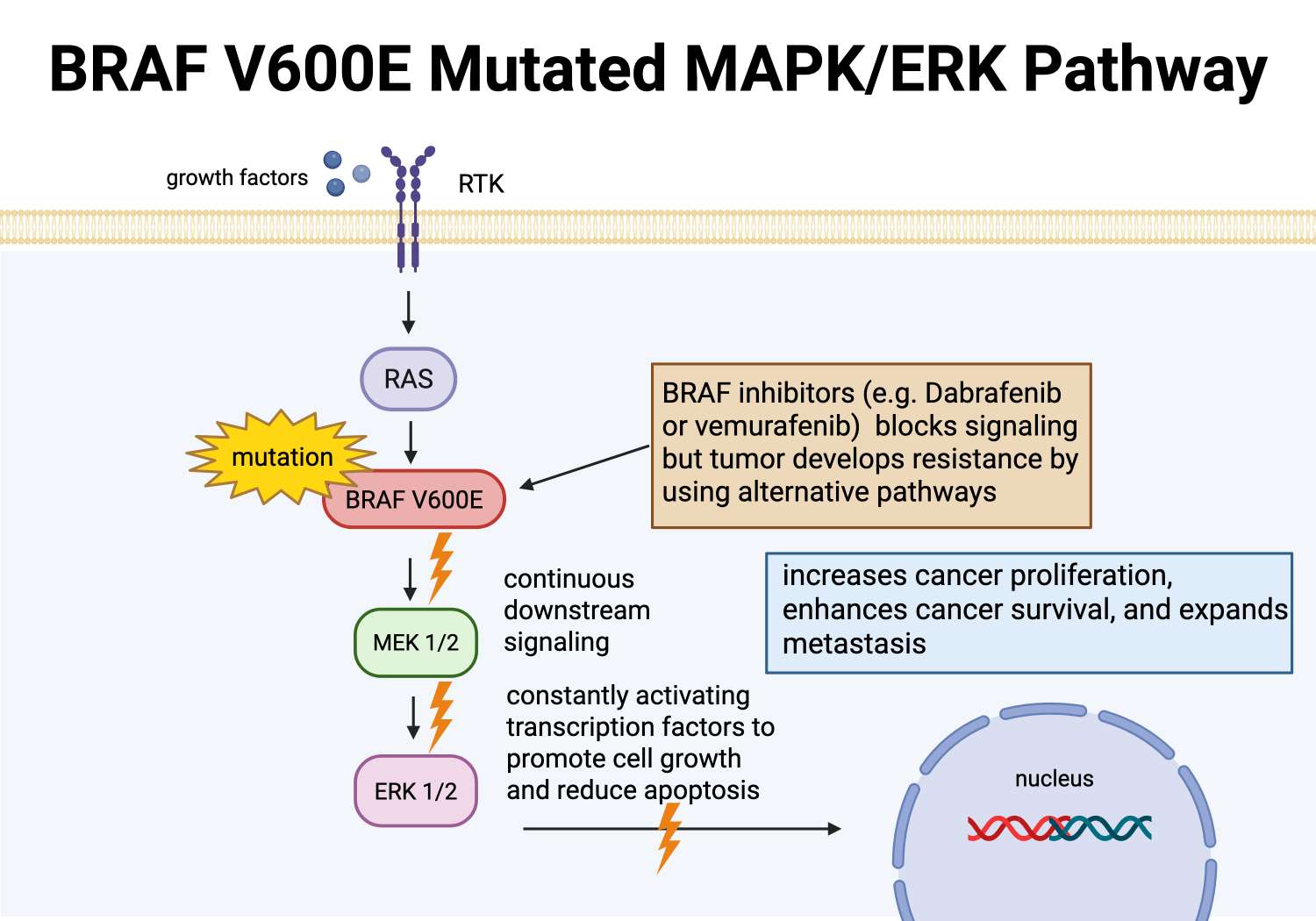
BRAF V600E Mutations in MAPK/ERK Pathway Figure created by student
Video Presentation
Impact Statement

Candice Chen
This program has taught me many things, whether it’s academically or personally. At first, I was nervous and doubted myself because I felt that this program was too advanced and challenging for my current knowledge and experience. However, Elio taught me to believe in myself and recognize that I can achieve difficult goals.Throughout this experience, I developed a better understanding of complex scientific concepts, conducted research, and strengthened my time management and organizational skills. Because of this, it prepared me for future research by improving my ability to analyze information, manage deadlines, and communicate my thoughts effectively. In just two weeks I had created a scientific poster and presentation, something I didn't know I would be capable of accomplishing. This program also helped me gain more insight into my future career, especially my interest in pre-med. I now hold myself to a higher standard and believe I achieved substantial growth through this camp. Elio pushed me to see a better version of myself and I'm super grateful to have experienced such a meaningful and inspiring program.
Student Reflection
By: Candice Chen.