Type 1 Diabetes Treatment: The Insulin Pump
By: Caterina Maria Zetu (International Computer High School of Bucharest ICHB)
Summary
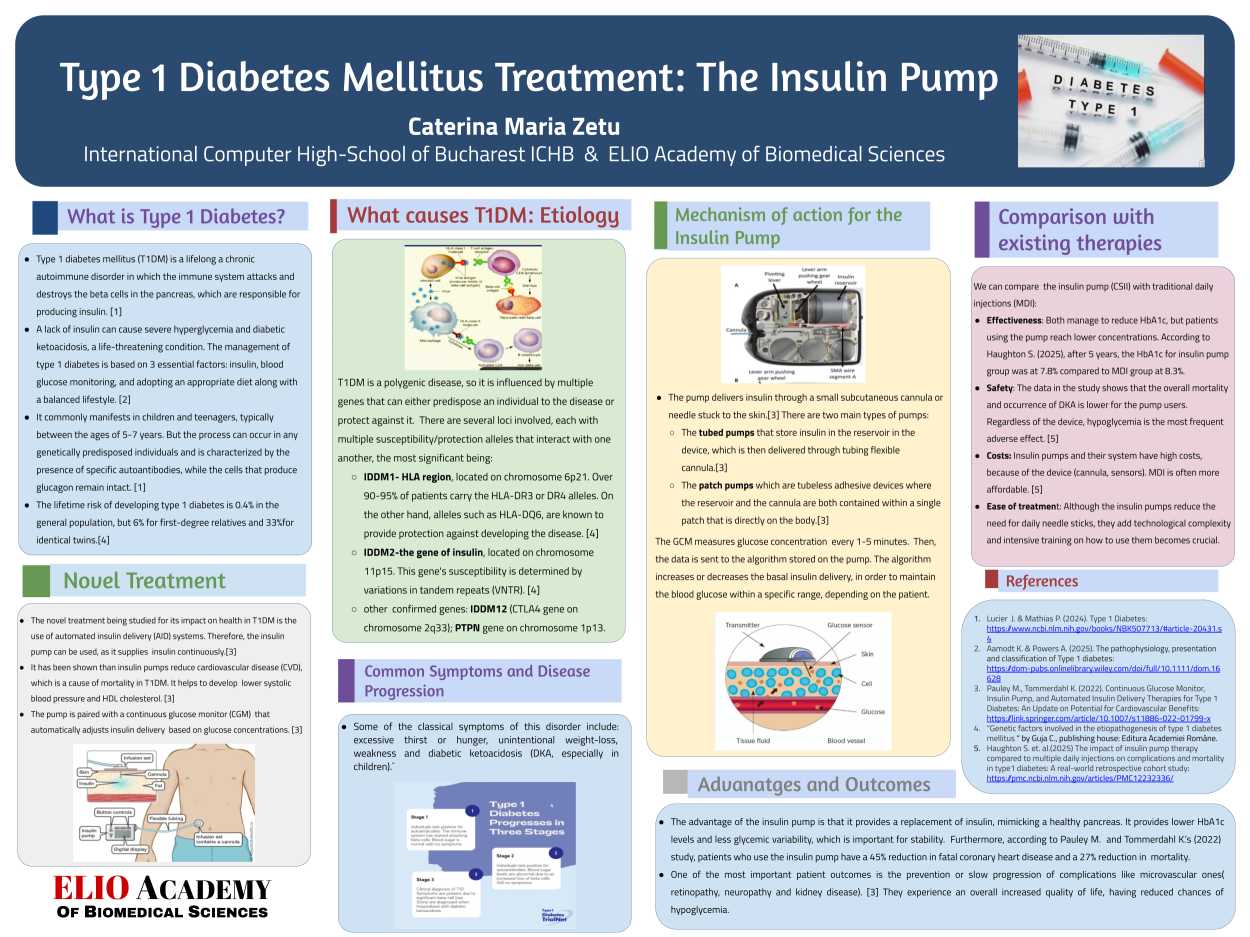
Type 1 Diabetes Mellitus (T1DM) is an autoimmune disease in which the pancreatic beta cells that produce insulin are killed by the immune system. This leads to hyperglycemia and potentially diabetic ketoacidosis (DKA), which is fatal. T1DM is a polygenic disease and influenced by loci such as IDDM1, the HLA region (chromosome 6p21), and IDDM2, the insulin gene (chromosome 11p15). The disease usually progresses in 3 stages, from autoantibody presence but with normal glucose levels to abnormal blood sugar levels and finally to visible symptoms such as excessive thirst, rapid weight loss, and weakness.
In order to treat the disease, automated insulin delivery systems (AID) are used, such as insulin pumps with glucose monitors (CGM). CGMs measure the glucose levels every 1 to 5 minutes and get the data within the pump. Basal insulin delivery is then made through the cannula. Compared to daily injections, insulin pumps have better long-term glycemic control and reduce coronary heart disease. However, these devices have higher costs and are complex, so they require training on how to be used.
Video Presentation
By: Caterina Maria Zetu.