The Neuroscience of Autism Spectrum Disorder: From Neural Mechanisms to Inclusive Education
By: Ciuca Cristian Mihai (National College Gheorghe Lazar)
Summary
Advances in neuroscience have transformed our understanding of Autism Spectrum Disorder(ASD), revealing that complex biological mechanisms shape how autistic individuals learn, comprehend, think, and experience the world. My project reviews how these scientific discoveries can be translated into evidence-based educational practices that promote inclusion, recognize neurodiversity, and better support the diverse cognitive, sensory, and learning profiles of autistic students. Using literature from leading journals-including Nature Reviews Neuroscience, Nature Reviews Disease Primers, The Lancet, Molecular Psychiatry, Frontiers in Psychiatry, and Pediatrics-on current findings in autism genetics, neuroanatomy, synaptic plasticity,brain functional connectivity, neuroimmune interactions, neuroplasticity, and neuroscience-informed inclusive education for neurodivergent students illustrates the potential of these findings to create more inclusive learning environments for autistic students.
Evidence shows that the robbasis of autism is highly heterogeneous, dysplaying complex interactions among genetic susceptibility, brain development, neural connectivity, immune signaling, and environmental influences. There is a large amount of evidence that the cause of autism is quite diverse and the product of a complicated interaction between genetics, brain development, brain wiring, immune function, and environmental factors. Unlike originating in one area of the brain, autism is a system-wide disorder, impacting multiple systems responsible for the way our brain functions. Genetics plays a large role-with alterations to specific gene variants affecting brain development and function by interfering with processes like synapse formation mediated by genes like SHANK3, CHD8, SCN2A, and MECP2-while other observations via neuroimaging demonstrate differences in parts of the brain that govern thinking, input from our senses, and the way we process social information.
Understanding the science behind learning and thinking can help educators recognize neurodiversity and individual needs, leading to the development of accessible, inclusive, flexible, and most important of all personalized learning environments that empower autistic students to reach their full potential. Educational practice should be adapted in accordance with the scientific evidence for diverse learners’ learning styles, needs, and preferences. By extending its role beyond an explanation of biological mechanisms, neuroscience can foster inclusion and reduce the prevalence of misunderstanding of autism, while leading to improvements in the educational outcomes of autistic learners through close partnerships between neuroscientists, educators, clinicians, and policymakers.
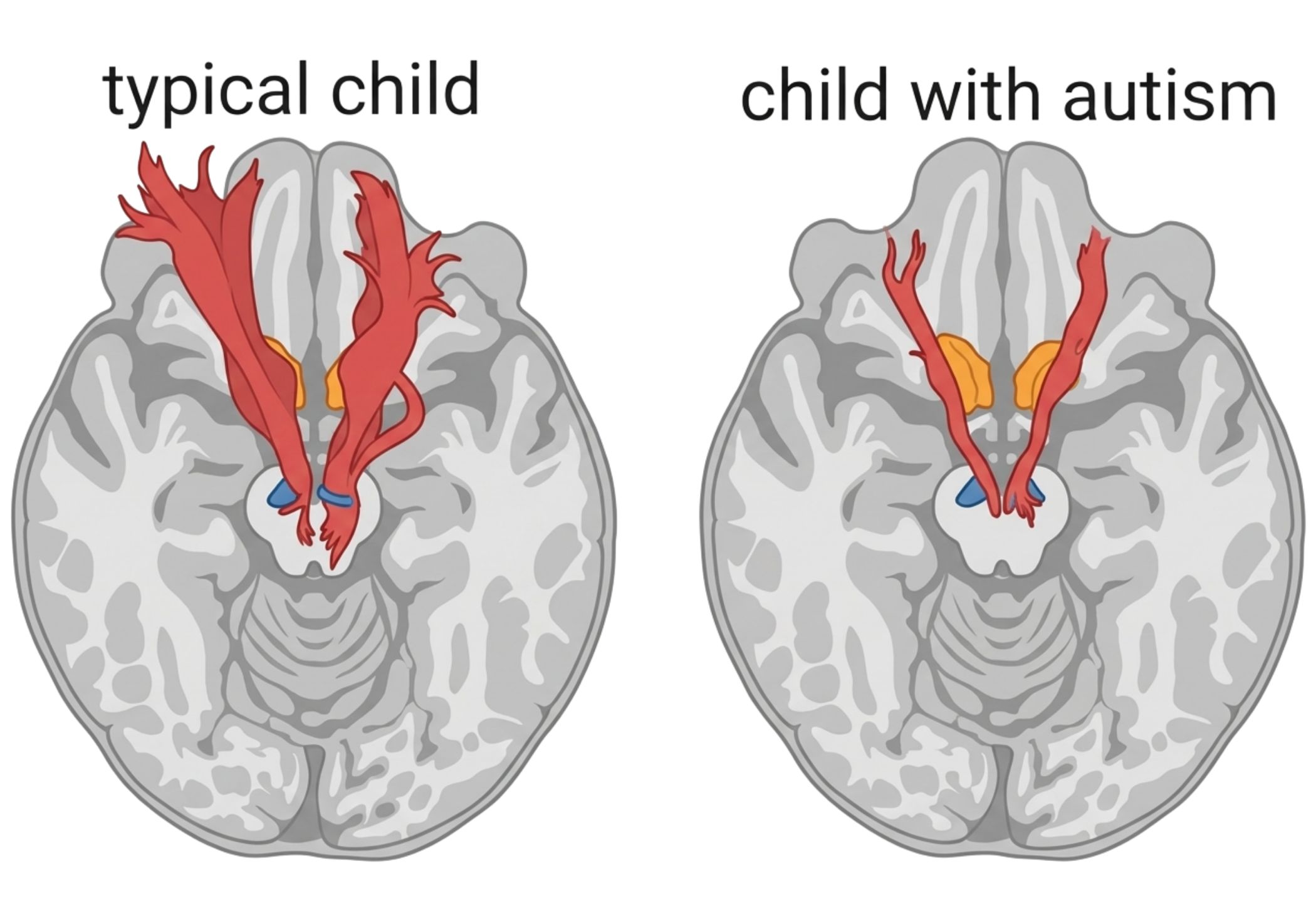
The difference in cognition and neural pathways between a child with autism and one without.
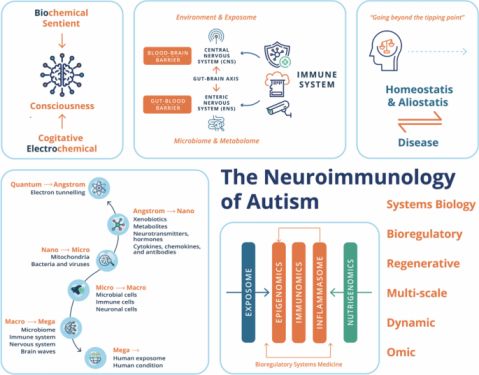
Complex interactions among genetic factors, immune signaling, the gut–brain axis, environmental exposures, and neural networks that contribute to the development and heterogeneity of ASD
Video Presentation
Impact Statement

Ciuca Cristian Mihai
I have found myself pondering many times, what do all humans think about and how each and every one thinks, perceive, and engages with the world uniquely? It is this interest that pulled me into neuroscience, and the Elio Academy of Biomedical Sciences molded it into a true scientific passion. The course presented numerous concepts, from neuroplasticity, which I have had previously studied, to the mechanisms behind neurodevelopmental disorders, which are of particular interest for me because I want to bridge the gap between neurodivergency and inclusivty. It enabled me to develop an ability to critically analyze scientific articles and journals, analyze a study's merit, synthesize multiple studies, present my data to an audience and communicate science through my work. More importantly, it taught me the application of science outside the walls of the laboratory, particularly towards building an education system which embraces the diversity in neurobiology for neurodivergent children.
Student Reflection
By: Ciuca Cristian Mihai.