TP53 : Guardian of the genome
By: Faiz Rana (Chatham Middle School)
Summary
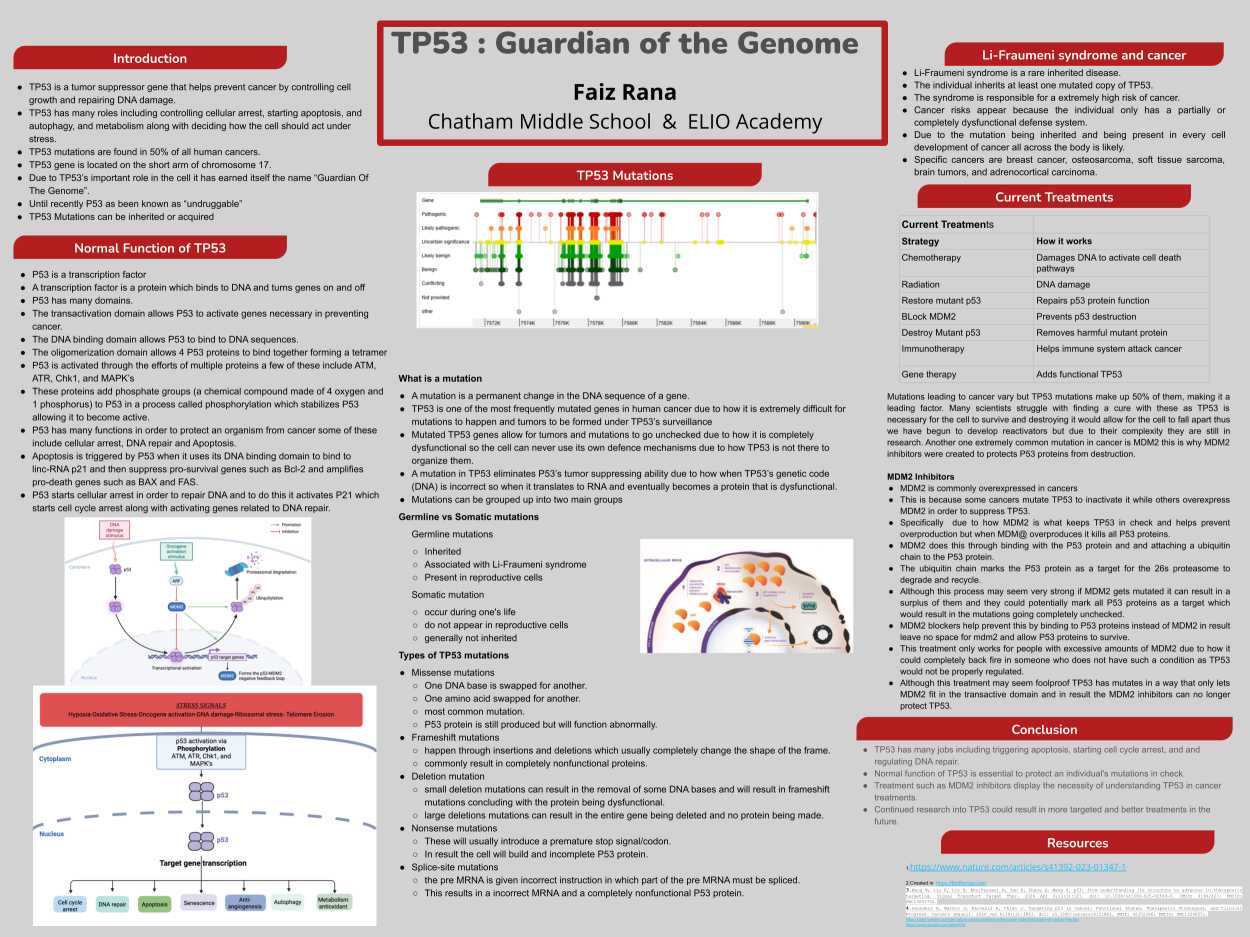
In my project I explain what Tp53 is, why it is important, how it works, what mutations it can have, its role in cancer prevention, how it is related to Li-Fraumeni syndrome and new treatments that are being formed to protect p53.
TP53 is a tumor suppressor gene that helps prevent cancer by controlling cell growth and repairing DNA damage. It has many roles including controlling cellular arrest, starting apoptosis, and autophagy, and metabolism along with deciding how the cell should act under stress. TP53 mutations are found in 50% of all human cancer. Until recently P53 has been known as “undruggable” TP53 Mutations can be inherited or acquired. TP53 is activated via multiple proteins and when it is working correctly it can use all of its domains towards protecting the cell. TP 53 has many different types of mutations, they can all be inherited or acquired (germline v somatic). Depending on what type of mutation occurs the protein could be dysfunctional, incomplete, or not produced at all. When someone is born with a TP53 mutation at least one of the pair of their TP53 is mutated in every cell of the body this is known as the rare inherited disease Li-Fraumeni syndrome. Li-Fraumeni syndrome makes the individual affected, vulnerable to many cancers; there are a number that are commonly related to this syndrome yet scientists still do not understand why. Although TP53 mutations are very dangerous and essential to develop cures for when MDM2 is mutated it can stop the P53 protein from being able to do its job; this is because MDM2 binds to P53 and marks it for destruction. When MDM2 is mutated in a way that it grows at a very rapid pace it can overwhelm P53 and mark all P53 proteins for destruction. For this very reason we have developed MDM2 inhibitors which bind to P53 before MDM2 can.
In conclusion TP53 is extremely important to protect us from cancers and tumors by working to prevent mutations. In the future it is essential that we can understand TP53 better as it will help us develop treatments to help avoid cancer.
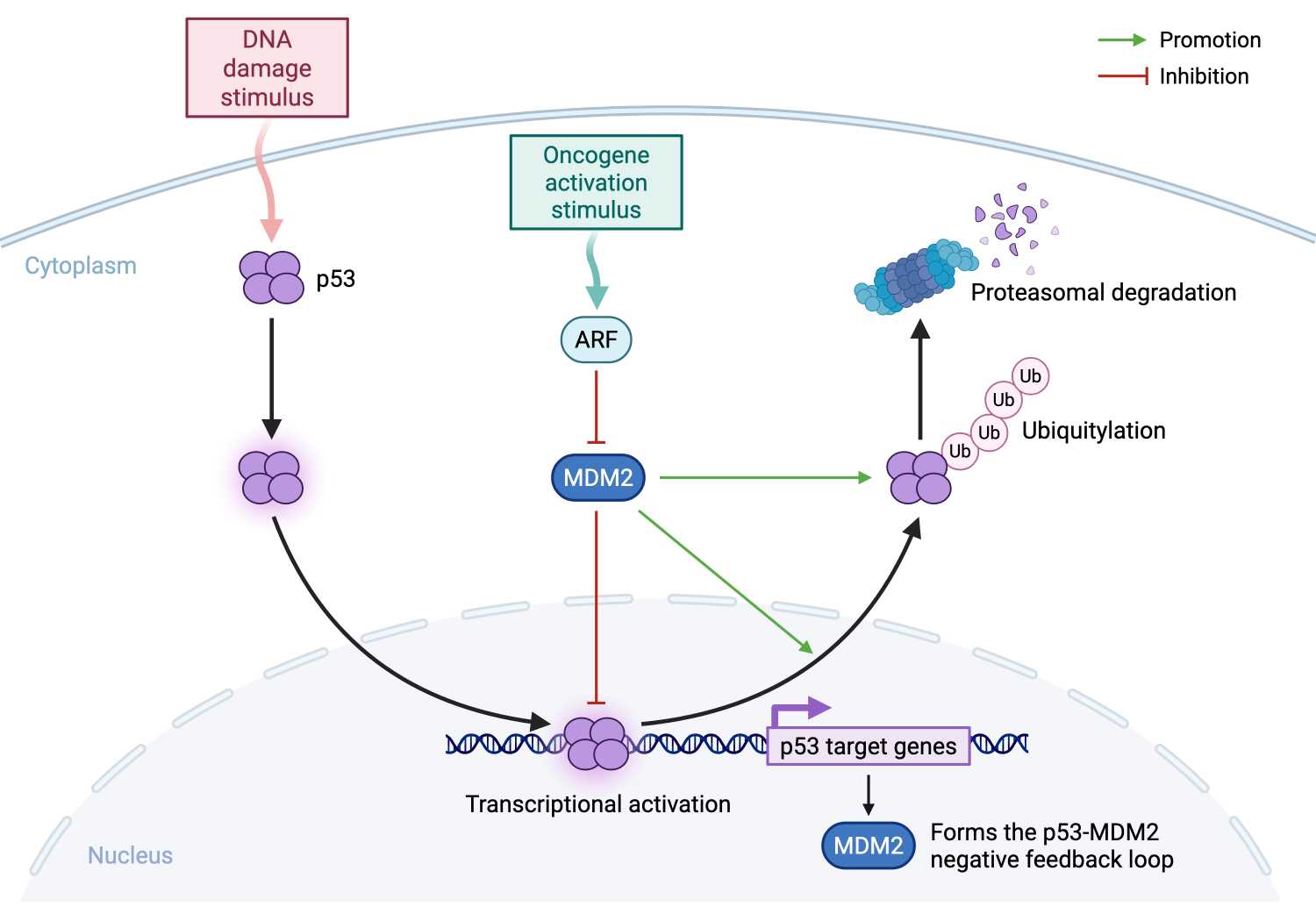
This diagram shows how p53 and MDM2 work together to control the cell. DNA damage activates p53, which can turn on genes that help protect the cell.
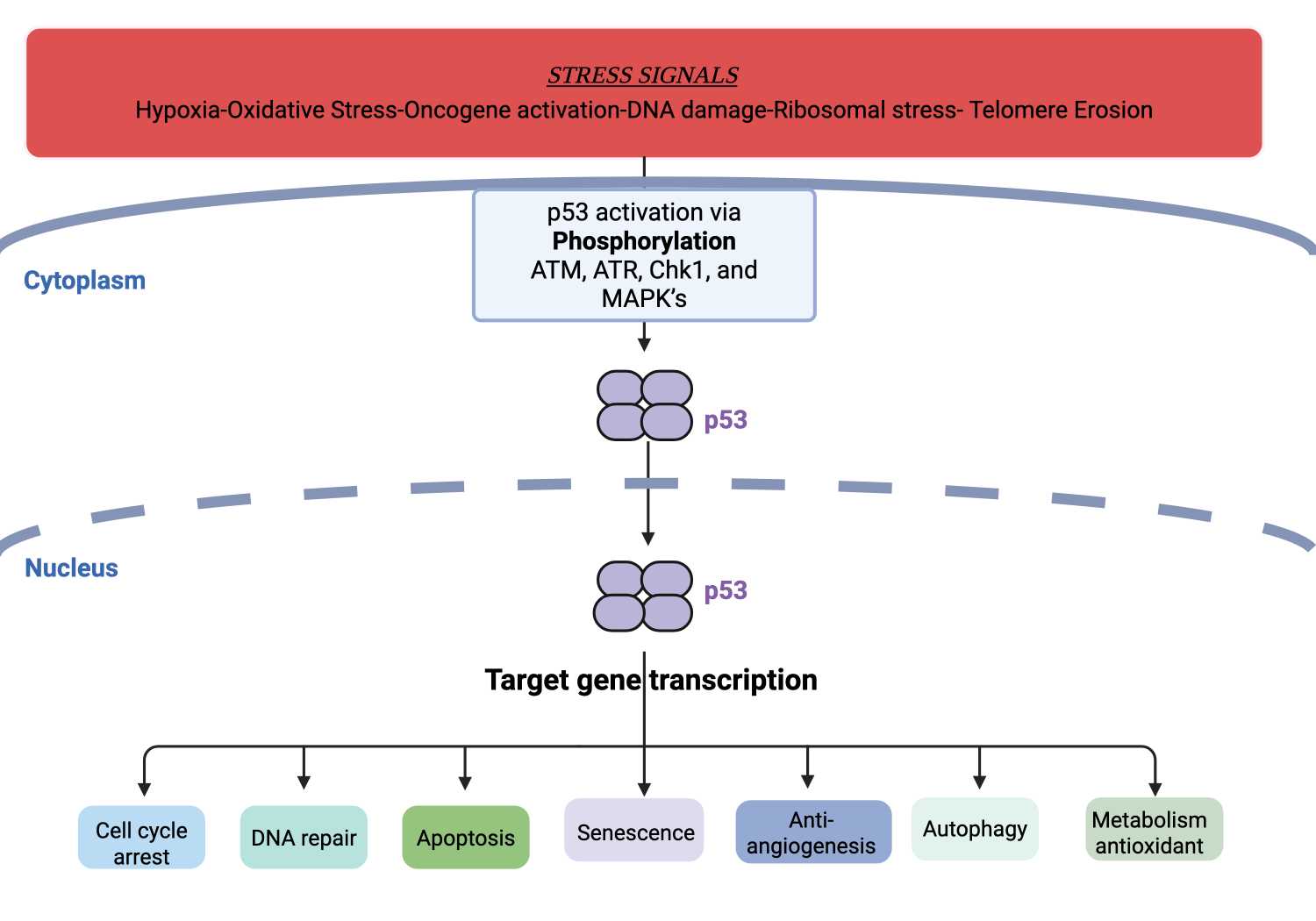
This diagram shows how different types of stress, such as DNA damage and oxidative stress, activate p53.
Video Presentation
Impact Statement

Faiz Rana
I learned about the cell cycle and the extensive process that the cell goes through to divide and survive. I specifically learned about important genes such as the TP53 gene and the MDM2 gene which both work in preventing mutations within the cell. I also learned about cancer and how it is derived from mutations in one's DNA. Doctor Juhi taught us that cancer is not foreign to the body but simply mutated cells with mutations that allow it to divide continuously and due to this tumor appear. When tumors appear in need of nutrients to supply the cells rapid division it goes through mitosis and slowly spreads across the body taking all of its nutrients. In the program we learned how to research properly and about good databases and online libraries. Using this was very important as I will be able to use these far into the future. I also learned how to use BioRender and how to create figures on it.
Student Reflection
By: Faiz Rana.