Opsoclonus Myoclonus Syndrome
By: Ioannah Ayele (Liberty University)
Summary
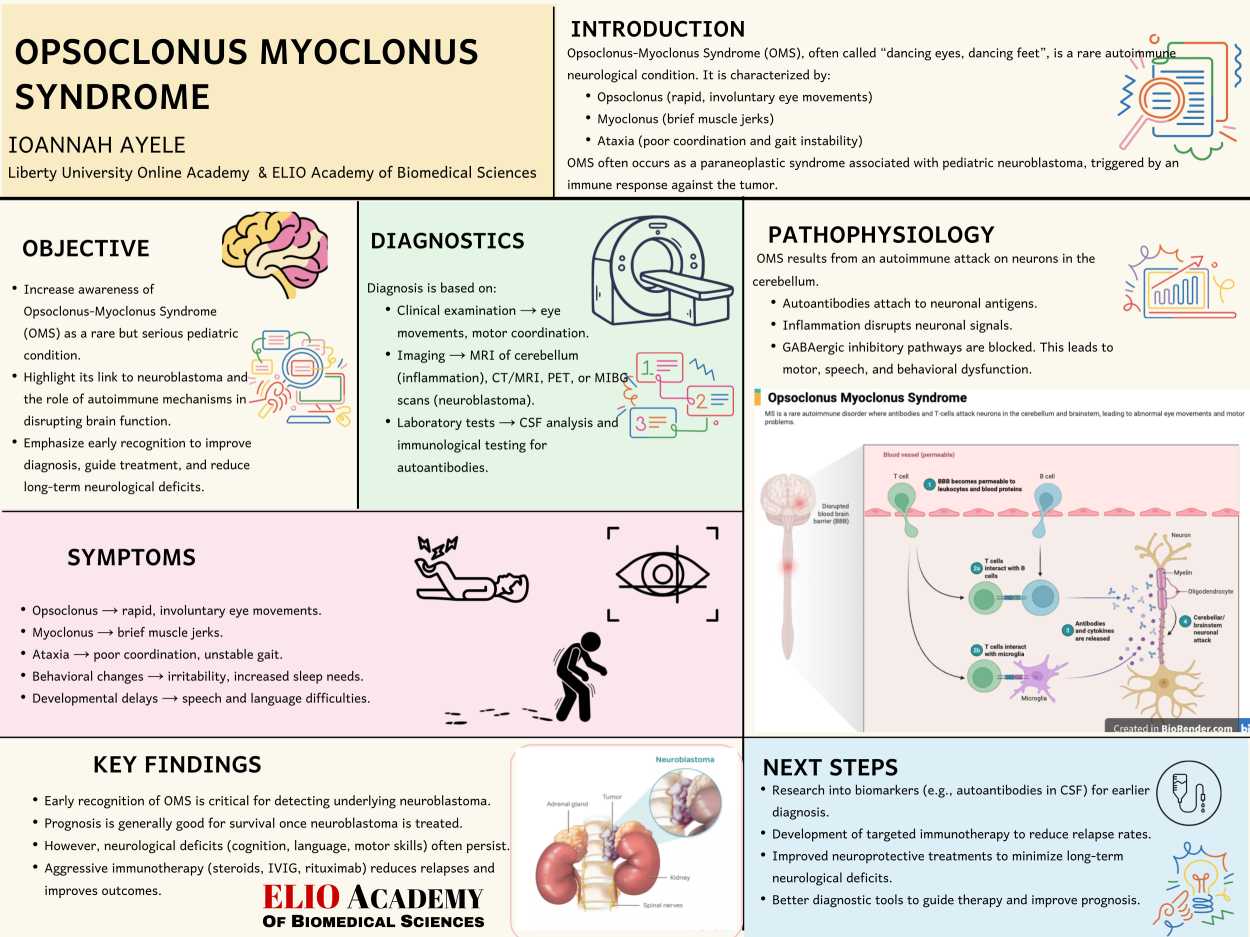
Opsoclonus‑Myoclonus Syndrome is a neurological disorder caused by an autoimmune response in the brain and spinal cord. OMS affects mostly infants and young children. People with OMS have opsoclonus (rapid eye movement), myoclonus (muscle spasms), and ataxia (pronounced lack of coordination). Approximately half of OMS cases are associated with neuroblastoma, making it a common paraneoplastic syndrome related to childhood cancer. During OMS, immune cells attack tumor cells and cross the blood‑brain barrier. Mistakenly identifying neurons in the cerebellum and brain stem as antigens, these immune cells destroy healthy neurons.
Diagnosing OMS is very important, especially in young children, because it may present as the first sign of neuroblastoma. Finding evidence of OMS allows physicians to detect cancer earlier and begin treating both diseases while limiting long‑term neurological side effects. The autoimmune reaction causes cerebellar ataxia and cytotoxicity as immune cells bind to the B‑cells and microglia in the brain. After attaching themselves, immune cells secrete antibodies and cytokines that kill healthy neurons, resulting in problems with motor skills, slurred speech, and abnormal behavior. Irritability, sleep disturbances, and delayed speech are also symptoms that may occur with sudden eye movement you cannot control and muscle spasms in children with OMS. Many times, symptoms appear abruptly, and the child is misdiagnosed with epilepsy or viral encephalitis. OMS is diagnosed by physicians during physical exams and medical testing. MRI scans may reveal inflammation in the cerebellum, CT, PET, and MIBG scans may identify the location of cancer, and CSF can help find autoantibodies located in the brain and spinal cord. Tests that regularly monitor urine can also reveal tumor by-products such as VMA and HVA.
Video Presentation
Impact Statement

Ioannah Ayele
I learned about rare pediatric diseases including Opsoclonus‑Myoclonus Syndrome and neuroblastoma. Researching for the poster involved looking through multiple medical databases and sources to find accurate information to summarize onto our poster. This improved my skills in reading and understanding scientific articles and in presenting information in a way that created awareness for rare disease. The skills that I improved on during this project included in‑text citations, creating figures, and medical writing. I learned how to create visuals from BioRender to help display complex processes and from reading through peer-reviewed journals I also improved my skills in understanding how to cite them and write conclusive evidence. Through this program I learned skills that will help me with any research I take on in the future. I feel that I can approach scientific questions with more knowledge on how to create a project and display your findings.
Student Reflection
By: Ioannah Ayele.