The Role of the gene CFTR in Cystic Fibrosis.
By: Ishaan Godbole (Mission San Jose High School)
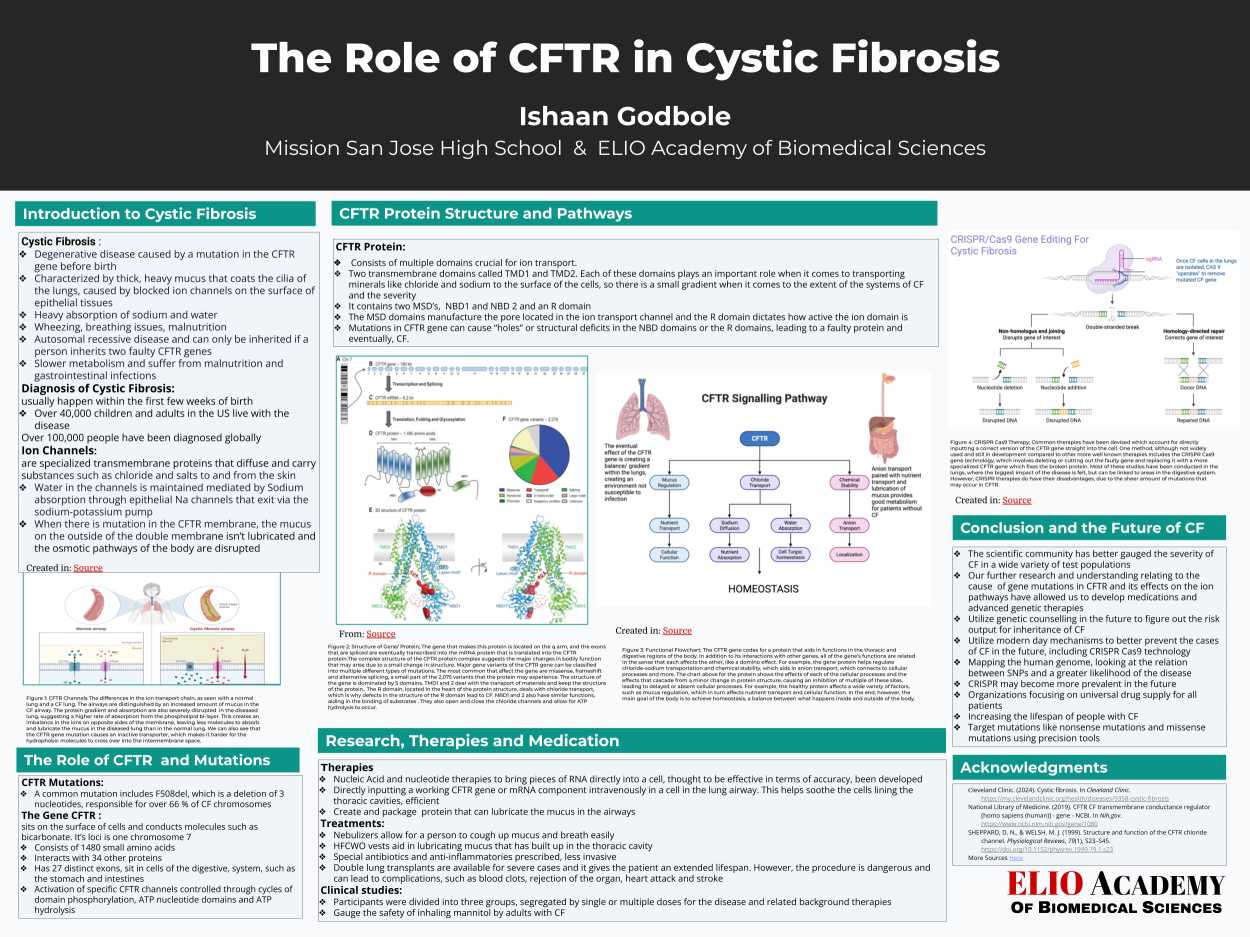
Summary
Cystic Fibrosis is an autosomal recessive degenerative disease caused by a mutation in the CFTR gene. This gene produces a faulty protein, which causes an imbalance in the ion transport chain in the epithelial tissues of the body. In a body affected by CF, the diffusion of sodium and chlorine ions is disrupted and halted by a faulty transported, and this leads to an excessive absorption of water. These chemical disparity creates thick, sticky mucus, which coats the lining of the lungs and liver. People with the disease suffer from breathing issues, as well as low metabolism rates and malnutrition.
The Gene CFTR is composed of 27 exons and, once translated, it creates a 1,480 amino acid protein with a complex structure, called the CFTR protein. The CFTR protein consists of 5 major domains, called NBD1, NBD2, TMD1, TMD2 and the R domain. All of these domains have equally important roles in maintaining chemical equilibrium inside the body. For example, NBD1 and 2 create energy via ATP hydrolysis, the R domain deals with chloride transport and TMD1 and 2 act as support structure. When a mutation does occur in the gene, it produces a faulty R domain, which has detrimental effects since it disrupts the ion transport chain.
Over the years, scientists have developed multiple treatment options and methods of keeping the symptoms of CF at bay. For example, Cystic Fibrosis patients use a nebulizer, which sprays mist into the their lungs and allows them to breathe easily, lubricating the mucus in their airways. Scientists have also developed the HFCWO vest, which vibrates against the patient's chest and allows for the patient to cough up the mucus lining the airways. As well as these temporary treatment options, precision therapies are being developed to target the root cause, the gene. mRNA, DNA therapies as well as nucleotide and nucleic acid therapies are targeting the direct cell level in order to deliver modified DNA fragments. An emerging but not foolproof method of CRISPR gene technology promises an effective, but more invasive way of treating the mutation via the CAS9 technology.
Overall, there is hope that cystic fibrosis will finally be cured and that, through our understanding of the human genome, we can bring an end to this degenerative disease.
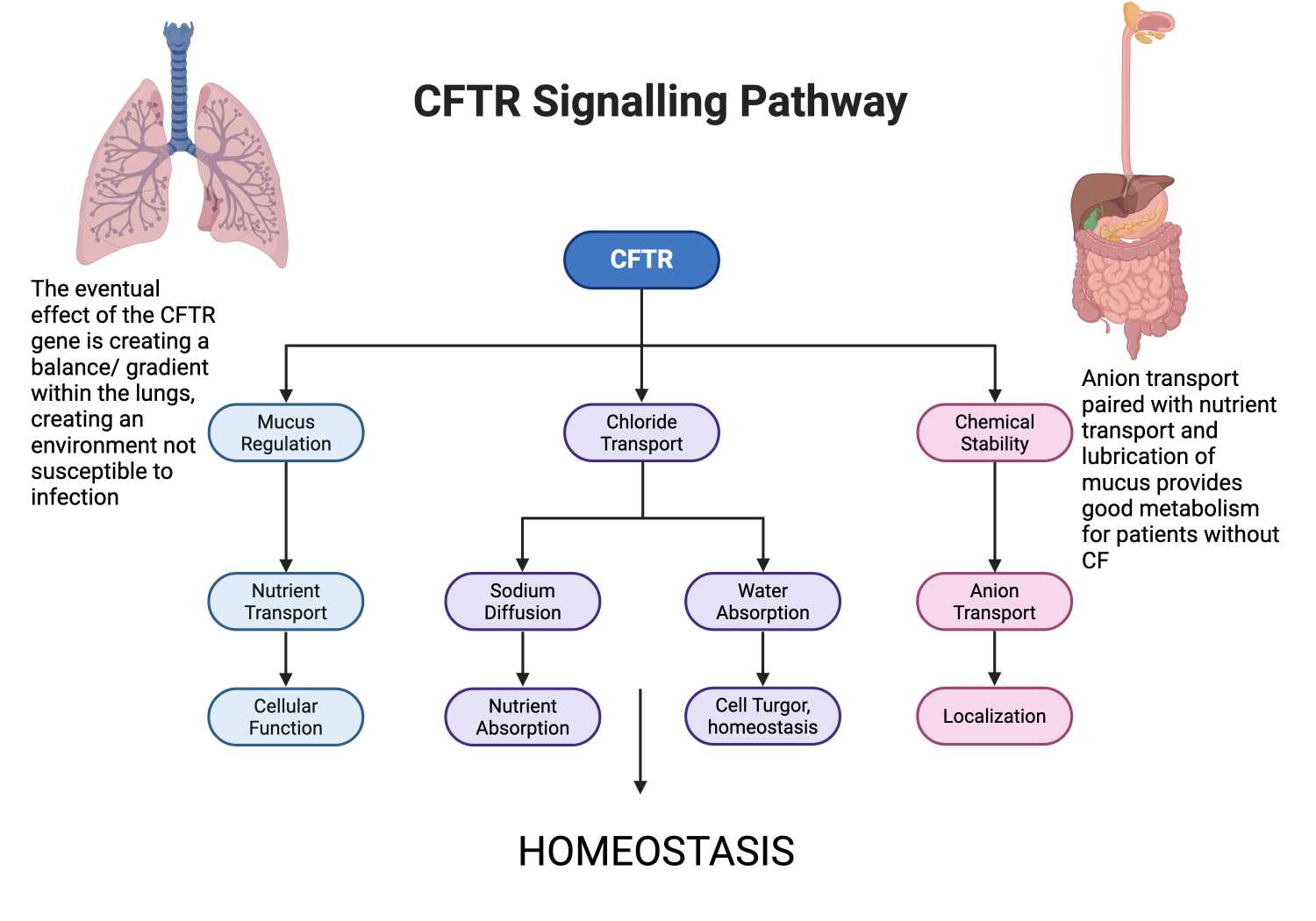
Functional Flowchart; The CFTR gene codes for a protein that aids in functions in the thoracic and digestive regions of the body. In addition to its interactions with other genes, all of the genes functions are related in the sense that each affects the other.
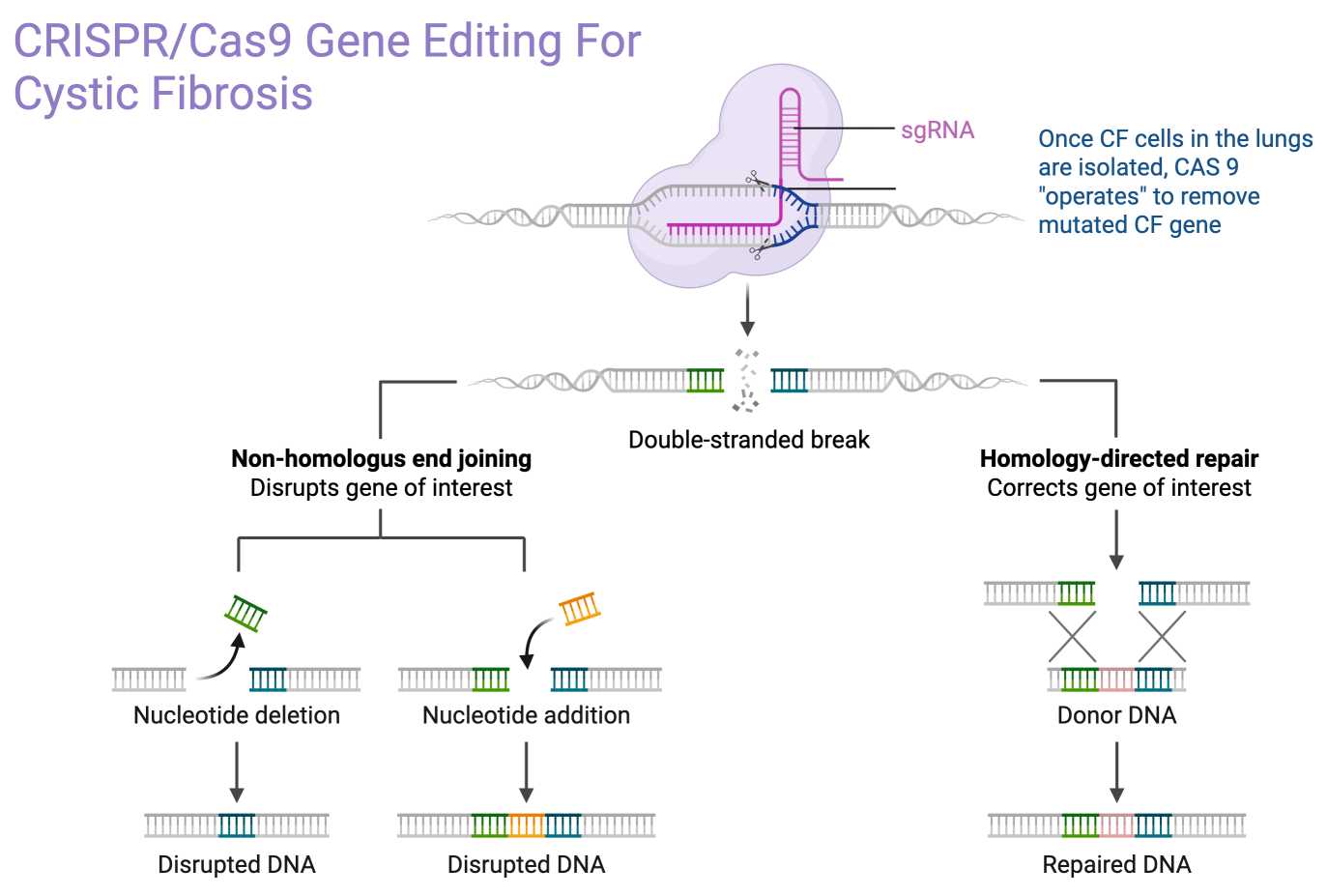
CRISPR Cas9 Therapy; Common therapies have been devised which account for directly inputting a correct version of the CFTR gene straight into the cell.
Video Presentation
Impact Statement

Ishaan Godbole
Elio Academy has been an amazing learning experience for me as a student. Although it was only 2 weeks, I learned more than I would have in any other summer program! I got to dive deeper into my interests in biomedical sciences, as well as participate in hands-on activities and interact with amazing mentors. Throughout this program, I've learned how to better organize research, step out of my comfort zone and explore the vast variety of topics that genetics and cancer biology has to offer. I’ve also learned how to manage my time wisely, and meet deadlines.Most of all, however, I’ve learned to be creative and think outside of the box! Elio helped me immensely with my confidence, be it in high school research papers, essays, presentations or tests. I have left this program knowing how to be a better scientist and researcher, and it has helped me boost my self-esteem and allowed me to be curious about the world around us!
Student Reflection
By: Ishaan Godbole.