Beyond Dopamine: Exploring NMDA Receptor-Targeted Treatments for Schizophrenia
By: Janani Parthasarathy (Poolesville HS)
Summary
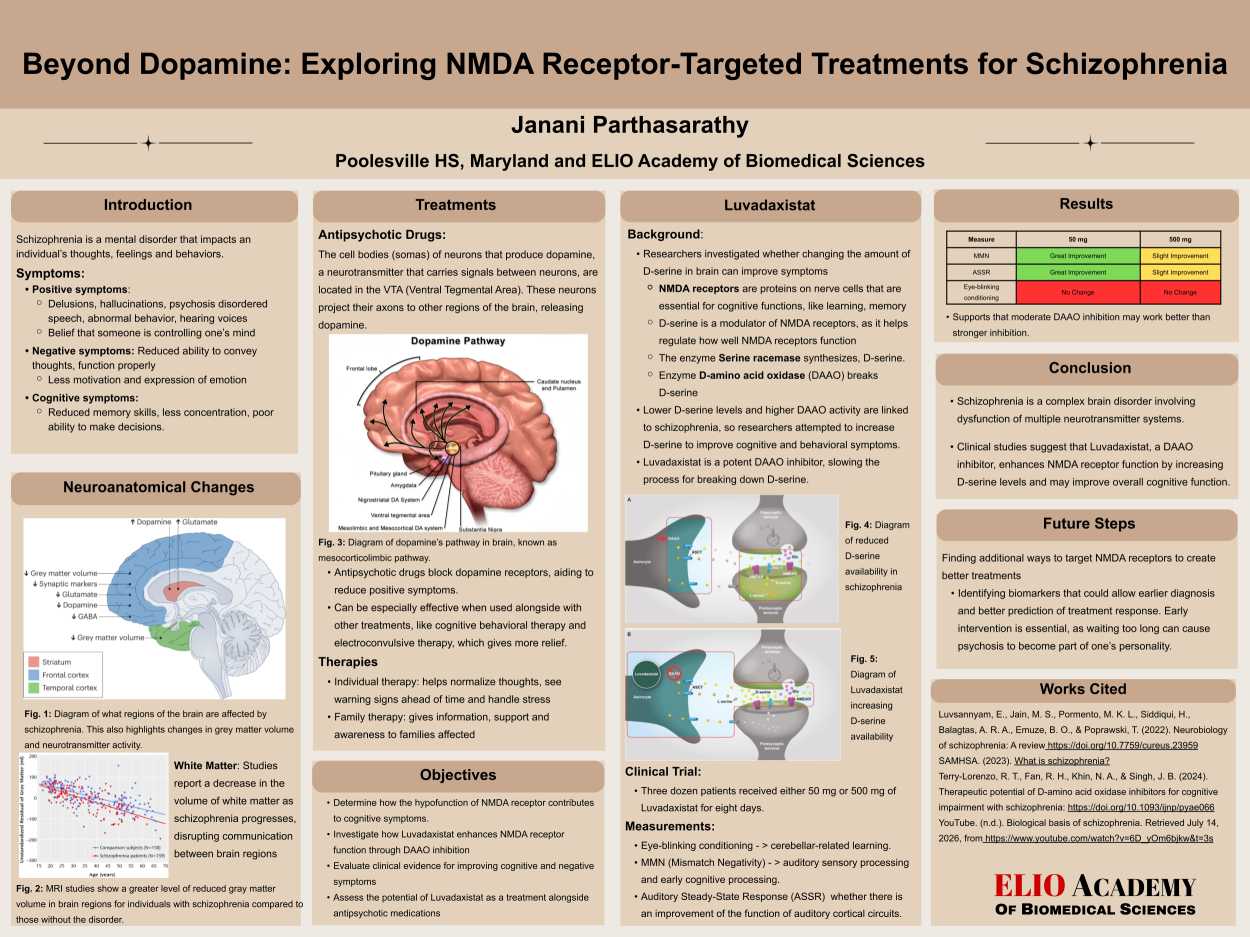
Schizophrenia is a complex mental disorder that affects approximately 1% of the global population. It is characterized by several symptoms, including hallucinations, delusions, and reduced concentration and memory skills.. While current antipsychotic medications effectively reduce positive symptoms by blocking dopamine receptors, they provide limited improvement in cognitive and negative symptoms, highlighting the need for more targeted treatment strategies.
This project focuses on NMDA receptor hypofunction and how it leads to cognitive symptoms. Luvadaxistat is a drug that is currently being tested by researchers, which inhibits D-amino acid oxidase (DAAO), the enzyme that breaks down D-serine. By improving NMDA receptor activity, Luvadaxistat has the potential to improve cognitive symptoms that antipsychotic medications are unable to treat effectively. Clinical trials show that moderate DAAO inhibition may work better than stronger inhibition.
Overall, this project demonstrates that schizophrenia is caused by multiple neurotransmitter abnormalities rather than only dopamine dysfunction. Treatments such as Luvadaxistat represent a promising step toward treating the cognitive symptoms that have been difficult to treat before, offering the potential to improve the lives of individuals living with schizophrenia.
Video Presentation
Impact Statement
Janani Parthasarathy
I gained a deeper understanding of how neuroscience connects with real world challenges. I learned about several mental disorders, and completed a research project on schizophrenia, which further developed my understanding of neuroscience. Researching Luvadaxistat introduced me to the process of evaluating emerging therapies by analyzing articles and looking at clinical trial findings. This program also greatly strengthened my research skills and taught me to communicate scientific concepts in a clear and organized way through creating presentations. It inspired me to continue exploring innovative therapies that could improve outcomes for patients with neurological disorders.
Student Reflection
By: Janani Parthasarathy.