The Role of EGFR in Glioblastoma
By: Katelyn McGinley and Jenna Lee (Mira Costa High School & Leigh High School)
Summary
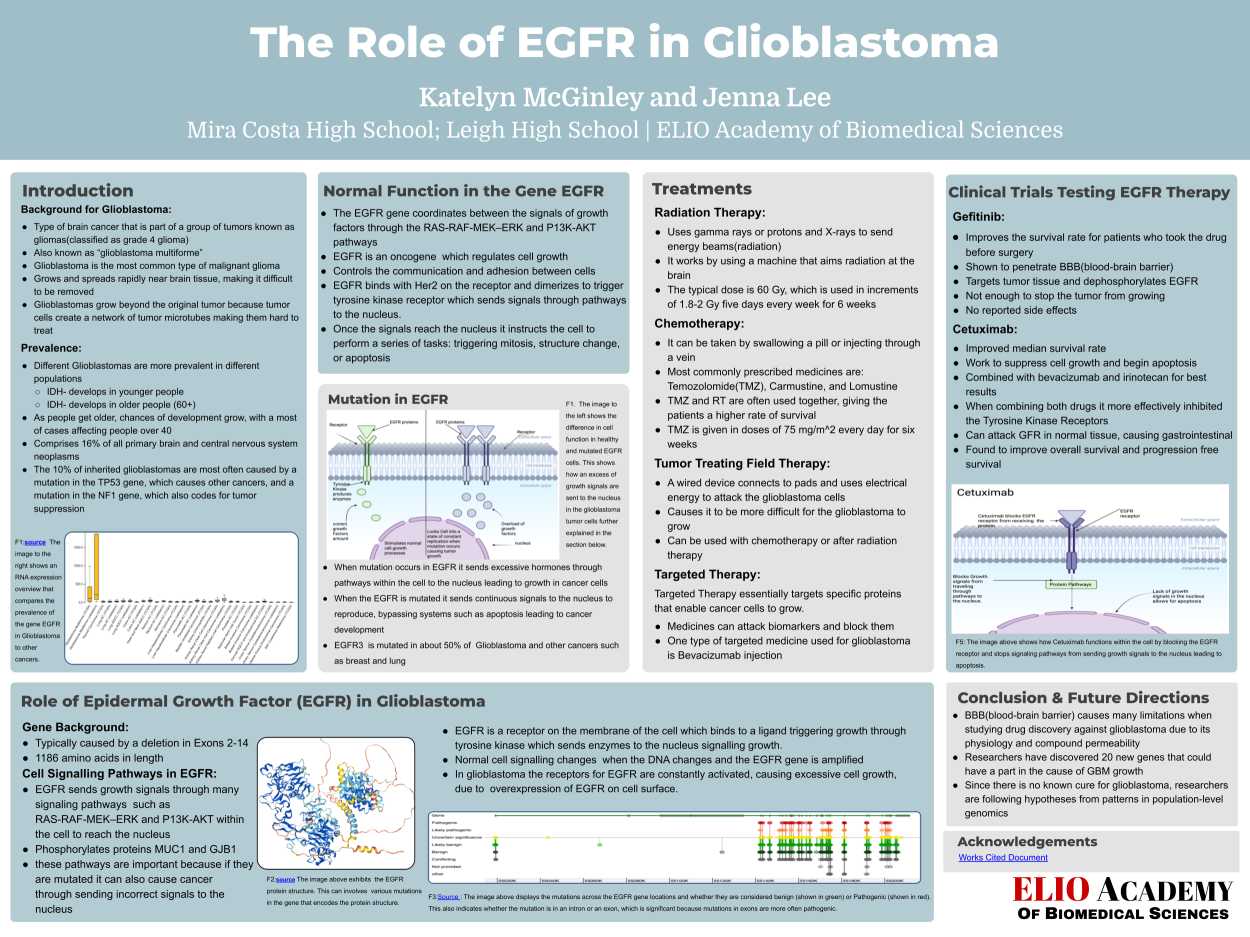
Glioblastoma, one of the most common brain tumors, is a grade 4 glioma that currently does not have a cure. While glioblastoma can develop at any age, it is primarily found in older adults over age 40 and often presents with symptoms such as seizures, memory loss, and behavioral changes. Glioblastoma causes unique challenges to finding treatment as it creates a network of microtubules which rapidly spread throughout the brain. In this project, we researched the process behind the Epidermal Growth Factor Receptor(EGFR), how it played a role in half of glioblastomas, and what implications this carried for cures and clinical research regarding glioblastoma. The EGFR gene is 1,185 amino acids in length and has interactions with 3,119 proteins within the body; pathogenic mutation within EGFR typically occurs in exons 2-14. Epidermal Growth Factor Receptor works by sending various signals through pathways such as RAS-RAF-MEK–ERK and P13K-AKT within the cell to monitor cell growth and apoptosis. When a mutation occurs in the cell DNA, it causes the EGFR receptor to be continuously activated, leading to unregulated cell growth. This unrestrained cell growth leads to the development of Glioblastoma in the Brain.
As we dug deeper, we investigated the treatments that are available against Glioblastoma. Radiation Therapy is one method recommended to be used to get rid of the remaining cancer cells after surgery. Using gamma rays, protons, or X-rays to aim energy beams(radiation) at different parts of the brain, it targets and destroys cancer cells. Another type of therapy is Chemotherapy. It works by either swallowing a pill or injecting it through a vein, stopping cancer cells from dividing rapidly directly in the body. Tumor Treating Field Therapy is also a treatment against the growth of Glioblastoma. By connecting a wired device to a sticky pad attached to the scalp, it uses electrical energy to attack the cancerous cells. As a result, it makes it tougher for glioblastoma to grow. Finally, we learned about Targeted Therapy with essentially targets specific proteins that enable cancer cells to grow. The medicines attack biomarkers and block them. One example of targeted medicine used for glioblastoma is Bevacizumab injection, which can block blood supplies that are given to tumors. Currently, work is still being done to investigate potential treatments for Glioblastoma, with several therapies being explored, and some combination treatments showing promise in targeting EGFR mutations in glioblastoma.
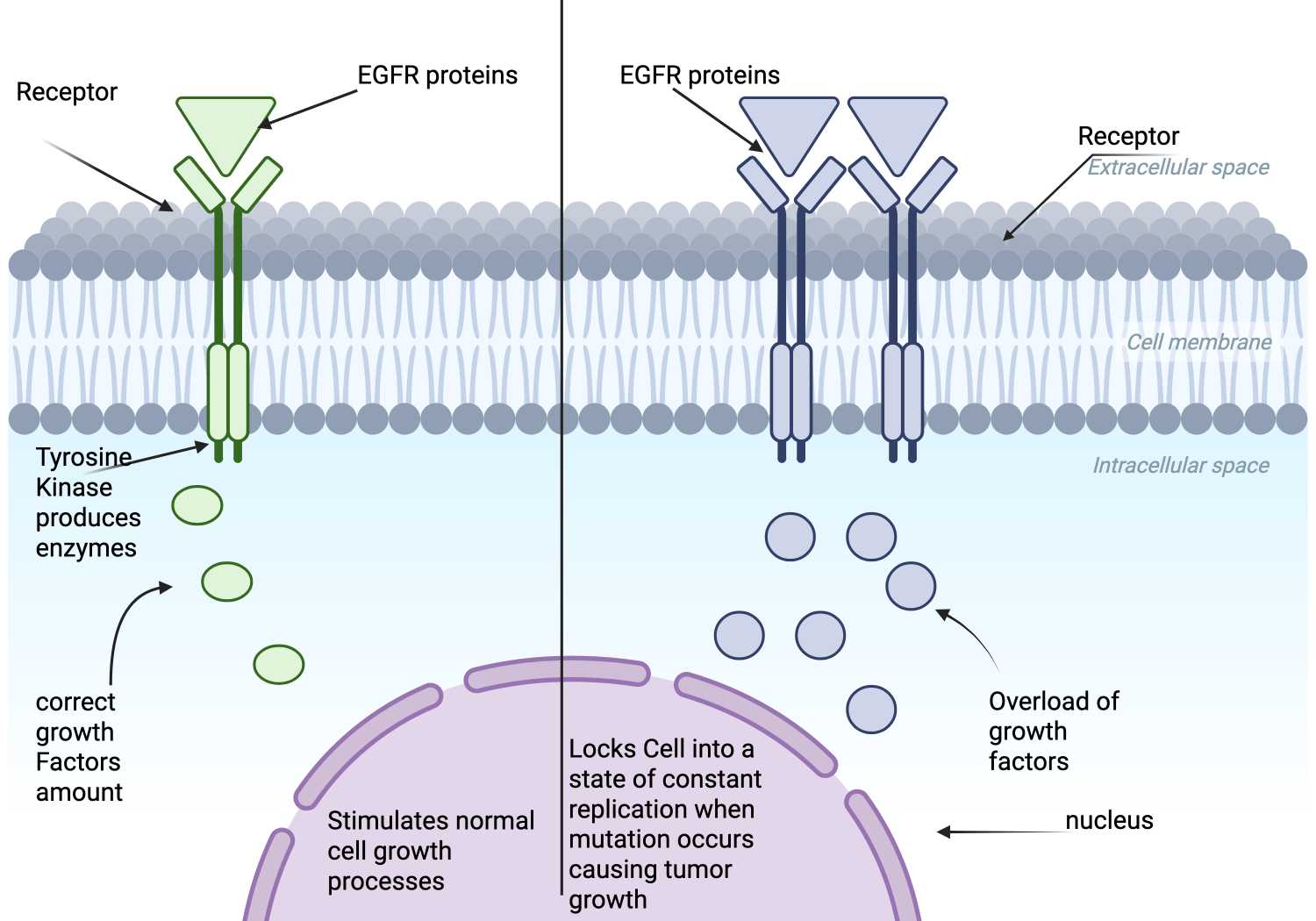
The image shows the difference in cell function in healthy and mutated EGFR cells. This shows how an excess of growth signals is sent to the nucleus in the glioblastoma tumor cells.
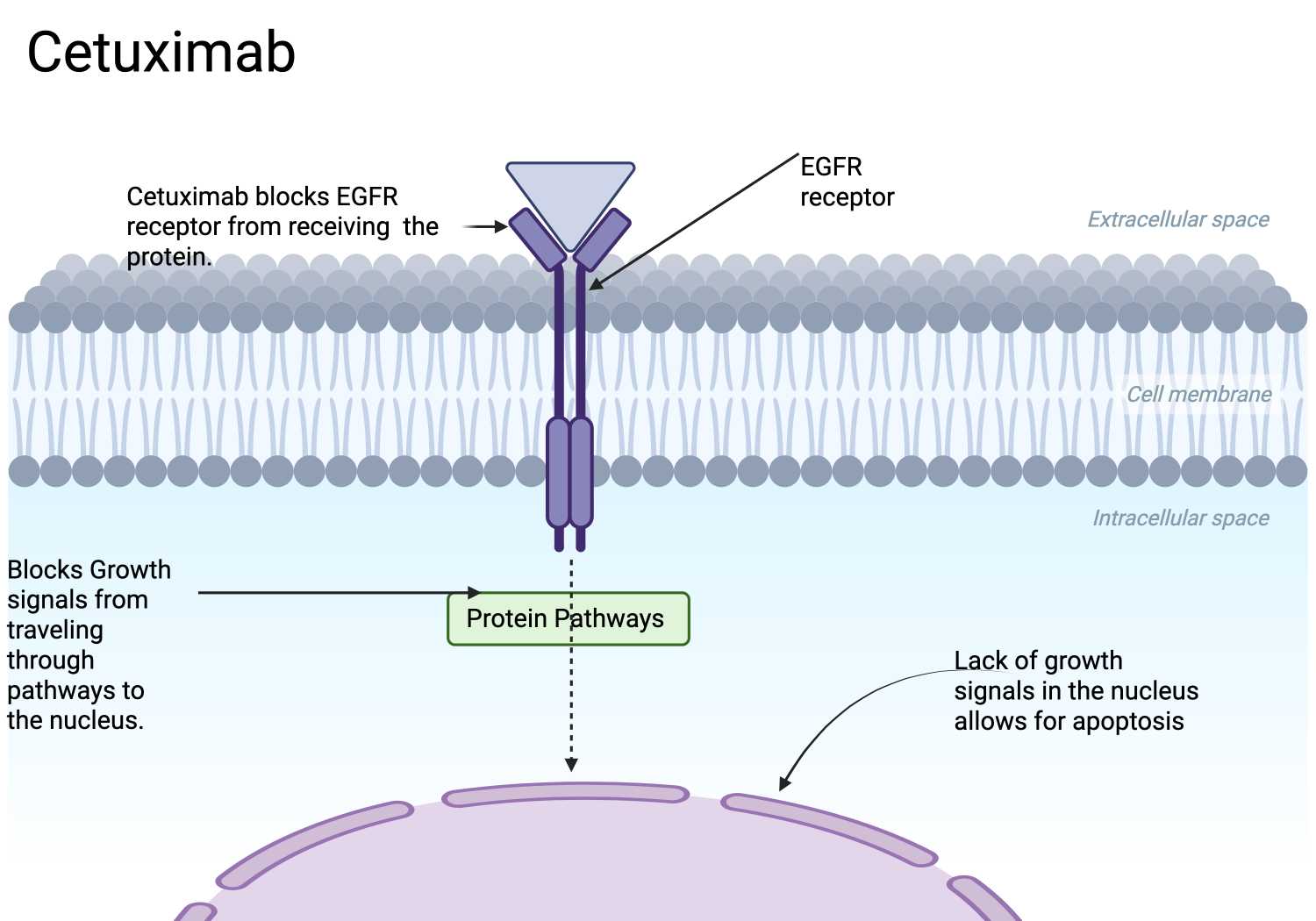
The image above shows how Cetuximab functions within the cell by blocking the EGFR receptor and stopping signaling pathways from sending growth signals to the nucleus, leading to apoptosis.
Video Presentation
Impact Statement
Katelyn McGinley
During this course, my interests in the biomedical field has expanded while also learning skills to effectively research and understand complex scientific concepts, relating to cell biology and cancer research. One of my favorite parts about this program has been learning about resources that facilitate biomedical research. Not only did we learn about the complex biological systems that govern the human body, but also how to independently explore scientific topics. Another valuable skill I honed, is the understanding of how processes within the body work, and how to interpret scientific figures such as cell signaling structures. I am more prepared to research scientific topics that interest me for future opportunities or summer internships. I have made meaningful progress in my abilities to research, make scientific figures, and forge connections between complex concepts. Overall, this program has furthered my interest and passion for the biomedical sciences, and I eagerly anticipate new experiences to come.
Student Reflection
Impact Statement
Jenna Lee
Throughout this program, I learned about the significance of cancer and molecular biology. Starting from the basics and growing into complex concepts, I was able to catch on quickly. Whether it was the introductions to genomics or the future of treatment, I understood the importance of what these researchers do and how it impacts others in real-life circumstances. Each day, I came into class and valued the time I had with other students who were just as curious about Genetics and Cancer Biology. As we asked insightful questions each day, my admiration for the sciences only grew. For the short time I was a part of the program, it improved my teamwork skills in projects and my ability to communicate and collaborate with others. In the future, I will utilize the skills I gained from this course and continue to spread my passion for biomedical sciences, with this program guiding me along the way.
Student Reflection
By: Katelyn McGinley and Jenna Lee.