GABRA1 at the Crossroads of Inhibition, Epilepsy, and Benzodiazepine-Induced Amnesia
By: Matei Farcau-Bobon (International Computer High School of Bucharest)
Summary
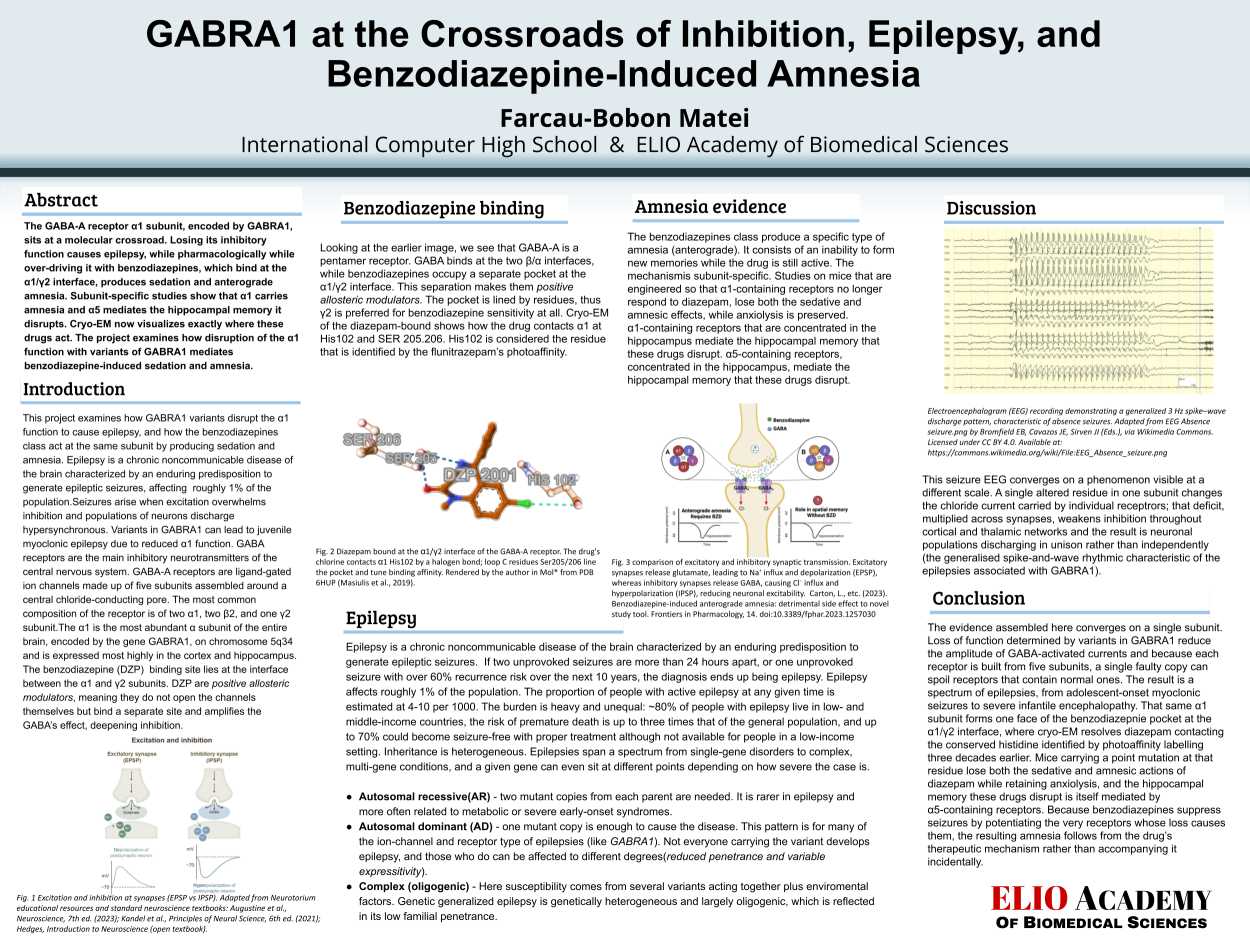
Deep in the brain's wiring sits a molecular switch responsible for keeping neural activity in check. The GABA-A receptor is the nervous system's principal inhibitory channel. When it opens, it lets the brain's activity settle rather than spiral. One piece of that receptor, the α1 subunit, encoded by the gene GABRA1, turns out to be a genuine crossroads: depending on what happens to it, it can produce two strikingly different outcomes. Lose its function through a genetic variant, and the result is epilepsy. Over-activate it with a benzodiazepine, the sedative drug class that includes diazepam, better known as Valium and the result is sedation paired with anterograde amnesia, the inability to form new memories while the drug is active.
This project traces that crossroads through three decades of research. A single histidine residue, identified in 1992 as essential for benzodiazepine binding, turns out to be exactly the residue that recent cryo-electron microscopy structures show a drug molecule physically touching. A prediction confirmed, decades later, in atomic detail. Using structural data from the Protein Data Bank, original renders were built showing diazepam seated in its pocket at the interface between the α1 and γ2 subunits, contacting that same histidine through a direct chemical bond. Alongside this, genetic evidence from patient variants shows how disruptions to the same subunit, sometimes at the very same amino acid position, producing opposite functional effects.
What emerges is not two separate stories but one: a single subunit, one binding pocket, and two clinically opposite consequences depending on the direction of disruption. The molecular logic connecting an inherited seizure disorder to the mechanism of a widely prescribed drug class is the same logic, read in two directions.
The project has a practical edge beyond the biology. Benzodiazepines are among the substances most associated with drink spiking, and the amnesia this receptor produces is not incidental to that misuse. This is the reason these drugs are effective for it. A victim who cannot reliably recall the event cannot reliably report it, and by the time testing occurs, the drug has often cleared the body. That gap is precisely what point-of-use detection is designed to close, grounding an ongoing engineering project in the molecular biology of the target it's built to catch.
Video Presentation
Impact Statement

Matei Farcau-Bobon
This program taught me how to turn vast literature into a more concise narrative rather than just a list of facts. The journey of the α1 in the three decades of papers which started from a single histidine identified in 1992 to a precise cryo-EM structure showing the exact interactions of the drug with the residue. This showed me how knowledge accumulates over time and how each study answers a narrow question, leading toward something none of them state alone. Also something valuable that I learned is to work with primary data instead of only reading briefly about it. Rendering protein structures from the PDB, checking variant classifications of GABRA1 in ClinVar and comparing functional evidence across studies, rather than accepting only one claim. What challenged me was shortening the amount of information just enough to make the poster both clear and relevant. For me, the most important thing is that this project connects to my passion research in which the same benzodiazepine is studied for a drug detection device I'm developing. Thus this program also gave me a molecular insight on the danger of benzodiazepines, motivating me to make this device a reality.
Student Reflection
By: Matei Farcau-Bobon.