Bispecific T-cell Engager Therapy
By: Nael Asad Tariq (TNS Beaconhouse)
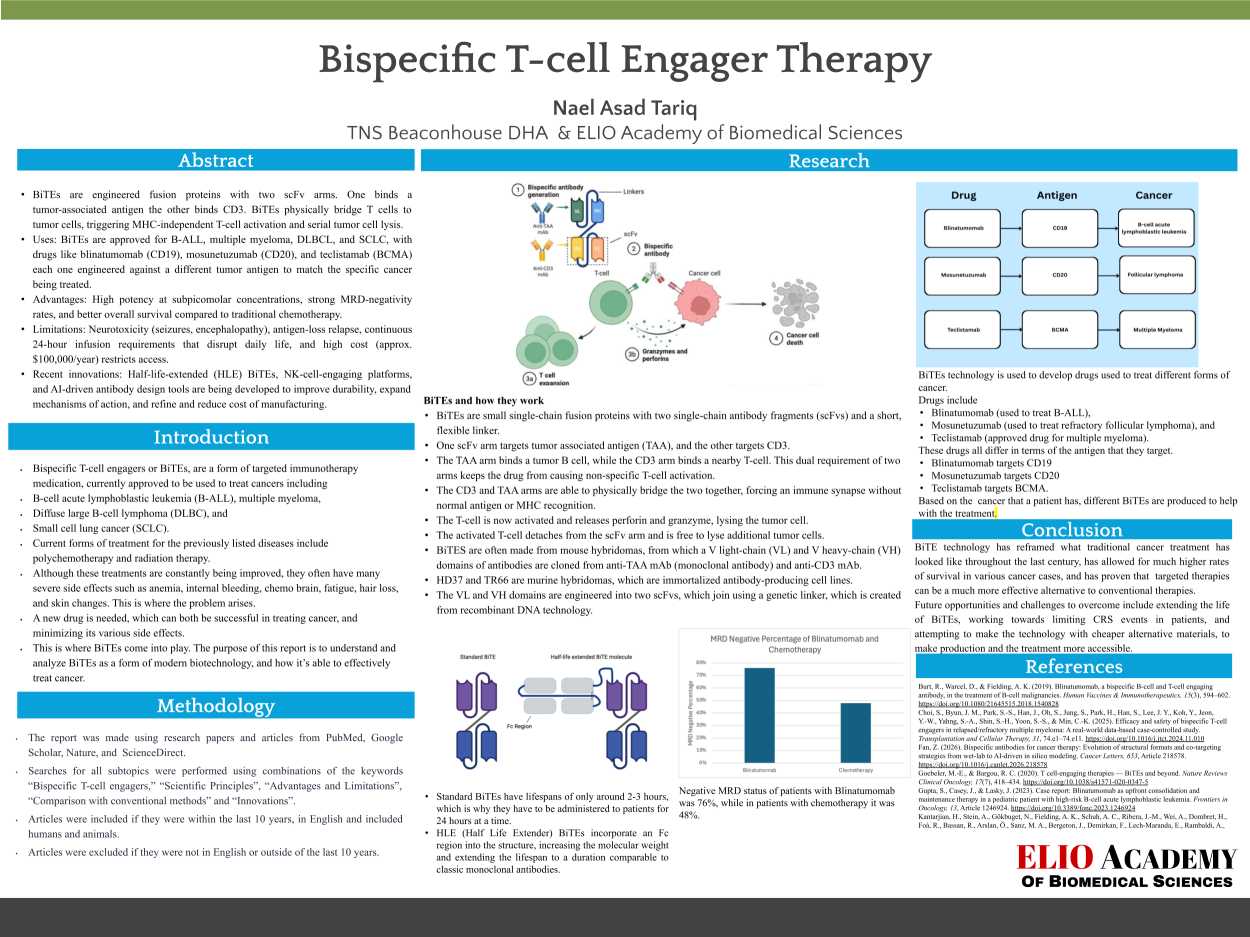
Summary
This project is about Bispecific T-cell engagers (BiTEs), how they’re created, how they function, and their applications in biomedical studies. Bispecific T cell engagers are essentially bridges between the T-cells and the cancer cells, and the T cells release cytotoxic chemicals such as perforins and granzymes into the cancer cells, triggering cell lysis or cell death. This project takes a look at the structure of BiTEs and their different components in depth. It also looks at the production process, different types of BiTEs, and how they can be personalized.
Next, the project covers the advantages and disadvantages of using BiTE technology. This is done through the use of several narrative case studies, statistics, and visual graphs. Also, a comparison is provided between the conventional methods, such as chemotherapy, and BiTE technology. It highlights the main differences between the two and how one prevails over the other in two different circumstances or situations.
Towards the end of the project, the main focus is on recent technological innovations and what specific benefits they have in reducing the limitations of BiTE technology. This includes Bispecific Killer cell engagers, Half-Life Extenders, and it also talks about how artificial intelligence is being used and profitted from. Lastly, the project ends with a conclusion, and a nod to future areas of research that could be explored, to better BiTE technology.
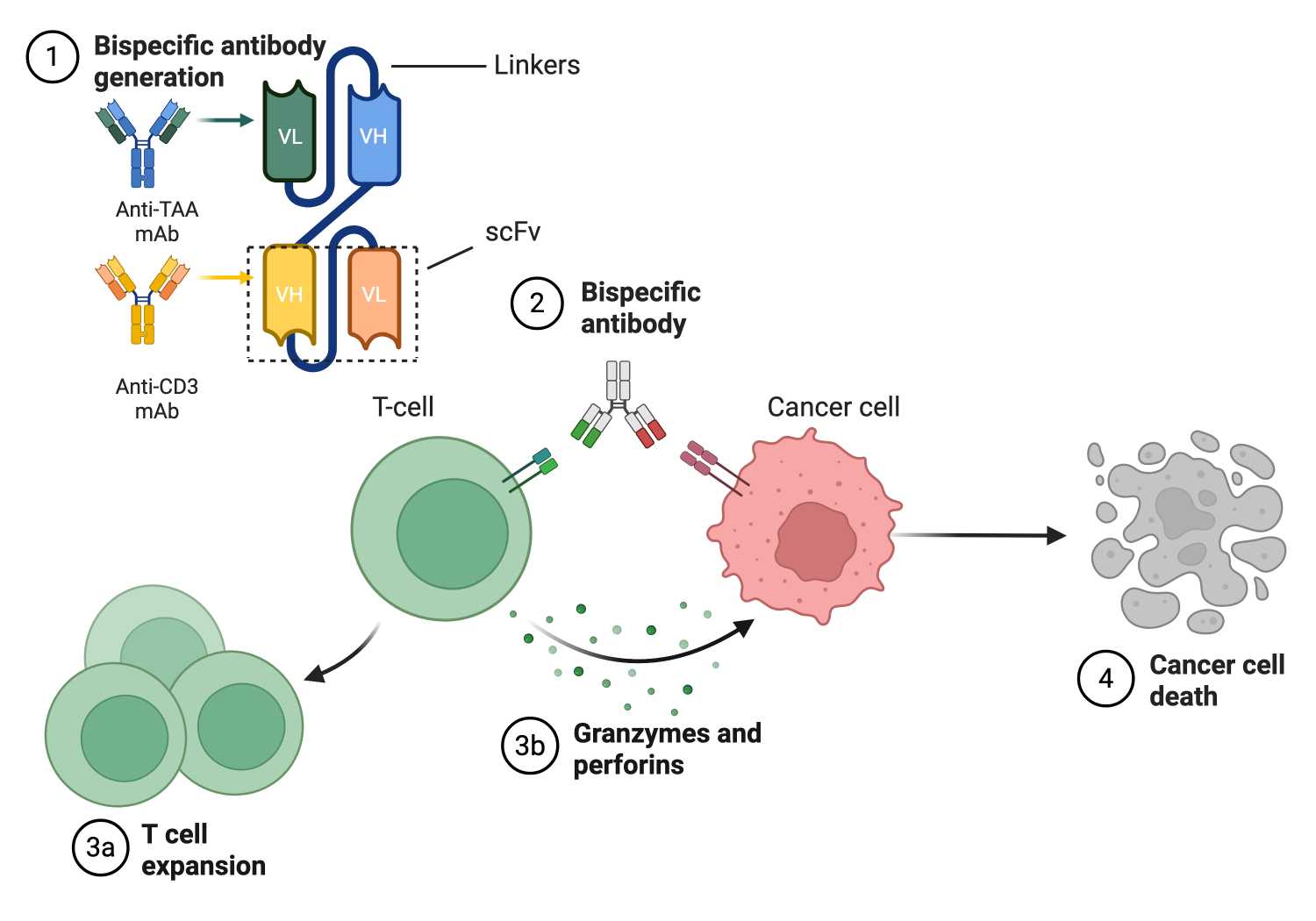
BiTE generation and function.
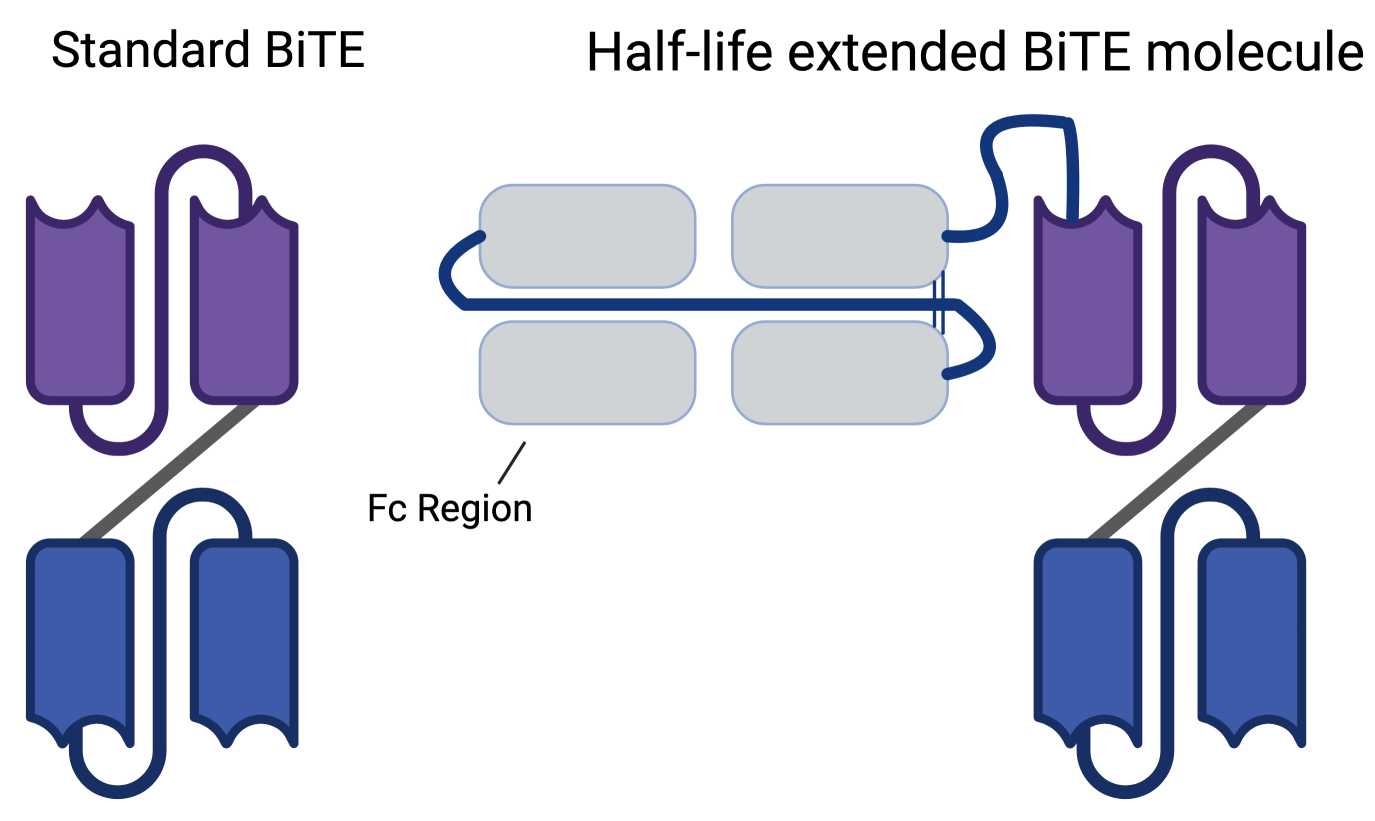
Standard BiTE VS Half-Life Extended BiTE
Video Presentation
Impact Statement
Nael Asad Tariq
The program helped me to learn several new topics, including cancer, cancer therapeutics, genetics, genomics, and multiomics. The topics that stood out to me most were cancer and cancer therapeutics. I was very interested to see how cancer is able to evolve based on the number of mutations within a chromosome, and how it reflects the stage of cancer that a person is in. Understanding metastasis also helped me to realize it’s harder to treat cancer in later stages, due to high toxicity associated with lots of drug intake, because the cancer is in different locations, and because, in some cases, metastasis can make cancer inoperable. I also thoroughly enjoyed the multitude of case studies that we did in almost every class. Whether it was about HER2 and breast cancer, or Retinitis Pigmentosa, the narrative definitely helped to keep me engaged. This course has helped to prepare me by allowing me to understand firsthand how research is conducted and synthesized. Moving forward, I plan to use these newly developed research skills in future projects, and I strongly believe they will allow my research to excel.
Student Reflection
By: Nael Asad Tariq.