Sweat Sensors for Cystic Fibrosis
By: Prisha Patra (Woodbridge Academy Magnet School)
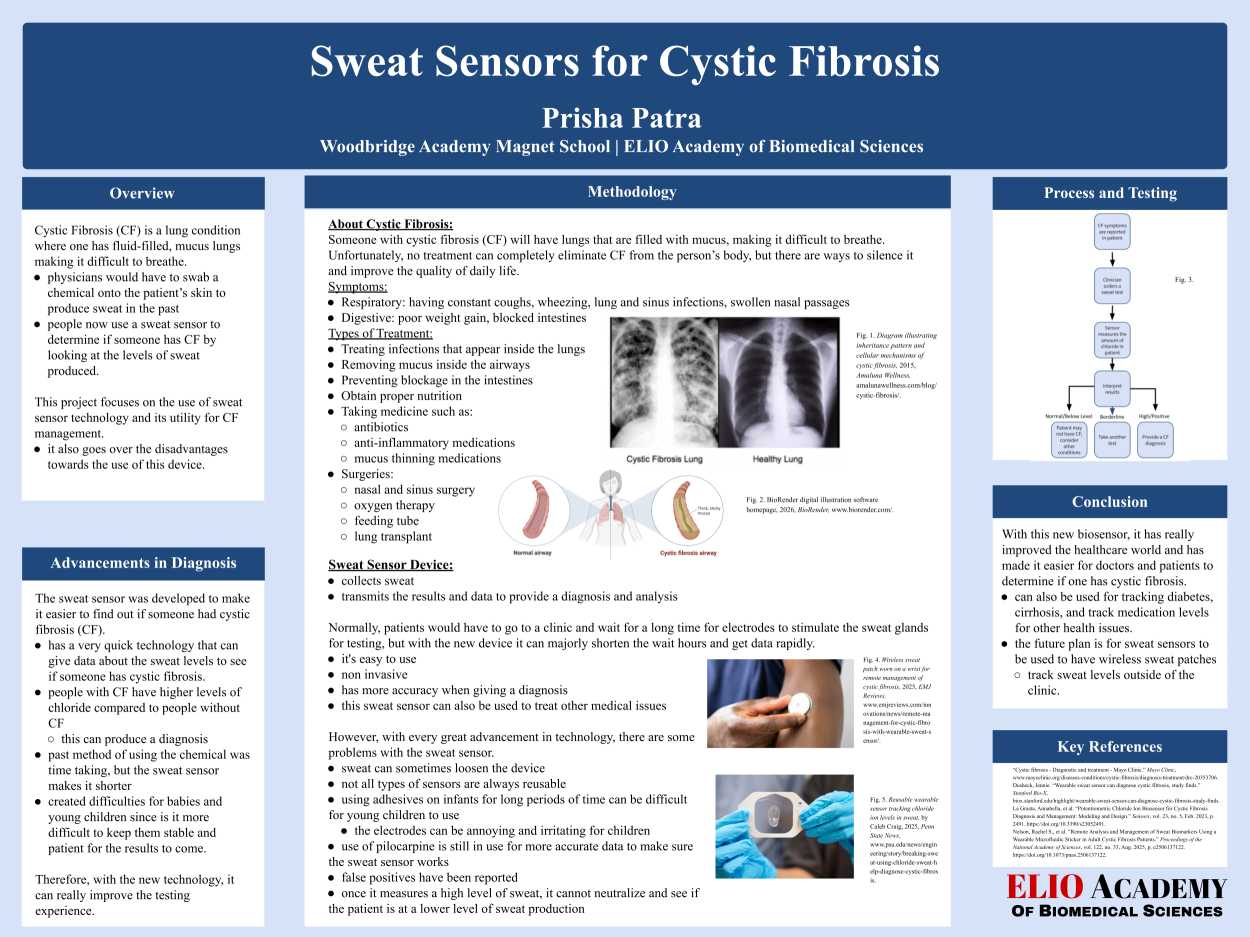
Summary
My science project discusses what cystic fibrosis (CF) is and explains how the new sweat sensor technology works. In the project, I explain what cystic fibrosis is, such as the various symptoms and treatment for cystic fibrosis. Some of the more common symptoms are having respiratory and digestive problems, like coughs, wheezing, and poor weight gain. Although this disease cannot be completely treated and eliminated from the body, there are some ways to prevent it from worsening; which are treating the infections, removing mucus in the airways, and having surgeries.
In the technology and robotics world that is progressively colliding with medicine, the new sweat sensor technology can be used to diagnose CF by tracking and collecting data for the sweat levels that the patient produces. This is such a great advancement in healthcare because it makes diagnosing disease much faster and easier, especially when physicians have to diagnose younger children. This device can be put onto the skin with an adhesive, and then can collect sweat levels which will create a diagnosis once checked over. But, physicians may still use the old-fashioned way of swabbing a chemical, called pilocarpine, onto the skin for diagnosis. However, there are certain problems with this sweat sensor technology. Some types of these sensors are not reusable, the adhesive part of it can be a problem for children to have on for a long time, and people still use the old method of swabbing pilocarpine so that they can double check the test or redo the test if the sweat test results in a neutral response.
The testing process starts off with the patient or the doctor reporting CF symptoms in the patient. A sweat test is ordered to see if the patient has CF and a diagnosis can be produced. The sensor measures the amount of chloride in the patient, and from here it can go three ways: if the levels are normal are below level, the patient likely does not have cystic fibrosis, so another other conditions should be considered; if the patient is at the borderline level, another test will be taken and sometimes the clinician may test with pilocarpine instead; and if the sweat levels are high, which is positive, a cystic fibrosis diagnosis can be given and confirmed. Finally, this sweat sensor device can also be used to detect and provide testing for other types of diseases, not just CF.
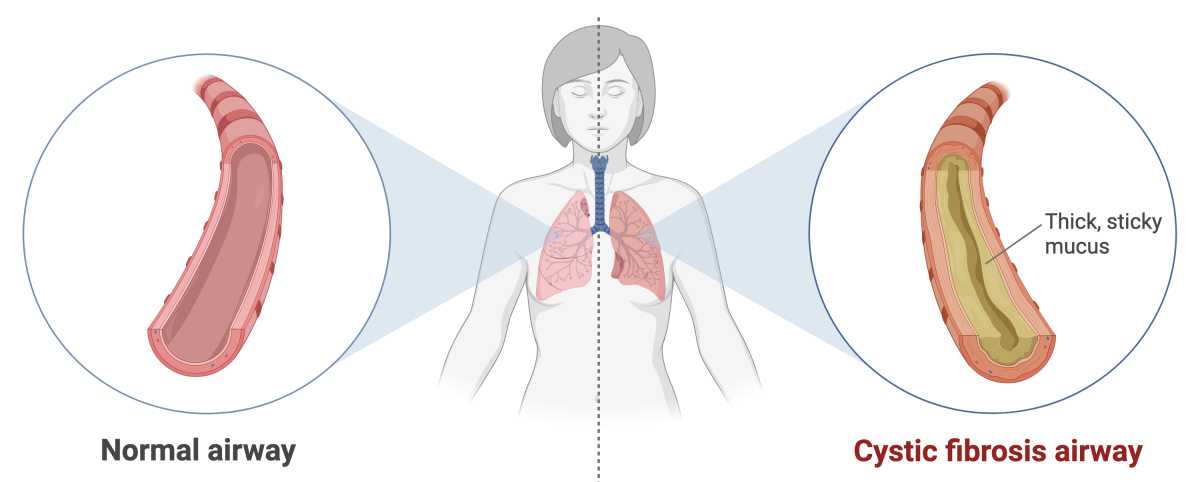
The cystic fibrosis airway is very thin and has a lot of mucus.
Video Presentation
Impact Statement

Prisha Patra
Taking this course through Elio Academy really helped to strengthen my research skills and how a scientific poster can be created. My instructor told me about many websites to find information on different genes and DNA along with other top, reputable websites for research information. These resources really helped to gather extra, detailed information for a science project. In the lessons and research papers, I learned new details and in-depth analysis into molecular biology, cancer biology, and genetics through this program. Through my research, I learned about how a recent technology with sensors can be used to determine and diagnose different diseases. After looking closely at genes one day in class, I realized how many different ways there are to look at them and how one can also figure out family members after searching up information based on one gene.
Student Reflection
By: Prisha Patra.