Stem cell transplant for Acute Lymphoblastic Leukemia
By: Shreya Manne (St. Mary's Episcopal School)
Summary
My project discusses the novel treatment of stem cell transplants to treat acute lymphoblastic leukemia (ALL). ALL is a type of leukemia that occurs when the body makes too many lymphocytes that are not fully matured yet, which damages the immune system. Healthy immune cells are replaced by leukemia cells that do not work properly to defend against viruses and infections as normal immune cells do. This type of leukemia is the most common cancer among children, and it is rarer in adults. Heavy exposure to radiation, toxic chemicals, and pesticides can be risk factors in developing this disease. ALL is usually treated by chemotherapy, car T-cell therapy, and monoclonal antibodies if not for stem cell transplants.
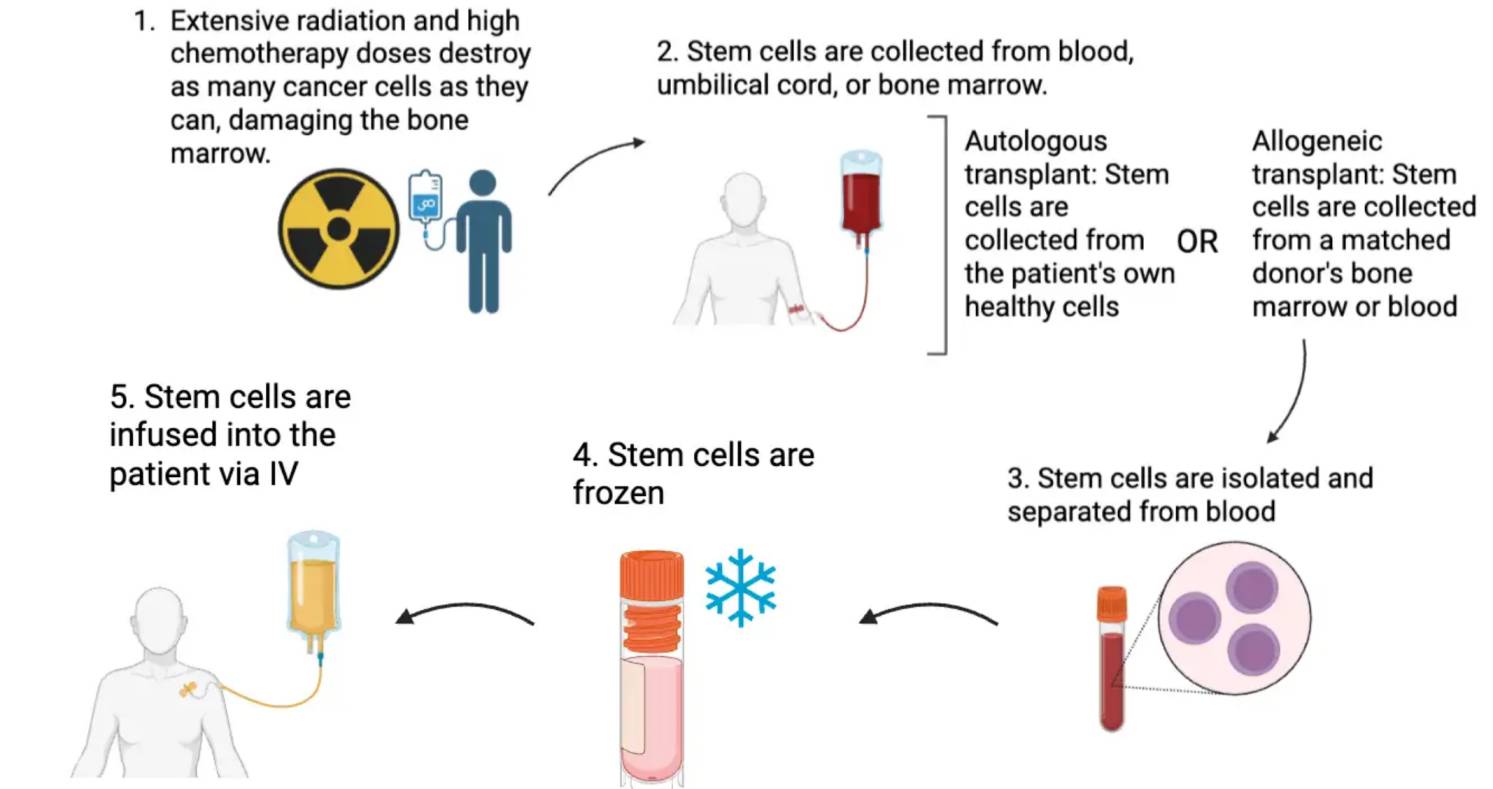
Stem cell transplants treat leukemia by replacing damaged, cancerous cells with healthy stem cells to support the immune system. This treatment option is usually used for patients that have cases of leukemia that keeps coming back aggressively. There are two types of stem cell transplants: autologous and allogeneic. Autologous transplants take stem cells from other parts of the patient’s own body that have healthy stem cells, while allogeneic transplants take stem cells from a matched donor’s body to be infused into the patient. Stem cells can be taken from the bone marrow, umbilical cord, or the bloodstream, but the bone marrow is most common for leukemia cases. Before infusion, high doses of chemotherapy and extensive radiation are used to kill as many cancer cells as possible. Then, stem cells are taken and then isolated from other cells. They are then frozen and infused in when needed. Patients are usually kept in the hospital for monitoring after the infusion.
Stem cell transplants can be a promising treatment option for ALL patients as it has worked for over 60% of patients and reduced the mortality rate by 39%. There are also complications, as they are very expensive, and those who receive allogeneic transplants risk developing graft vs host disease (GVHD), in which the body attacks the immune cells. However, stem cell transplants can be an absolute cure if the immune system reacts well to them. In the future, stem cell transplants should be made more accessible by reducing cost. Complications like GVHD should also have more treatments and patients should have more support after stem cell transplants in order to build their immune system back up.
Stem Cell Transplant Methodology
Video Presentation
By: Shreya Manne.