Checkpoint Inhibitor Immunotherapy for Non Small Cell Lung Cancer
By: Sruthi Kommana (Joseph A Foran High School)
Summary
Immunotherapy for non-small cell lung cancer has become one of the main treatment options and it is constantly developing with new testing and clinical trials. Non-small cell lung cancer accounts for 85% of lung cancer cases. Symptoms include constant coughing, trouble breathing, coughing up blood, etc. It can be caused by many things but some main factors are smoking and indoor radon. There are many treatment options including chemotherapy, surgery and radiation therapy. However, immunotherapy has been effective because it focuses on one specific pathway and has less side effects compared to other options.
Checkpoint inhibition therapy uses inhibition to block proteins such as CTLA-4 and PD-L1. PD-L1 acts as an off switch within the immune system and prevents T cells from destroying healthy cells while CTLA-4 prevents T cells from becoming too active and destroying healthy cells within the body. Cancer cells produce abundant amounts of these proteins in order to trick the immune system that they are healthy cells but instead these abnormal cancer cells constantly continue to divide and spread throughout the body. PD-L1 is found on cancerous cells and it connects to a protein found on healthy cells known as PD-1. This connection causes T cells to be turned off and without T cell activation it is extremely hard to kill malignant cells within the body.
Immunotherapy helps re-energize T cells within the body because throughout the cancer immunity cycle they might start to get tired and lose their ability to fight cancer cells efficiently. Also, with the heavy amounts of PD-L1 proteins and CTLA-4 proteins it makes it difficult for the activation of T cells. By inhibiting these proteins throughout the cancer immunity cycle it allows T cells to regain their ability to detect abnormal cells and kill cancer cells. Immunotherapy is also known to work better alongside other treatments such as chemotherapy. Chemotherapy breaks apart cancer cells and releases antigens to make the tumor visible to the immune system. Immunotherapy trains white blood cells to remember the cancer and the antigens also help T cells find their way to where the tumor is located in order to kill the cancerous cells. By combining these two therapies it makes treatment more effective. Immunotherapy is constantly developing and changing in order to help with the survival of cancer patients.
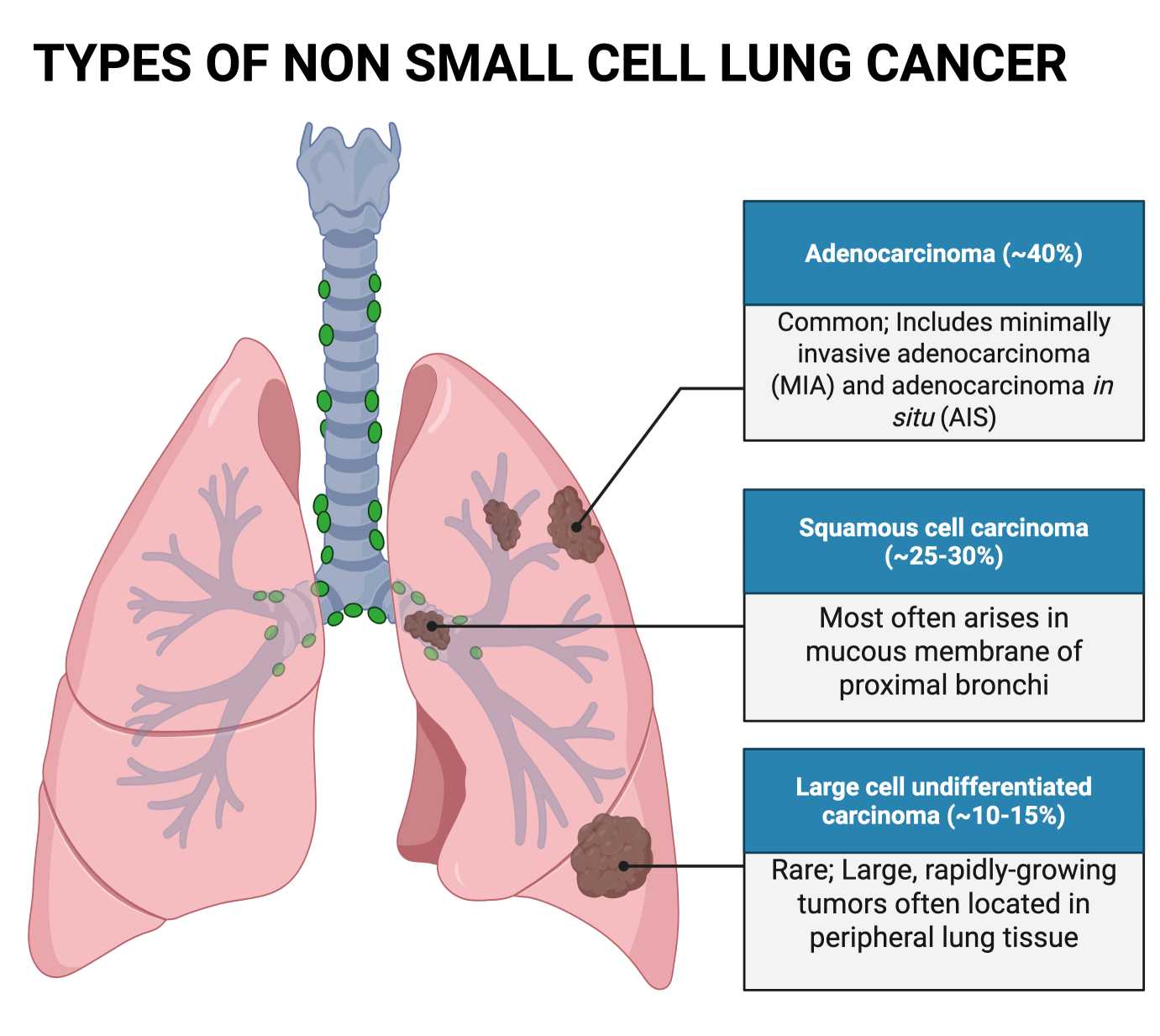
This figure shows the different types of Non Small Cell Lung Cancer. Examples include adenocarcinoma, squamous cell carcinoma and large cell undifferentiated carcinoma.
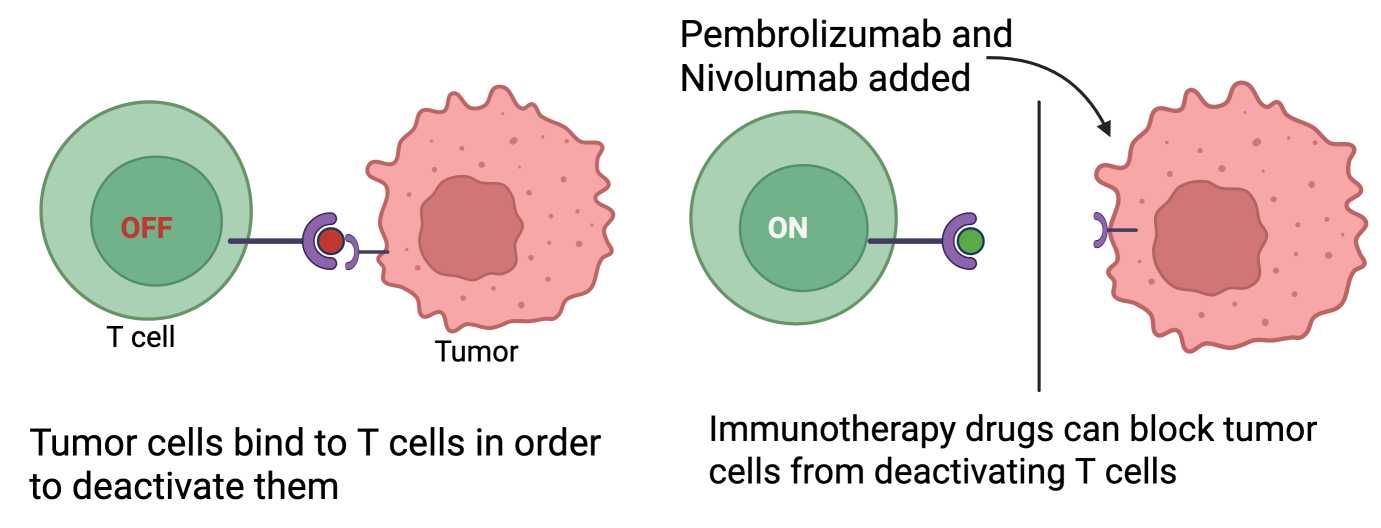
This figure shows how tumors are able to bind to T cells in order to deactivate them so that the immune system won't know to kill them.
Video Presentation
By: Sruthi Kommana.