MYCN Amplification and Therapy Resistance in High Risk Neuroblastoma
By: Swagatha Selvam (Mission San Jose High School)
Summary
Neuroblastoma is a childhood cancer that emerges from neuroblast, immature nerve cells. The cancer is mostly diagnosed in infants and children under the age of five. Some forms of the disease are treatable, yet the disease manifests high risk forms that resist therapies resulting in unfavorable prognoses. This research aims to study mechanisms that drive neuroblastoma treatment resistance by investigating the MYCN oncogene which is one of the most potent genetic markers for aggressive neuroblastoma. The study will look into normal function of MYCN, how its amplification leads to tumor behavior changes and why treating patients with MYCN amplification is so difficult.The research will also focus on the role of ALK gene that undergoes mutations along with MYCN amplification resulting in aggressive tumor development.
This study addresses how MYCN amplification is correlated with the normal activity of genes and cellular functionalities. MYCN is responsible for regulating gene activity during cellular development, growth, and the formation of the nervous system under normal circumstances.However, amplification of MYCN leads to the overproduction of MYCN protein. The resulting proteins cause abnormal cell replication and fail to allow differentiation of the primitive neurons into mature neurons. MYCN assists tumors' survival due to its capability to inhibit apoptosis via MDM2 activation, which prevents proper functioning of p53. Contributing to this process are microRNAs, long non-coding RNAs, chromatin-modifying agents, and changes in metabolism. These changes explain why neuroblastoma with MYCN amplification shows a higher rate of progression and significant relapse after treatment.
Finally, this project explores treatment methods which have been developed so far along with new ways in personalized medicine that can help in the elimination of MYCN-induced therapy resistance. Standard methods of treatment involve the use of chemotherapy, surgical treatment, the use of radiation, stem cell transplantation, and immunotherapy, but MYCN-amplified patients continue to demonstrate high incidence of therapy failure. Currently, focus is on the creation of effective treatment methods which will ensure the possibility of planning the therapy aimed at that indirectly influences MYCN. They include the use of different types of inhibitors as well as various drugs that are targeted at ALK, provided that the patient possesses relevant mutations in their body. The upcoming new methods such as CAR-T therapies, use of circulating DNA and PROTAC materials may become the real breakthrough to solving MYCN therapy resistance.
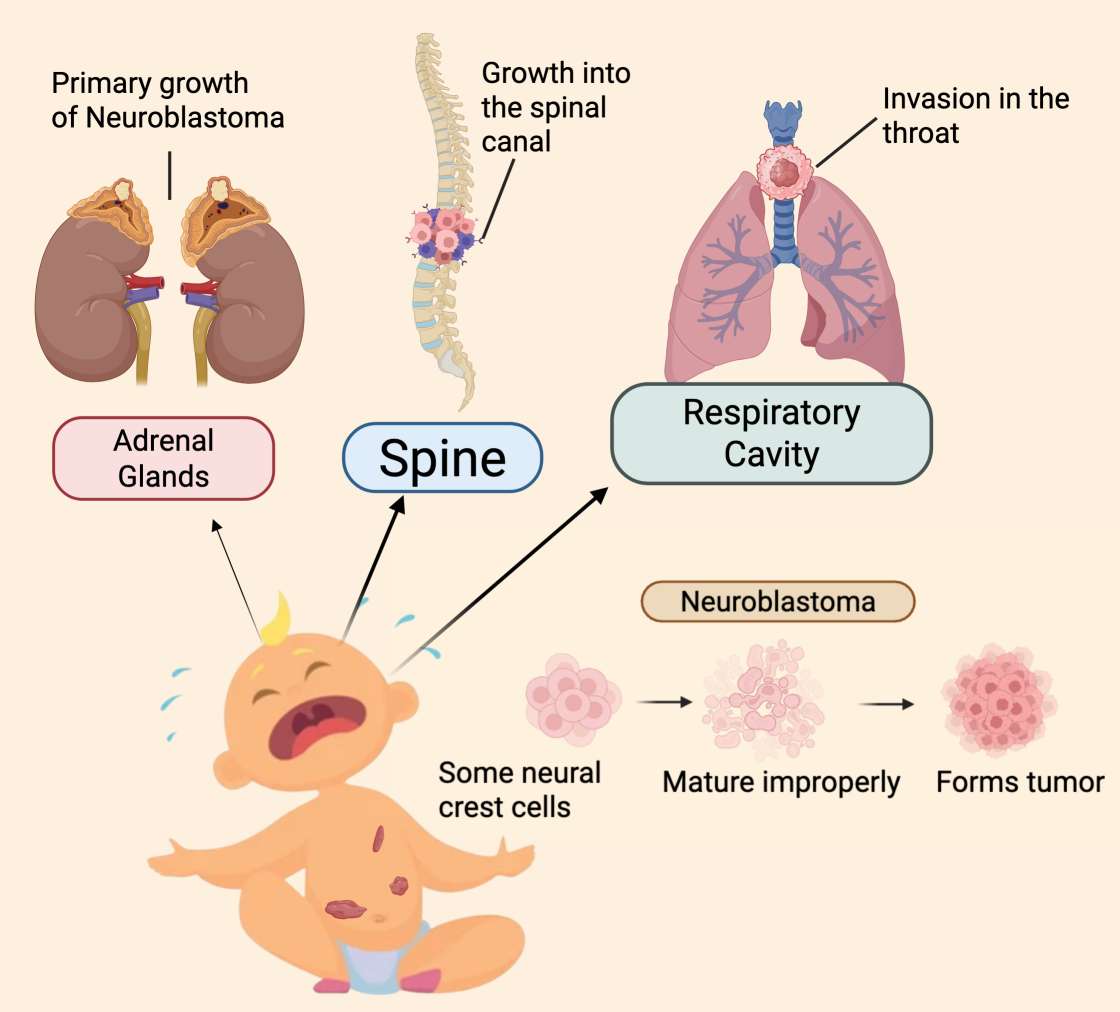
Invasion of Neuroblastoma in a child Neuroblastoma typically starts in the adrenal glands and further spreads to other parts of the body rapidly.
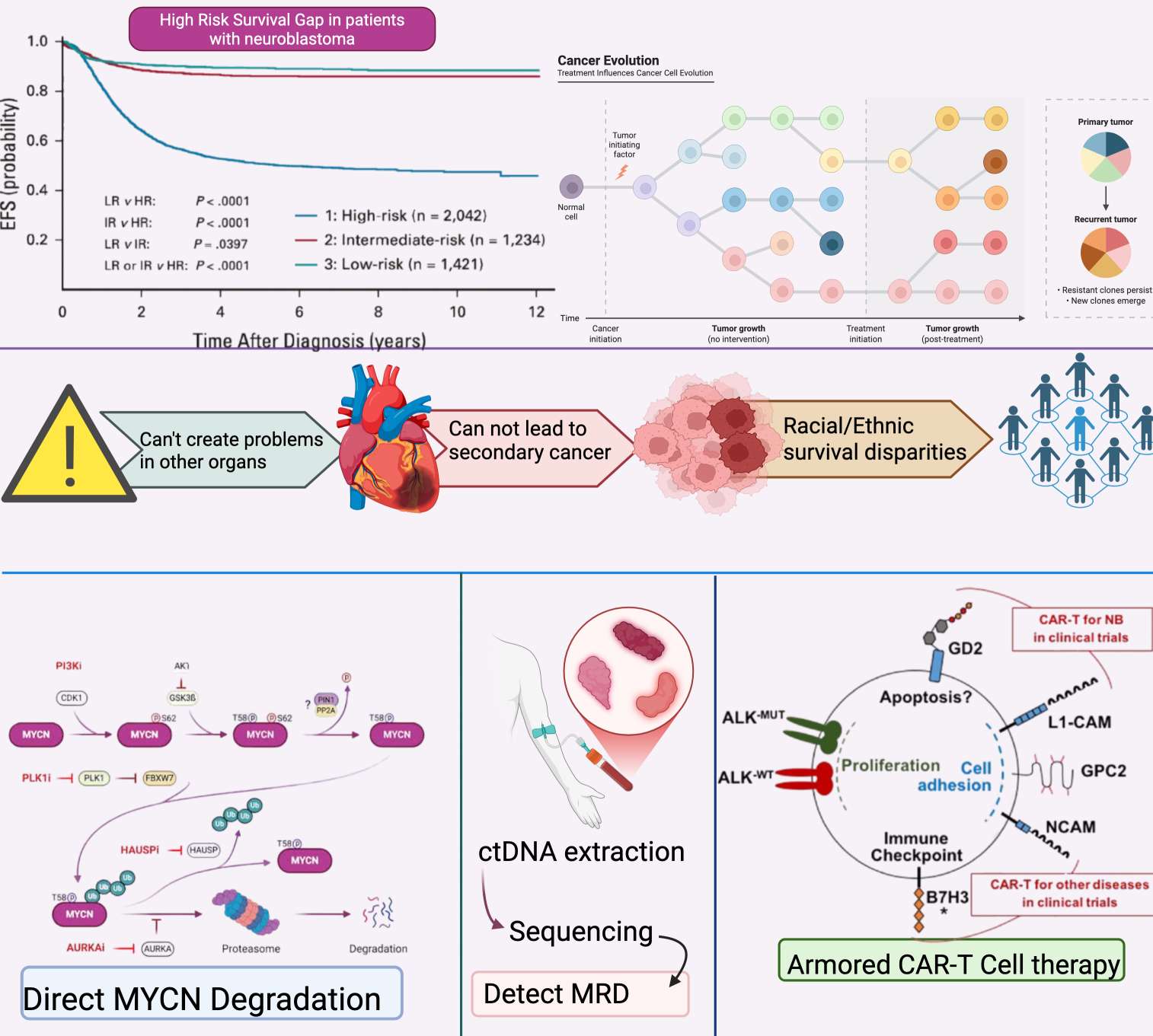
Future of Neuroblastoma Experts are working on dealing with the high survival gap while working through the barriers with coming up with new innovative cell therapy through MYCN degradation. early detection of MRD, and targeted CAR-T cell therapy
Video Presentation
Impact Statement

Swagatha Selvam
My name is Swagatha Selvam, and I am a student at Mission San Jose High with a strong interest in pediatrics. Through this amazing opportunity, I was able to explore various aspects of genetics and treatment pathways in healthcare. It led me to have a stronger foundation while diving into the concepts of my own research. Before this course, I had a narrow understanding of genetic processes and how the body worked in general. Now, I am well knowledgeable about genetic processes in the body. Through the experience of navigating through this research, I was able to enhance my abilities to understand scientific literature, analyze complex images, and increase my critical thinking. Learning about diseases and cancer, strengthened my interest for a future in healthcare and has inspired me to continue exploring other pathways, treatment methods, and progression of new medical discoveries. Putting myself to the test through this educational two week course is something I truly benefitted from.
Student Reflection
By: Swagatha Selvam.