The Current and Future Technology of CRISPR-Cas13
By: Theodore Haldorson (PiM Arts High School)
Summary
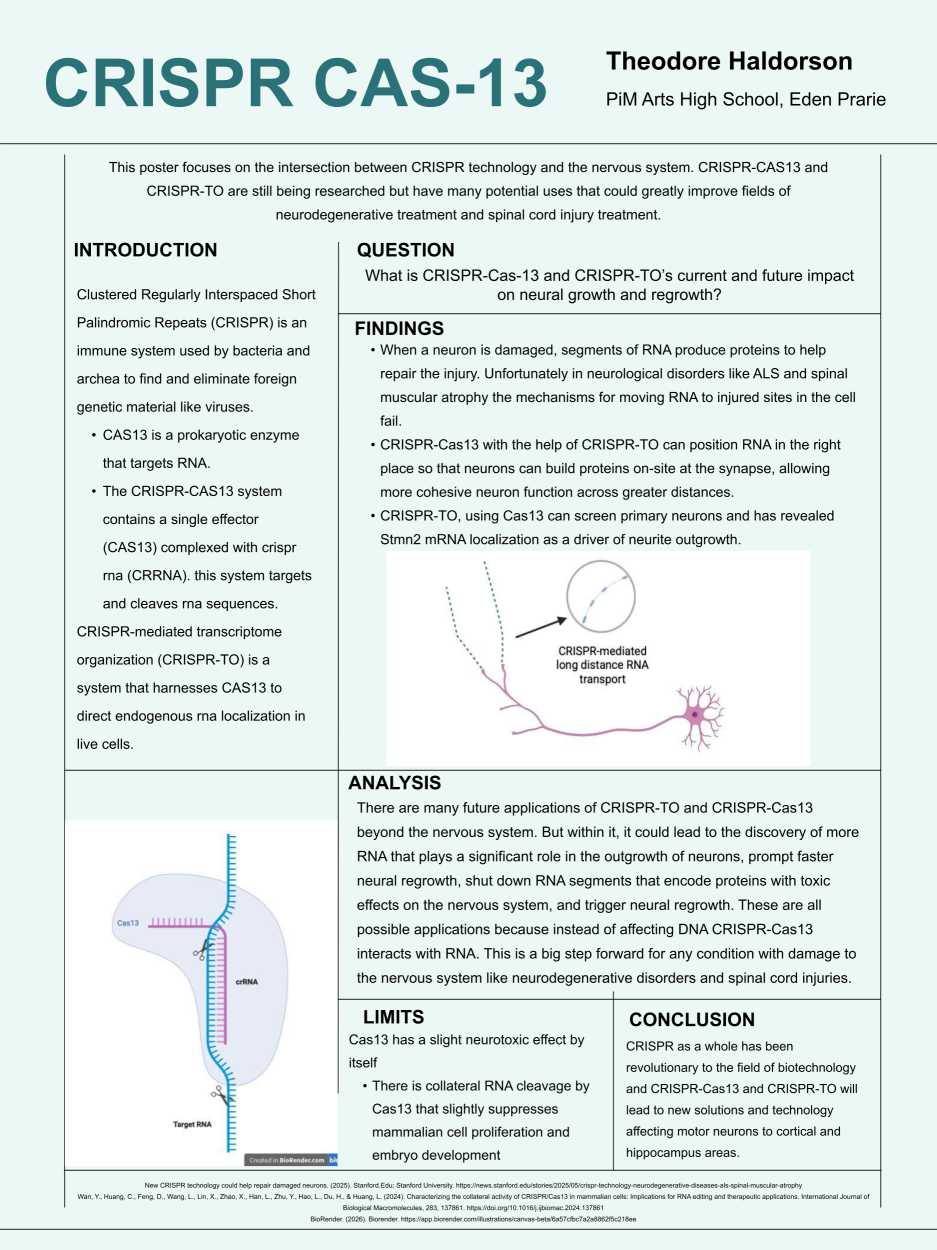
CRISPR-Cas13 is a CRISPR-based system that targets and edits RNA in place of DNA, distinguishing it from the more familiar DNA-editing CRISPR tools such as Cas9. Cas13 is a prokaryotic enzyme and is the core of this system, functioning as an effector complexed with a CRISPR RNA (crRNA0 to recognize and bind to specific complementary RNA sequences. My project reviews current research on CRISPR-Cas13 and its companion technology, CRISPR-TO (CRISPR-mediated transcriptome organization), and evaluates their possible role in neuron repair and regrowth. In healthy neurons, segments of RNA are moved to injury sites to enable local protein synthesis; in neurodegenerative disorders such as ALS, this mechanism fails, leaving damaged sites without necessary proteins. Using CRISPR-TO to direct Cas13, RNA can be repositioned across larger distances within the cell; including to the synapse, allowing for more cohesive neuron function. This same screening approach also revealed Stmn2 mRNA localization as a key driver of neurite outgrowth, offering a specific mechanistic target for future research.
While this technology shows clear promise, it remains limited by mild neurotoxic effects and off-target collateral RNA split, this slightly suppresses mammalian cell proliferation and embryonic development. Catalytically “dead” Cas13 (dCas13) shows a potential path forward, allowing for efficient and specific RNA targeting without collateral damage. The clinical translation is still in early stages as currently only one CRISPR-Cas13 based medicine is in clinical trials (showing how young this field is). CRISPR-based RNA-targeting research is only about ten years old, and there is much unknown about the long-term effects of this technology and its full range of applications.
This project connects the current literature on CRISPR-Cas13 and CRISPR-TO’s applications to neural growth and regrowth, and outlines the potential future directions for the field. Included in these are expanding screening efforts to identify additional RNA that drives neuron outgrowth, isolating proteins and RNA strands that could trigger faster regrowth, and developing methods to remove RNA segments without collateral damage. Because CRISPR-Cas13 acts on RNA instead of DNA, its applications have the potential to extend far beyond the nervous system, but within it, this technology represents a meaningful step forward in treating neurodegenerative disorders and spinal cord injuries.
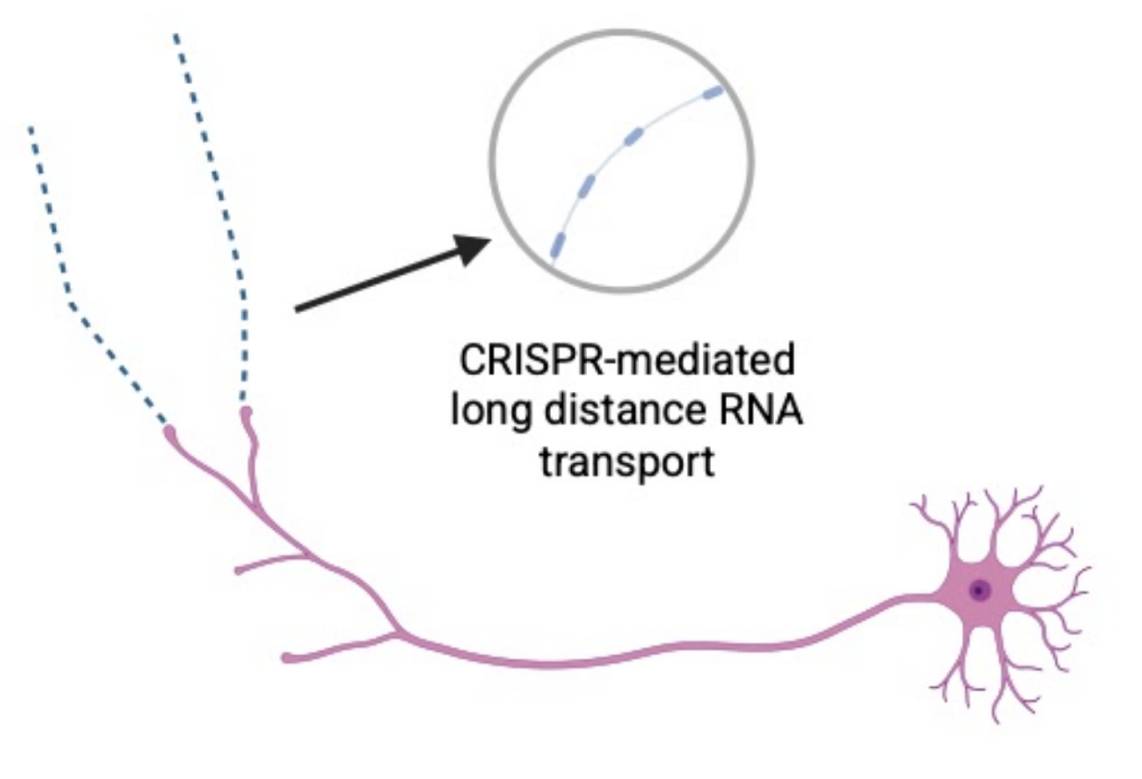
CRISPR-TO-mediated transport of RNA
Video Presentation
Impact Statement

Theodore Haldorson
While I came into Elio Academy having a bit of my own understanding of neuroscience, through this program I was able to better understand the broad variety of topics encapsulated in the field of neuroscience as well as delving deeper into my chosen project. I was able to work through problems and road blocks in my research with the help of the instructor of the program and was given many resources that helped on my project. My next goal is to join a lab research position in the coming year and Elio Academy has set me up for understanding the rigor required for this. While maybe not the focus of this program I was also able to gain a better understanding of a type of treatment that had long interested me but I had previously been without resources to understand. This was an amazing opportunity for me and has been another stepping stone on my developing interest in neuroscience.
Student Reflection
By: Theodore Haldorson.