Ex-Vivo and In-Vivo CAR-T Therapy For Leukemia
By: Yuliia Berezhna (Leigh High School )
Summary
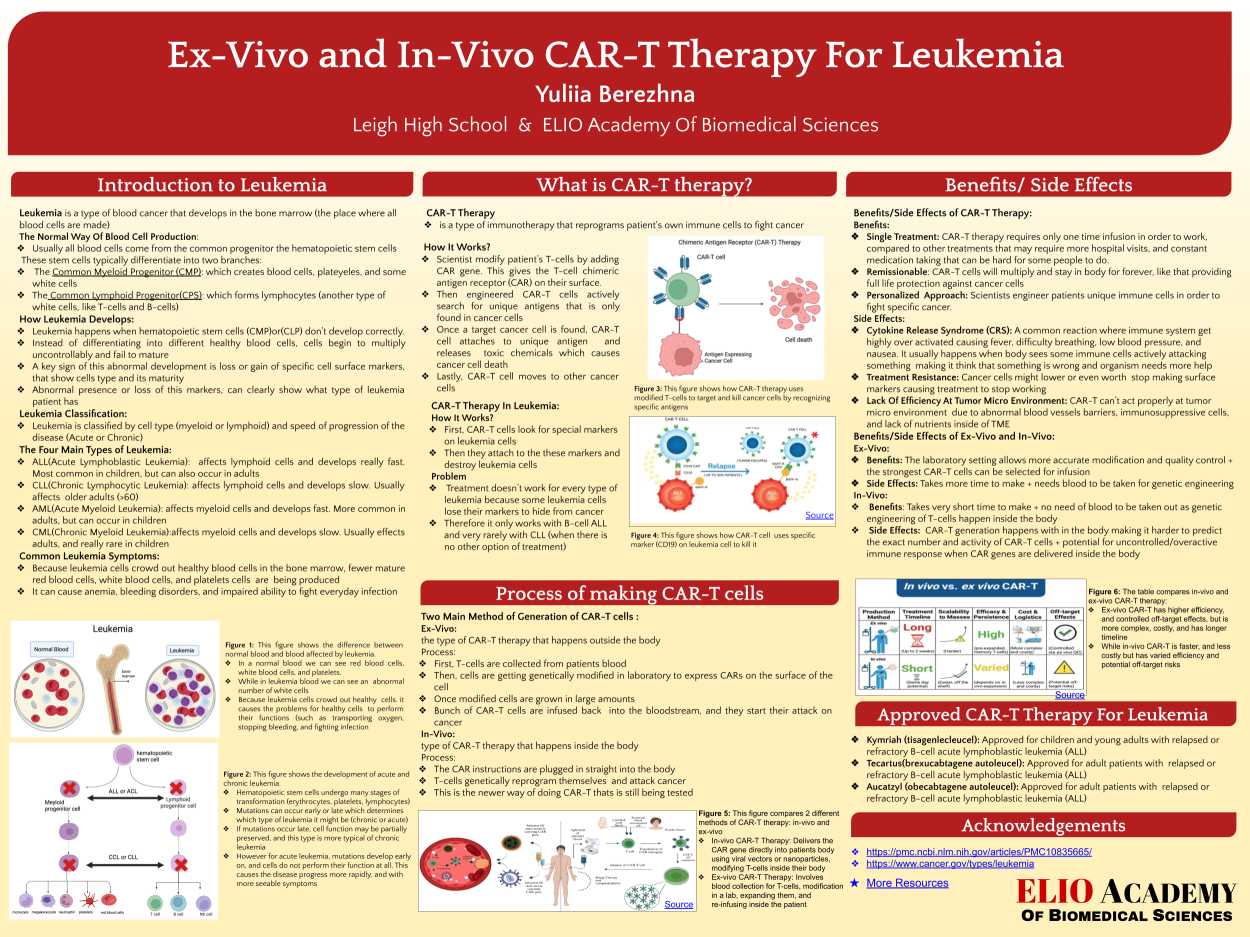
This work is aimed to present what leukemia is and how ex-vivo and in-vivo CAR-T therapies work with it. Leukemia is the type of blood cancer that occurs when hematopoietic stem cells fail to mature, which leads to uncontrolled division of leukemia cells. After some time leukemia cells start to crowd out healthy blood cells and fewer mature red blood cells, white blood cells, and platelets are being produced which can cause symptoms such as anemia, bleeding disorders, and impaired ability to fight everyday infection. There are 4 types of leukemia that are categorized by the cell lineage - myeloid/lymphoid and the progression of the disease - slow/fast. The names of leukemia types are: Acute Lymphoblastic Leukemia(ALL), Chronic Lymphocytic Leukemia(CLL), Acute Myeloid Leukemia(AML), and Chronic Myeloid Leukemia(CML).
When traditional treatments for leukemia don’t work, CAR-T therapy can become a life saver. CAR-T therapy is the type of immunotherapy that reprograms a patient's own immune cells to recognize cancer by adding Chimeric Antigen Receptor (CAR) to the T-cell. The CAR antigen then helps the T cell to connect to CD19( an antigen that only cancer cells can have) and release the toxic chemicals to kill cancer. However, there is a problem: Treatment doesn’t work for every type of leukemia because some leukemia cells lose their markers to hide from cancer. Therefore it only works with B-cell ALL and very rarely with CLL.
There are two types of CAR-T therapies, ex-vivo and in-vivo. Ex-Vivo therapy is a type of therapy that reprograms T-cells outside the body. First, doctors collect patients' blood. Then, they reprogram T-cells in the laboratory. Lastly, they put reprogrammed T-cells inside the body. This method of therapy allows selection of the CAR-cells, however it takes a very long time. Also, there is In-vivo therapy that happens inside the body. It delivers genetic instructions directly to the T-cells which is a much quicker method of making CAR-T cells, but this method is also less predictive and has potential for uncontrolled overactive response.
CAR-T therapy as all the therapies has benefits and side effects. CAR-T Therapy benefits are single treatment, it is remissionable, and this therapy is very personalized. However, CAR-T therapy also has some side effects like Cytokine Release Syndrome, treatment resistance, and lack of efficiency in the tumor micro environment. Overall, CAR-T therapy isn't the most efficient therapy, however it can save lives when there is no other choice of treatment.
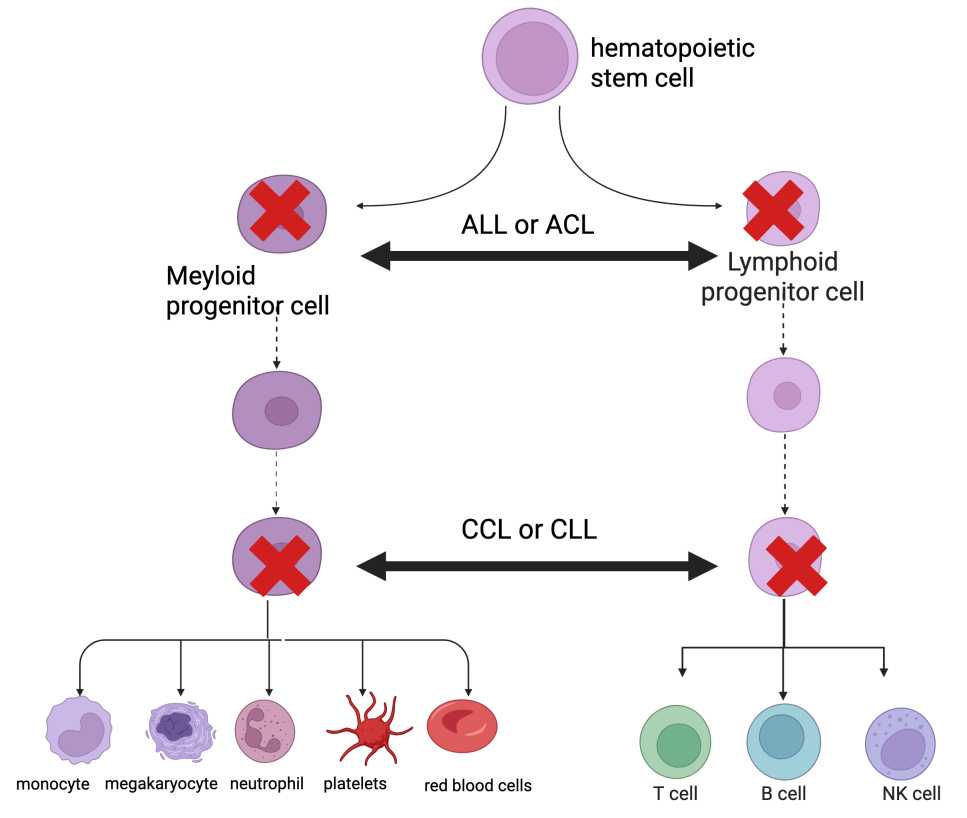
Development of acute and chronic leukemia.
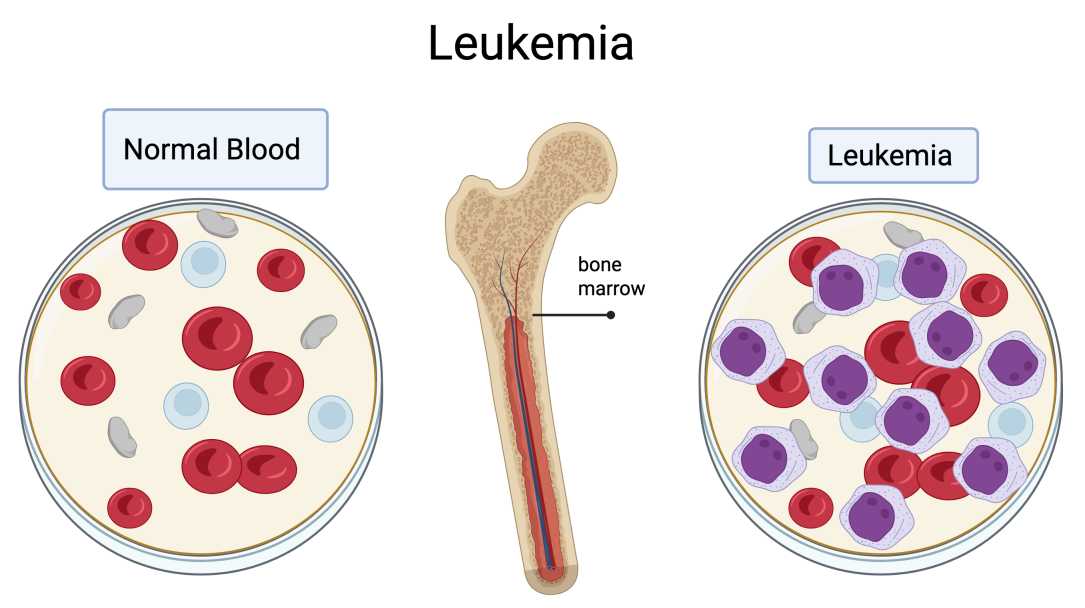
Difference between normal blood and blood affected by leukemia.
Video Presentation
Impact Statement

Yuliia Berezhna
Before this program, I honestly didn’t know much about different types of cancer or their treatments. The only thing I knew is that cancer is a very scary disease that is caused by mutation, usually treated by chemotherapy. However, this program taught me that cancer is much more complex, especially when blood cells fail to mature properly, leading to leukemia. While studying about leukemia, I also got super fascinated about CAR-T therapy - the treatment that reprograms patients' own immune cells by adding CAR-T receptors on their surface which makes the T-cells see cancer and kill it. Therefore, this 2 weeks program showed me that there are better, more personalized ways to treat cancer than just standard, well-known chemotherapy. I also learned that sometimes CAR-T therapy can be difficult, because cancer can hide the antigens that CAR-T therapy needs in order to work. Overall, this experience made me very interested in genetic engineering and personalized medicine, and this program gave me a very strong foundation in cancer that I will continue using in my future health care journey.
Student Reflection
By: Yuliia Berezhna.